The distinction between opposing a political-militant regime and respecting a nation’s people must be central to any responsible critique. Afghanistan’s citizens have endured decades of violence, displacement, and economic collapse; they deserve solidarity, not blanket blame. What requires scrutiny instead is the evolving relationship between external state actors and the current Tehrik‑e‑Taliban Afghanistan (TTA) power structure and its political fronts, including the entity referred to here as GDI, the regime-aligned political apparatus that seeks international legitimacy while perpetuating repression at home.
This insight maps the strategic logic of those ties, the risks they create, and why accountability-focused critique should remain firmly anti‑Taliban and not anti-Afghan.
Why the nexus matters
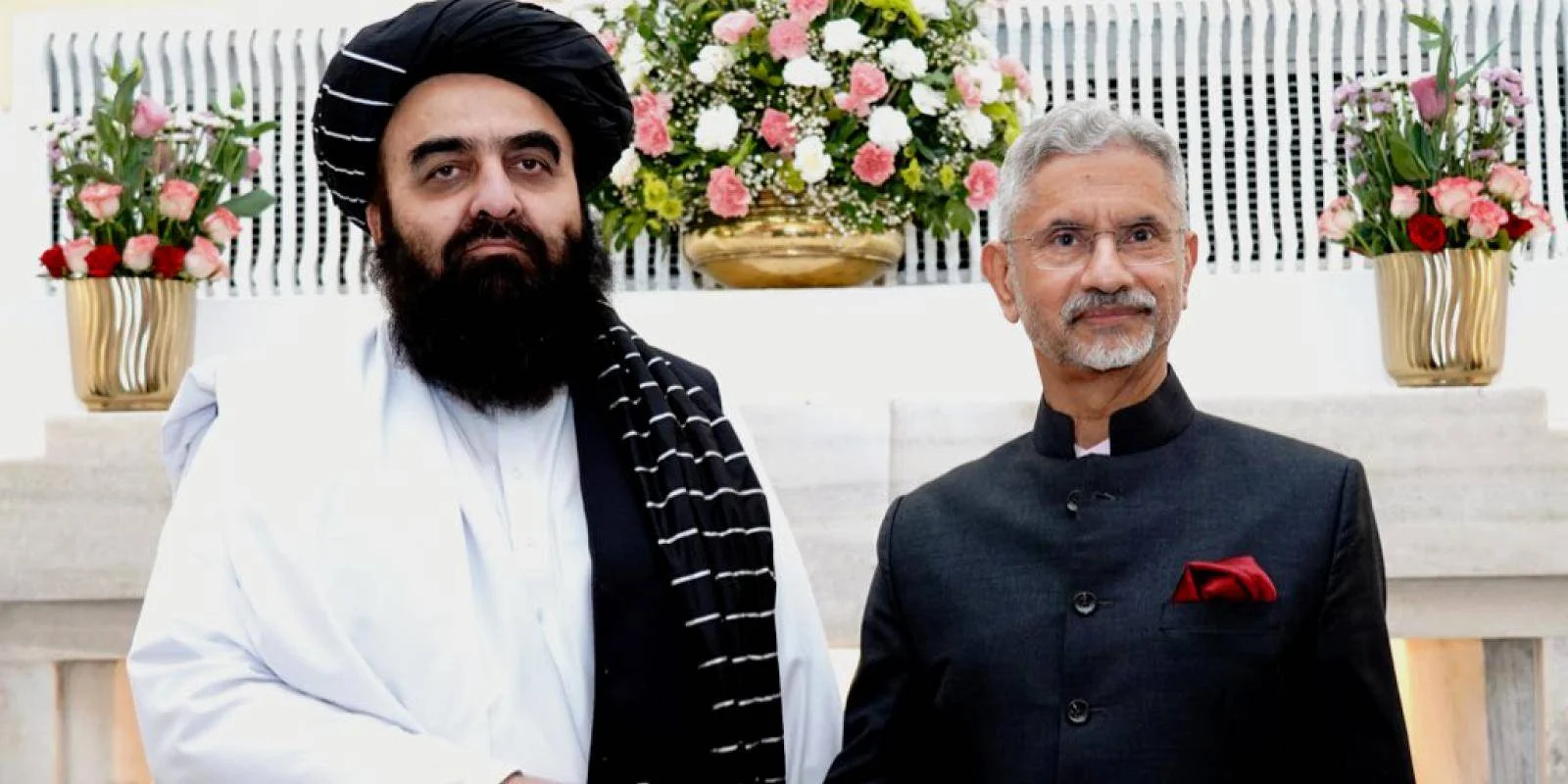
State-to-regime ties are consequential when a non‑democratic, militant movement governs. A relationship that offers diplomatic cover, material support, or political validation to an authoritarian regime alters the incentives on the ground: it reduces pressure for human rights reforms, enables cross-border proxy dynamics, and shifts regional balances. Recent high-level interactions between Afghan interim officials and New Delhi illustrate this geopolitical shift: visits and joint communiqués have raised questions in the region about alignment and intent, especially when statements touch on highly sensitive bilateral disputes and when engagement proceeds despite the regime’s record and international sensitivities.
How the India–Afghanistan engagement functions in practice
Engagement can take multiple forms: diplomacy that normalizes a government, development assistance that bypasses civil society, or security cooperation that reshapes local conflict dynamics. Each avenue can be justified in narrow terms, humanitarian reach, access to citizens, or stability calculus. Still, the aggregate effect can be to bolster a regime that represses dissent and curtails basic freedoms.
When diplomatic gestures are amplified by public rhetoric that mirrors one party’s geopolitical stances, they risk being read as strategic alignment rather than neutral outreach, with predictable pushback and destabilizing implications for neighboring states.
Critique of the Tehrik‑e‑Taliban Afghanistan regime
The TTA’s governance model prioritizes ideological consolidation and coercive control over inclusive statebuilding. Its policies toward women, minorities, media, and dissent are central concerns for principled critics. Accountability demands naming the specific practices that warrant international censure: forced curbs on education and employment for women, suppression of independent media, arbitrary detentions, and the instrumentalization of religious institutions to legitimize political power. Criticism here is not a cultural judgment; it is a defense of universal rights and the rule of law.
Equally important is naming the regime’s regional behavior: cross-border attacks, support for proxy actors, and inflammatory rhetoric can export instability. When external actors engage the regime without clear conditionality on human‑rights improvements and non-aggression, they risk reinforcing the very dynamics that produce insecurity and humanitarian suffering.
Critique of GDI (the regime’s political front)
GDI, understood here as a political front or institutional façade that seeks international acceptance while representing the Tehrik‑e‑Taliban’s interests, plays a specific role in packaging the regime for foreign audiences. Its function is diplomatic sanitization: presenting a more palatable face while core practices remain unchanged. Exposing this role requires differentiating between surface reforms and structural change.
Token consultations, selective appointments, or PR campaigns do not substitute for credible measures: constitutional guarantees, an independent judiciary, and protections for civil society. International interlocutors must push beyond photo‑ops and public statements to demand transparency, access for independent monitors, and civic participation that is not curated by the regime. Engagement that ignores these gaps risks granting legitimacy without leverage.
Tactical and moral prescriptions
Diplomatic and development engagement with Kabul should be explicitly conditional: contacts that lack enforceable safeguards on human rights and non-aggression must be resisted because symbolic outreach without mechanisms for accountability only entrenches repression and deepens regional mistrust. At the same time, assistance and dialogue should be channeled through independent Afghan civil‑society organizations and regional mechanisms that protect oversight and prevent the monopolization of resources by state apparatuses aligned with the regime.
Any move toward normalization or technical cooperation should come with clear, verifiable benchmarks, such as unhindered access for UN monitors, the restoration of girls’ and women’s education, and the release of political detainees, so that progress can be measured rather than presumed. Throughout, criticism must remain precise and evidence-based: condemning the Tehrik‑e‑Taliban Afghanistan and the GDI targets oppressive institutions and their enablers. It must always be explicitly decoupled from the dignity and rights of the Afghan people.
Conclusion
Exposing the India–Afghanistan nexus as it relates to the Tehrik‑e‑Taliban regime and its political fronts is necessary for a sober regional policy that protects human rights and regional stability. That exposure should be rooted in a careful separation: hold accountable those who wield power and the external actors who enable them, while maintaining an unequivocal stance of solidarity with the Afghan people who continue to bear the costs of these political arrangements.
Also Read: Afghanistan-Pakistan Trade Collapse: A Region at a Crossroads as Kabul Seeks New Routes