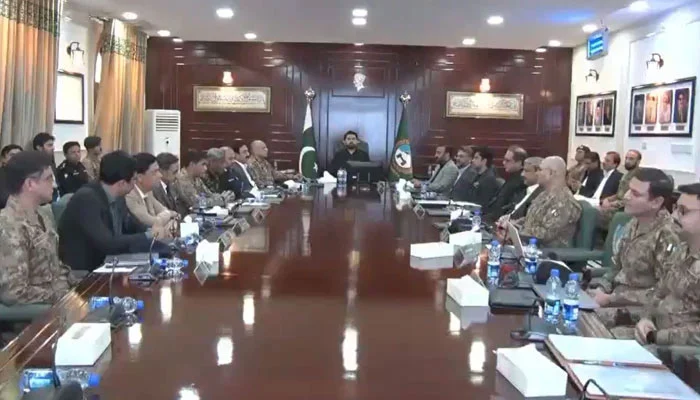
The Khyber Pakhtunkhwa government’s decision to establish a special sub-committee to oversee development and security operations, alongside approving Pakistan Super League (PSL) matches in Peshawar, represents a notable milestone in the province’s evolving security landscape. The move reflects growing institutional confidence in law enforcement capabilities while signalling a broader shift from reactive counterterrorism to governance-driven stabilisation.
Integrated Counterinsurgency Through Institutional Coordination
The formation of a multi-tier oversight body comprising civil, military, and federal stakeholders highlights Pakistan’s increasingly integrated counterinsurgency framework. Historically, militancy in KP flourished due to administrative fragility, economic deprivation, and governance vacuums. By institutionalising monitoring mechanisms for development projects and security reviews, authorities appear to be targeting the structural conditions that have long enabled extremist networks to recruit and operate.
Malakand as a Pilot Governance Model
Particularly significant is the decision to pilot a governance model in the Malakand Division, an area that has experienced prolonged militant activity in the past. If implemented effectively, the model could serve as a template for conflict-sensitive governance across districts such as Khyber, Orakzai, and Kurram. The focus on alternative employment opportunities, income support for displaced populations, and strengthened policing structures indicates a strategic recognition that durable peace cannot be sustained through military measures alone but requires socio-economic rehabilitation and institutional credibility.
Sporting Revival as a Symbol of Normalisation
The approval of PSL matches in Peshawar carries both symbolic and economic importance. Sporting revival has historically served as a marker of post-conflict recovery in multiple regions globally. For KP, hosting PSL fixtures is likely to enhance public morale, stimulate commercial activity, and project the province as gradually emerging from the shadow of militancy. The event also reinforces the narrative of normalisation, particularly for youth populations that remain vulnerable to radicalisation in fragile environments.
Countering Hybrid and Logistical Militancy Networks
The meeting’s emphasis on stricter action against illegal SIM networks, explosives trafficking, and extortion reflects awareness of the evolving hybrid nature of militancy. Contemporary terrorist groups increasingly rely on logistical networks, financial coercion, and digital communication channels, necessitating multidimensional countermeasures that extend beyond conventional security operations.
Federal-Provincial Synergy and Economic Stabilisation
Equally important is the commitment to enhanced federal-provincial coordination. KP’s security challenges have long been influenced by cross-border militancy and regional instability, requiring sustained national policy alignment. The federal government’s assurance of financial assistance and livelihood support for affected communities demonstrates recognition that security stabilisation must be accompanied by economic resilience to prevent recurring cycles of violence.
Sustainability Challenges and Governance Imperatives
However, the durability of these initiatives will depend on consistent policy implementation, transparency, and inclusive governance practices. KP’s security progress remains susceptible to external shocks and internal administrative challenges. Sustained public trust will require demonstrable improvements in service delivery, employment generation, and institutional accountability.
A Gradual Transition Toward Long-Term Stability
Ultimately, the decisions taken in Peshawar suggest cautious but tangible progress in KP’s transformation from a frontline counterterrorism theatre into a province steadily reclaiming stability and civic confidence. If the proposed governance reforms and security coordination mechanisms are executed effectively, they could mark a pivotal transition toward long-term regional stability and socio-economic revitalisation.