Challenging the Narrative
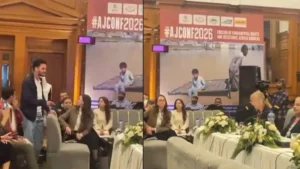
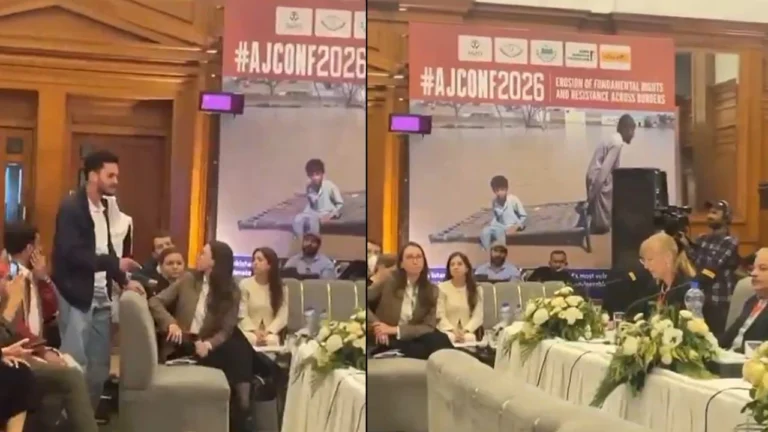
At the Asma Jahangir Conference in Lahore, Progressive Students Collective president Ali Abdullah directly questioned the German ambassador over Berlin’s support for actions in Gaza that have harmed civilians. The exchange highlighted a stark discrepancy in global human rights advocacy: while freedom of expression is often promoted, scrutiny of violations abroad is frequently suppressed or ignored.
Freedom of Expression Beyond Borders
The incident sparked debate among attendees and social media users, emphasizing that the right to question authority should not be limited to domestic institutions. Experts observe that in Pakistan, criticism is usually tolerated when directed at the government or local authorities, but similar scrutiny toward international actors often meets resistance, revealing a selective enforcement of moral and legal norms.
Visual Evidence and Public Discourse
Ali Abdullah’s intervention was supported by video clips highlighting violations in Palestine and Gaza, further amplifying the call for consistent accountability. The conference administration reinforced that participants were entitled to raise any questions freely, underscoring that restricting such discourse undermines the principles of open dialogue and civic engagement.
Global Consequences of Selective Advocacy
The confrontation exposed the uncomfortable truth: selective human rights advocacy diminishes credibility and fuels cynicism. True accountability requires that freedom of expression and moral scrutiny apply universally, regardless of national or geopolitical power. By bringing these issues to the forefront, the incident serves as a reminder that global human rights standards must be consistent, transparent, and impartial.