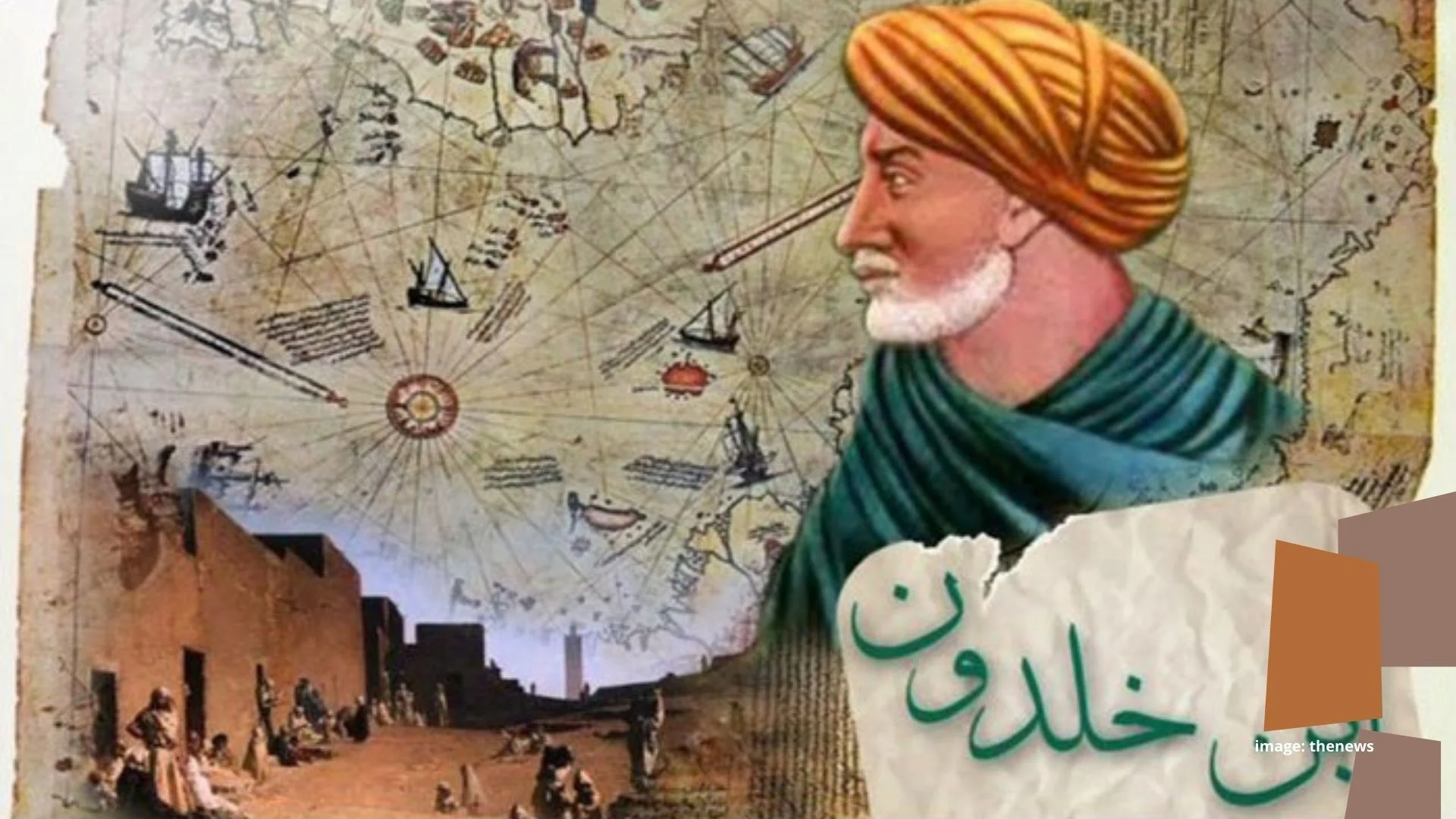
Abū Zayd Walī al-Dīn Abd al-Rahman Ibn Khaldun (1332–1406 CE) stands as one of history’s greatest intellectual pioneers, a polymath whose systematic study of human civilization created the blueprint for sociology and the philosophy of history. Born in Tunis during the tumultuous 14th century, his life as a statesman, judge, and historian was marked by political volatility.
This instability compelled him to seek universal, objective “laws of society,” resulting in his monumental introductory volume, the Muqaddimah. The Muqaddimah established Ilm al-Umran, the Science of Human Civilization, as a rigorous, philosophical discipline, independent of traditional conjecture.
Ibn Khaldun’s Islamic Dedication and Judicial Rigor
The methodological framework underpinning his groundbreaking science was derived directly from his comprehensive Islamic education. Ibn Khaldun memorized the Quran and undertook a deep study of Hadith, Sharia, and Fiqh (jurisprudence). This rigorous training, coupled with his education in philosophy and logic, shaped his analytical mind. This dedication was made manifest in his later life in Cairo, where he served multiple terms as the Maliki Grand Qadi (Judge).
In this high office, Ibn Khaldun attempted to reform the judicial system, demonstrating his commitment to the practical application of Islamic justice, which he viewed as crucial for preventing the social disintegration he theorized. His political philosophy, therefore, was not merely idealistic; it was a pragmatic reflection on state failure rooted in ethical decay. His reliance on induction, a logical process used in Islamic jurisprudence to derive general principles from specific facts, was adapted to his social science, creating a rational framework that complemented, and in some cases supported, the moral demands of Sharia.
The Dynamics of Asabiyyah and Civilizational Collapse
Ibn Khaldun’s greatest service to global thought is his cyclical theory of dynastic rise and fall, which moves historical analysis beyond mere chronicle to political philosophy. Central to this is the concept of Asabiyyah, or social cohesion, the fundamental bond that drives nomadic (Beduin) groups to unite and seize authority from the decadent urban (Hadari) centers. Ibn Khaldun posited that the very luxury and affluence of urban life erode the necessary discipline and collective purpose (Asabiyyah), leading inevitably to individualism and factionalism.
Flawed economic policies cement this decline. Ibn Khaldun is recognized as a forerunner in economics, establishing the labor theory of value and observing that at the end of a dynasty, high taxes lead paradoxically to lower revenue because they destroy the incentive to produce. This deterministic model, where the seeds of a civilization’s downfall are contained within its success, provides the “4th Dimension” framework for understanding the relentless, non-linear pressures of historical causality. The lifecycle of solidarity thus defines the cycle: when Asabiyyah is lost, the society collapses.
A Universal Legacy
Though his seminal work, the Muqaddimah, was completed in 1377, Ibn Khaldun’s profound impact was initially recognized only centuries later in Europe after a full French translation in the 1860s. Today, he is widely regarded as a founding father of sociology, historiography, and economic theory, anticipating the work of Comte, Marx, and Adam Smith.
His theories on social solidarity (Asabiyyah) and cyclical change remain vital analytical instruments for examining modern issues, including the crisis of social solidarity in contemporary Muslim societies and the complex dynamics of globalization. The enduring genius of Ibn Khaldun is that his framework for diagnosing social decay remains eternally relevant: longevity depends not merely on piety or power, but on maintaining the collective cohesion and justice that fuels innovation and sustainable production.
Also Read: Omar al-Mukhtar: The Desert Scholar Who Defied an Empire for Twenty Years