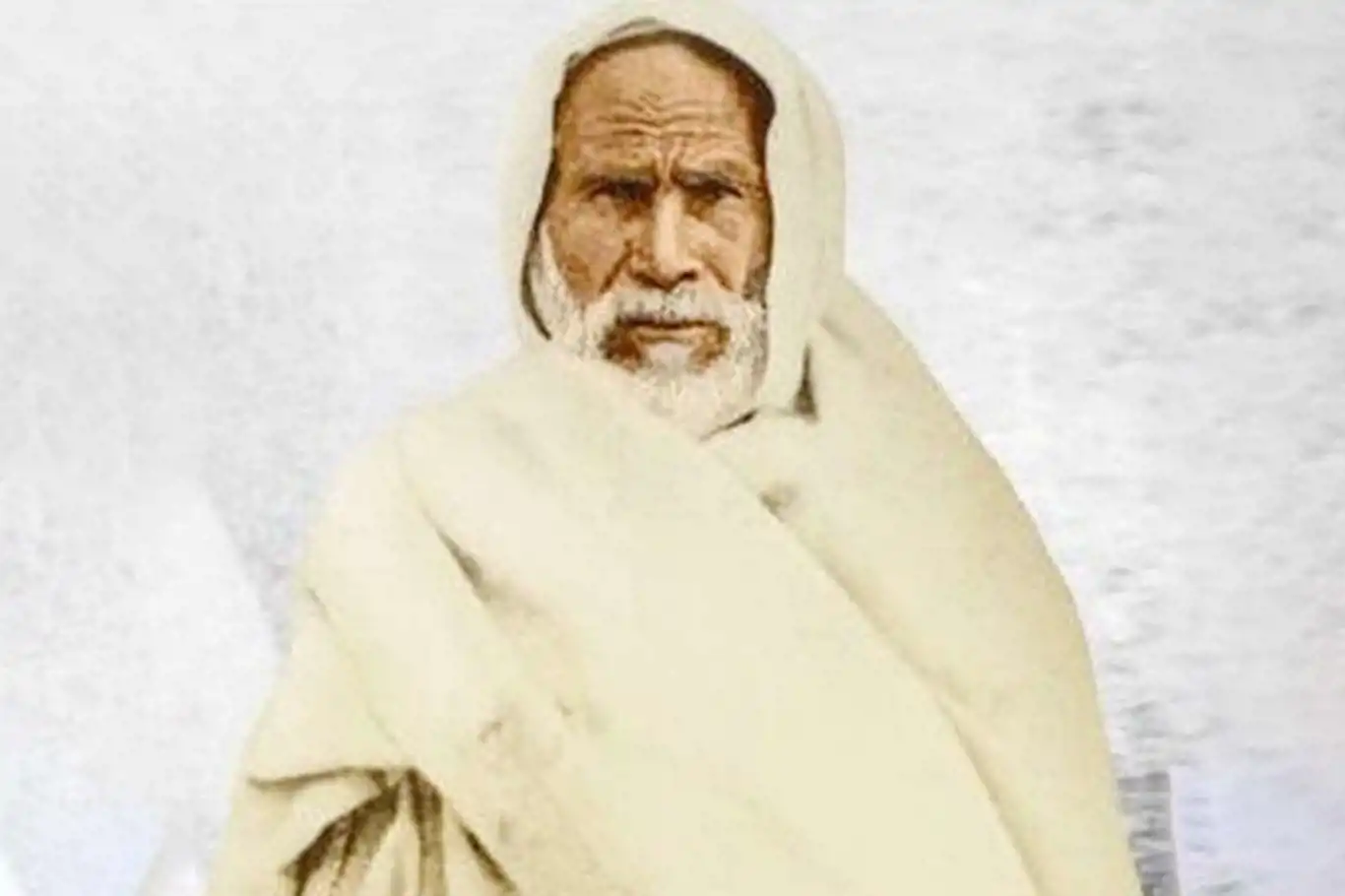
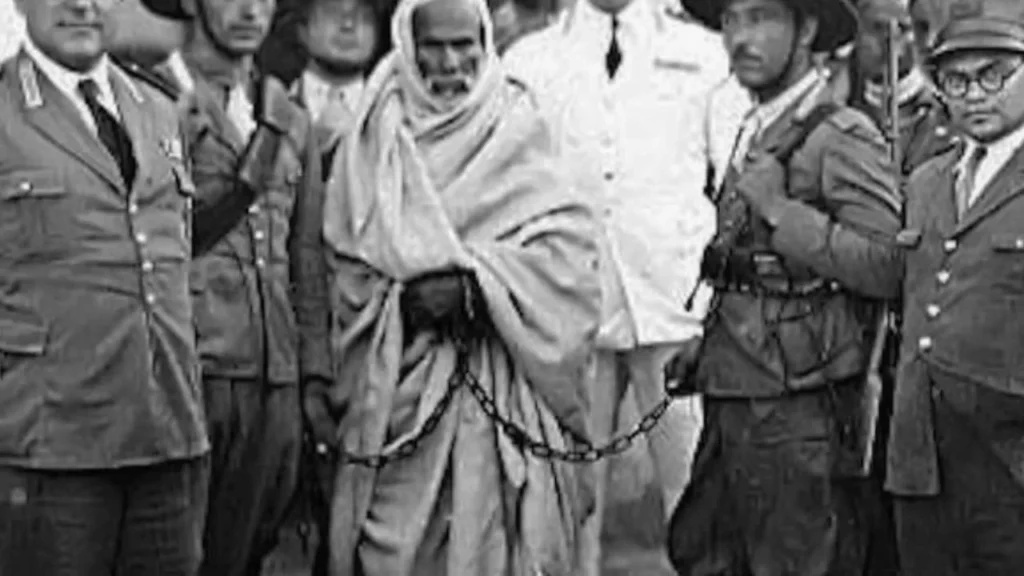
The year was 1931, and a frail seventy-three-year-old man stood manacled before an Italian military tribunal in Benghazi. His white beard reached his chest, his body bore the scars of two decades of desert warfare, yet his eyes burned with unshakeable conviction. When the judge asked if he truly believed he could defeat Italy, Omar al-Mukhtar replied without hesitation: “War is a duty for us and victory comes from God.” This was not the first time the desert scholar had chosen faith over fear, and it would not be the last.
From Quran Teacher to Warrior
Born in 1858 in a small village near Tobruk, Omar al-Mukhtar lost his father as a child and grew up in poverty. Yet poverty could not extinguish his thirst for knowledge. Adopted by a great sheikh, young Omar spent eight rigorous years at the prestigious Senussi Islamic University in Jaghbub, mastering jurisprudence, hadith, and Quranic exegesis. He memorized the entire Quran and developed a spiritual discipline so fierce that he slept only three hours nightly, spending the remaining darkness in prayer and recitation.
By the time Italian forces invaded Libya in 1911, Omar al-Mukhtar had become a respected Quran teacher and imam, known for settling tribal disputes with wisdom and humility. He was fifty-three years old, an age when most men contemplate retirement, not revolution. But when foreign boots trampled his homeland, the peaceful scholar made a choice that would echo through history: he would fight.
The Lion Awakens
Omar al-Mukhtar transformed the scattered Libyan resistance into a formidable guerrilla force. His rallying cry, “We will not surrender; we win or die!”, became the heartbeat of rebellion. For twenty years, he led his mujahideen through the unforgiving deserts of Cyrenaica, executing ambushes with surgical precision, disrupting supply lines, and vanishing into the dunes before Italian forces could respond.
His military genius lay not in numbers but in intimate knowledge of the terrain and unwavering faith. Italian commanders complained bitterly that it was impossible to determine his location. Omar al-Mukhtar knew every desert road from Cyrenaica to Egypt, every medicinal plant, every tribal custom. His forces moved like desert wind, swift, unpredictable, devastating.
Omar al-Mukhtar’s Code of Honor
What set Omar al-Mukhtar apart from other resistance leaders was his refusal to compromise Islamic principles, even in the brutality of war. When his fighters captured Italian soldiers, he protected them and forbade their execution. When an Arab warrior protested that the Italians killed Muslim prisoners, Omar’s response became legendary: “They are not our teachers!” Muslims, he insisted, must maintain higher moral standards regardless of enemy conduct.
The Italians repeatedly attempted to bribe him with money and land. He refused every offer. Even General Rodolfo Graziani, who would ultimately execute him, described Omar as “sharp, cultured, very honest and humble… His only fault was that he hated us so much.”
Empire’s Desperation
Unable to defeat Omar al-Mukhtar militarily, Mussolini’s fascist forces resorted to unspeakable brutality. They herded one hundred thousand Libyans into concentration camps where tens of thousands perished. They dropped poison gas from aircraft, hanged prisoners publicly by the thousands, and threw captives from airplanes. They constructed a massive two-hundred-mile barbed wire fence along the Egyptian border to cut off his supplies. They burned libraries, destroyed wells, and razed entire villages.
Yet through it all, the desert lion fought on. His hair turned white, his body weakened, but his resolve never wavered. For twenty years, he held back one of Europe’s most modern armies with a ragtag force of desert warriors armed with faith and rifles.
The Final Stand
On September 11, 1931, during an ambush near Slonta, Omar al-Mukhtar’s horse fell on him, pinning the elderly warrior beneath. After two decades of impossible resistance, he was finally captured. At his trial, he accepted full responsibility for every operation against Italian forces. When sentenced to death, he calmly recited: “From God we came and to God we must return.”
Four days later, twenty thousand Libyans were forced to witness his execution by hanging at Suluq concentration camp. The Italians hoped his death would break the resistance. They were wrong. His final words proved prophetic: “You will have the next generation to fight, and after the next, the next.”
Legacy Written in Sand and Sky
Today, Omar al-Mukhtar remains Libya’s national hero, his image gracing currency and inspiring generations. During the 2011 uprising, protesters carried his picture alongside their flags. His ninety-year-old son declared: “Ask the youth, they’ll tell you they are all the grandsons of Omar al-Mukhtar.”
The Quran teacher who became a warrior proved that faith, courage, and moral integrity can sustain resistance against impossible odds. His true victory lay not in defeating Italy militarily, but in refusing to compromise his principles until his final breath, a lesson that transcends borders and centuries.