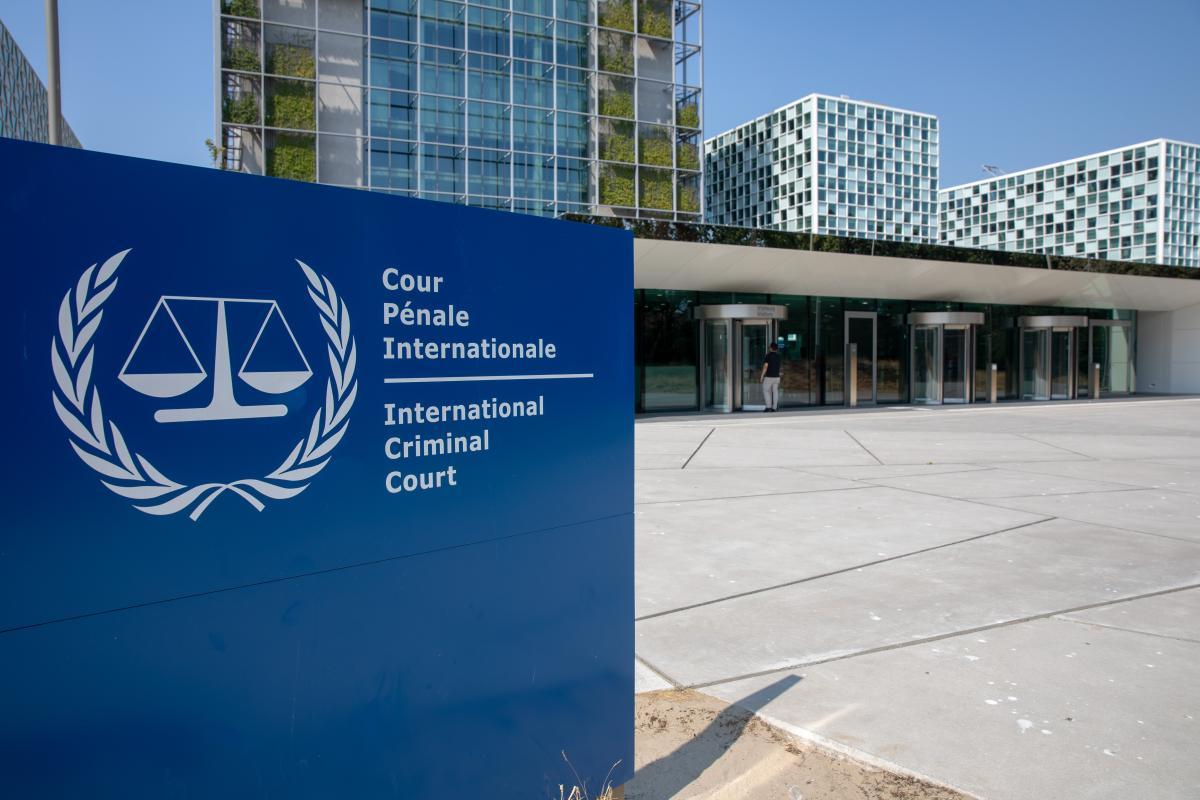
The exclusive investigation by Middle East Eye has revealed that the International Criminal Court issued two additional, previously undisclosed arrest warrants against senior Taliban members in September 2025 expanding the Court’s accountability net beyond the two warrants already made public against Taliban Supreme Leader Hibatullah Akhundzada and Chief Justice Abdul Hakim Haqqani. All four warrants charge the crime against humanity of persecution on gender and political grounds, covering the Taliban’s conduct as Afghanistan’s de facto authority since at least 15 August 2021.
The revelation marks a significant escalation in the international legal case against the Taliban. Where the July 2025 warrants against Akhundzada and Haqqani drew global attention, the two September 2025 warrants were kept confidential specifically to shield them from political interference demonstrate that the ICC’s investigation extends further into the Taliban’s senior leadership than previously known, with new evidence and additional victims not covered by the earlier applications. That the Court moved to expand this case even while anticipating retaliation is itself notable: it signals an institutional commitment to pursuing accountability on its own evidentiary timeline, rather than being deterred by political cost.
This effort has deep roots. The ICC’s Afghanistan investigation dates to 2017, and gained renewed momentum in November 2024 when six states Chile, Costa Rica, Spain, France, Luxembourg, and Mexico jointly referred allegations of crimes against Afghan women and girls since the 2021 takeover, explicitly asking prosecutors to act. Then Prosecutor Karim Khan’s January 2025 warrant applications followed weeks later, culminating in the four-warrant case now confirmed by MEE’s reporting.
The warrants rest on an extensive and independently corroborated evidentiary record. Since 2021, the Taliban have issued more than 100 decrees restricting women’s and girls’ rights UN Women puts the figure at 264 decrees affecting human rights overall, 166 specifically targeting women and girls, with the August 2024 “Law on the Promotion of Virtue and Prevention of Vice” codifying a system requiring full facial covering, barring women from speaking in public, and severely restricting freedom of movement, employment, and access to healthcare. The UN estimates 2.4 million girls remain excluded from secondary education, and 2025 alone saw more public floggings than all previous years of Taliban rule combined.
UN human rights experts and the UN Special Rapporteur on Afghanistan have separately documented enforced disappearances and killings of former government officials, arbitrary detention of women for “moral crimes,” and decrees including a 2026 criminal procedure code allowing violence against a spouse so long as it does not “break bones” that entrench impunity for gender based violence.
In December 2025, the civil society led People’s Tribunal for Women of Afghanistan delivered a symbolic judgment finding Taliban authorities guilty of crimes against humanity, including gender persecution and gender apartheid.
UN Special Rapporteur Richard Bennett has described the situation as “the most extreme and systematic assault on gender equality in the world today.” This is the evidentiary foundation built by UN bodies, independent legal experts, and civil society over several years into which the ICC’s four warrants now fit.
The case has advanced despite considerable headwinds. Beginning in February 2025, the United States imposed sanctions on ICC officials connected to the Afghanistan and Palestine investigations, starting with Karim Khan and extending to eight judges, including members of the 2020 Appeals Chamber that authorized the Afghanistan probe. The Court officials proceeded to secure two further warrants in September 2025 after sanctions had already begun underscores the resilience of the accountability process even under direct political pressure from a major power.
More recently, ICC judges have moved to split the Taliban gender persecution case into a standalone investigation, separate from the broader Afghanistan file that also covers alleged conduct by US and allied forces. The institutional reasoning behind this separation, the practical effect is to sharpen the Court’s focus specifically on Taliban accountability consolidating rather than diluting the case against the four named individuals.
This development is a welcome affirmation that international justice mechanisms, however slow and however politically contested, remain capable of building substantive cases against those responsible for systematic persecution including of a de facto government that has otherwise faced limited formal accountability since 2021.
The existence of four warrants, not two, demonstrates a more extensive evidentiary record against the Taliban leadership than was previously public, and reflects sustained engagement by ICC prosecutors, the state parties that referred these allegations, and the UN human rights architecture that has documented these abuses year after year.
The path from arrest warrant to arrest, let alone conviction, remains long the ICC has no independent enforcement power and depends on state cooperation, and UN experts have separately warned against normalizing diplomatic relations with the Taliban absent measurable human rights progress.
The expansion and consolidation of this case marks meaningful progress in the broader effort to hold the Taliban accountable under international law, and continued international backing for the Court’s Afghanistan investigation free from politically motivated obstruction remains essential to sustain that progress.