Examining Provincial Representation Through Empirical Evidence
The debate over provincial representation in Pakistan’s armed forces has resurfaced in public discourse, largely driven by political narratives that allege structural imbalance. In this context, the recent data-based clarification by Major General (Retd.) Zahid Mahmood provides an important corrective, grounding the discussion in empirical evidence rather than rhetoric.
Representation in Proportion to Population
According to the figures presented, provincial representation in the Pakistan Army broadly aligns with national population proportions. Punjab, which constitutes approximately 51-52 percent of Pakistan’s population, holds a comparable share within the armed forces. Sindh, with a population share of roughly 20–21 percent, accounts for around 17 percent of military representation, reflecting a modest gap but not a structural exclusion. Balochistan, often cited as the most underrepresented province, comprises about 5-6 percent of the national population, and its representation in the armed forces reportedly remains close to five percent.
These figures challenge claims that the armed forces are demographically dominated in a manner that marginalizes smaller provinces. While minor disparities exist, particularly in Sindh’s case, such differences must be examined in the context of recruitment patterns, educational pipelines, regional socio-economic factors, and voluntary enlistment trends rather than attributed solely to institutional bias.
Leadership Beyond Punjab
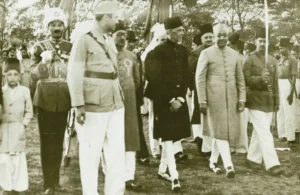
Equally significant is the historical record of leadership within Pakistan’s military. Officers from Sindh, Balochistan, Khyber Pakhtunkhwa, and minority communities have occupied senior command positions. The example of General Muhammad Musa Khan, a former Chief of Army Staff from Balochistan’s Hazara community, underscores that career progression within the military has not been confined to a single province or ethnic group.
Bridging Perception Gaps
However, acknowledging statistical proportionality does not eliminate the need for continued institutional introspection. Perceptions of underrepresentation, particularly in provinces facing chronic insecurity or political alienation, carry real consequences for civil-military relations and national cohesion. Data transparency, region-specific recruitment initiatives, and targeted investment in education and cadet training facilities in underserved areas remain essential to strengthening trust.
Ultimately, the controversy highlights a broader issue: the politicization of representation narratives in Pakistan’s security discourse. Sustainable national integration requires debates to be anchored in verifiable data rather than emotive assertions. As the evidence suggests, provincial representation in the armed forces is closer to demographic parity than commonly portrayed, but bridging the gap between perception and reality remains a critical policy challenge.