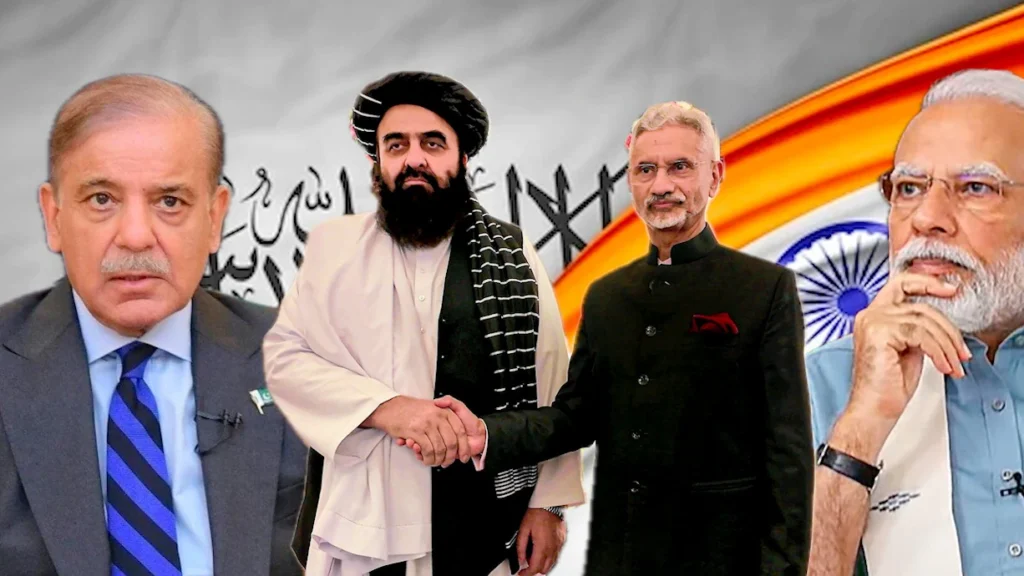
The diplomatic theater in New Delhi is witnessing a stunning political paradox. The recent high-level visits by the Taliban regime’s ministers, including Commerce Minister Nooruddin Azizi and Foreign Minister Amir Khan Muttaqi, signal a desperate, strategic pivot that has brought ideological adversaries to the negotiating table. With India still officially withholding formal recognition, the unprecedented outreach from Kabul is not a gesture of goodwill, but a calculated survival strategy: the Taliban’s New Delhi Gamble.
The core of this engagement is purely transactional. The regime, whose domestic policies remain uncompromisingly rooted in a strict interpretation of Sharia law, is demonstrating absolute flexibility in its foreign dealings. They are seeking immediate material gain, investment, trade corridors, and aid, at the expense of decades of anti-India rhetoric. This frantic search for an economic lifeline is the defining characteristic of the Taliban’s New Delhi Gamble.
From ‘Kafir’ to Client: The Ideological Pivot
The irony of the current situation is profound. For years, the Taliban regime and its affiliates referred to India as a “kafir” (infidel) Hindu state, openly praising “jihad in Kashmir.” That language has vanished. Today, the regime is actively wooing New Delhi, requesting significant Indian investment in their vast mineral reserves, seeking cooperation on hydroelectric projects like the Indian-built Salma Dam, and demanding access to essential goods like wheat and medicines.
Furthermore, the diplomatic spectacle highlights the regime’s compartmentalization of faith and finance. The same movement responsible for the destruction of the ancient Buddhist Bamiyan statues is now courting a nation that prides itself on protecting and celebrating shared ancient heritage. This ideological self-betrayal demonstrates that for the Taliban, economic survival has become the only non-negotiable principle, solidifying the highly pragmatic nature of the Taliban’s New Delhi Gamble.
The Logic of the Taliban’s New Delhi Gamble
The primary impetus for this dramatic pivot is the escalating geopolitical friction with Pakistan. Border closures and deteriorating ties have crippled Afghanistan’s vital trade routes, forcing the Taliban to seek an alternative and a strategic counterweight. India, with its robust economy and access to the Iranian Chabahar Port, offers exactly the diversification Kabul needs to avoid total economic strangulation.
In essence, the Taliban is trading ideological baggage for geopolitical leverage. They are abandoning their Muslim neighbor in favor of a Hindu-majority power to secure the access and cash necessary to maintain some semblance of stability. Having once branded the previous Afghan government as an “Indian puppet regime,” the Taliban is now embracing economic dependency on the very power they once sought to eliminate from Afghanistan. This desperate pursuit of a safety net is the real logic driving the Taliban’s New Delhi Gamble.
India’s Calculated Risk
New Delhi’s engagement, while pragmatic, is a carefully measured risk. By restoring its diplomatic presence and facilitating trade, India gains significant leverage and ensures its security concerns are addressed directly. In exchange for economic opportunity, India has secured a crucial assurance: Afghan territory must not be used as a staging ground for any hostile activity against India, effectively neutralizing the previous rhetorical support for Kashmir-based militant groups.
India’s strategy is clear: keep the diplomatic door ajar to influence Kabul’s conduct, ensure regional stability, and gain a foothold in Central Asia, all without conceding formal recognition. For India, the engagement is about counter-terrorism and counter-balance; for the Taliban, it is about cash and connectivity. This fundamental mismatch of goals means the relationship remains a tenuous marriage of convenience, not conviction. It underscores the immense stakes for both sides in the Taliban’s New Delhi Gamble.
The Taliban’s New Delhi Gamble is a powerful illustration of how raw geopolitical necessity can override decades of entrenched religious and political hostility. It is an act of desperation framed as diplomacy, forcing the regime to choose markets over mantras. While the Taliban seeks to “milk” India for its economic might, India is simultaneously leveraging the Taliban’s isolation for its own strategic and security interests. In this high-stakes game, both parties are holding their breath, knowing that this fragile arrangement is built on sand, not solidarity.