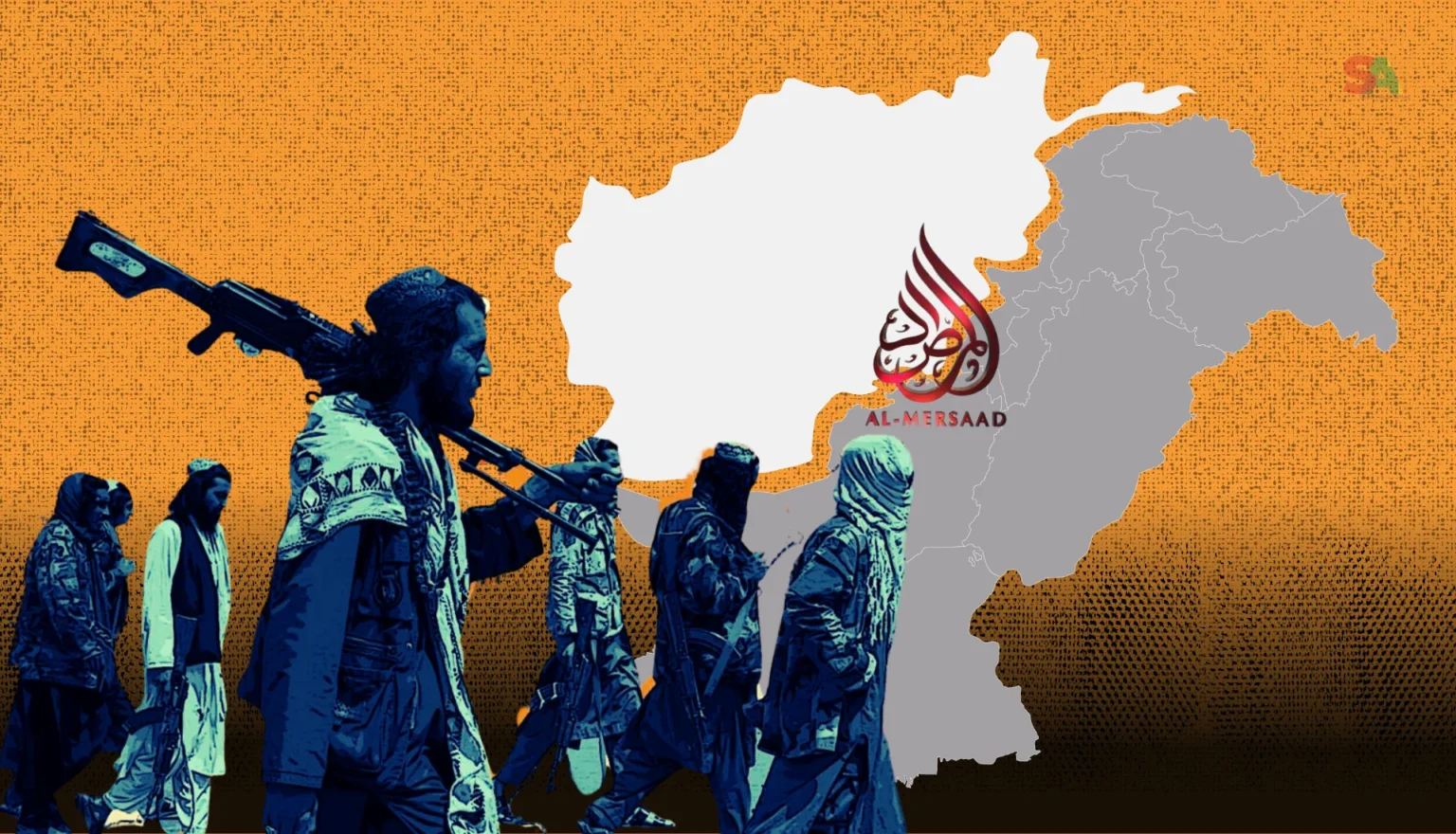
There are moments in the study of information warfare when a single platform reveals so much about the ambitions of its architects that it ceases to be a subject of media criticism and becomes a window into the strategic mind of a hostile state apparatus. Al-Mirsad is precisely such a platform. Launched in 2023 and operating as the intelligence-aligned media arm of the Afghan Taliban, it represents the most sophisticated, coordinated and ideologically lethal propaganda instrument yet deployed against Pakistan’s institutional integrity, social cohesion and international standing. A comprehensive study by the Centre for Security, Strategy and Policy Research at the University of Lahore has exposed its anatomy with clinical precision, and the picture demands the full attention of every serious analyst of South Asian security.
A Propaganda Apparatus Masquerading as Media
The instinct to classify Al-Mirsad as a partisan outlet vastly underestimates what it actually is. This is a structured propaganda weapon, engineered with newsroom discipline, multilingual reach and centralised editorial control that speaks directly to state direction rather than organic ideological enterprise. Its funding flows through the Taliban’s General Directorate of Intelligence media wing. Its senior managers carry demonstrable linkages to Sirajuddin Haqqani, one of the most consequential figures within Taliban governance. Taliban spokesperson Zabihullah Mujahid regularly amplifies its content across official channels, conclusively removing every ambiguity about the platform’s institutional character.
What elevates Al-Mirsad above all earlier Taliban propaganda is its extraordinary operational architecture. Content flows in six languages simultaneously: English, Urdu, Pashto, Arabic, Dari and Hindi. Distribution runs across Telegram, X, WhatsApp, YouTube and a network of archiving platforms maintained specifically to defeat bans and ensure content survivability. The inclusion of Hindi-language material is analytically telling, signalling a calculated effort to penetrate Indian audiences and align with hostile narratives extending well beyond Afghanistan’s borders. The Committee to Protect Journalists has itself confirmed the GDI connection, validating the broader research findings. When an organisation built to advocate for press freedom identifies a platform as a structural component of authoritarian intelligence operations, the evidence crosses every threshold of credibility.
Faith as a Weapon and Religion as Raw Material
The most corrosive dimension of Al-Mirsad’s operation is its systematic weaponisation of Islam. By distorting Islamic jurisprudence, reframing militant violence as sacred duty and branding Pakistan’s counterterrorism campaigns as participation in a crusader alliance against Muslims, the platform transforms religion into an instrument of radicalisation with devastating efficiency. This is propaganda at its most dangerous frequency, operating precisely where emotion overrides reason and where faith becomes the delivery mechanism for incitement.
The platform constructs a binary so false it would collapse under the slightest scrutiny, portraying Pakistan as anti-Islamic and morally illegitimate while elevating the Taliban as righteous guardians of an Islamic civilizational project. That the Taliban regime has systematically excluded women from education, dismantled civil freedoms and prosecuted a campaign of internal repression with few modern parallels receives zero attention in Al-Mirsad’s editorial architecture. The silence is deliberate, and the deliberateness is itself structured disinformation. The platform has even circulated claims that Pakistan desecrated the Holy Quran, a fabrication calibrated exclusively for emotional detonation among audiences with limited access to independent verification. Publishing an accusation so extreme and baseless reveals a willingness to weaponize the sacred without boundary or restraint.
Fracturing Pakistan from the Inside Out
Al-Mirsad’s targeting strategy extends beyond religious manipulation into the granular exploitation of Pakistan’s internal fault lines. Content deliberately frames the Pakistani state as an occupying power in Pashtun and Baloch regions, aligning its messaging with separatist movements that have long sought to fracture Pakistan’s territorial integrity. The strategic logic is transparent: convert legitimate community grievances into active hostility toward state institutions and transform perception into mobilisation.
The platform’s exploitation of Palestinian suffering in Gaza is deeply cynical. By embedding anti-Pakistan narratives within Islamic solidarity discourse, Al-Mirsad captures the emotional attention of younger, digitally active audiences who may lack the contextual literacy to detect manipulation beneath seemingly righteous content. Grief over genuine injustice is weaponised to generate hatred toward a state that is itself among the world’s most significant victims of organised terrorism. Beyond domestic targeting, content systematically portrays Pakistan as an unreliable and institutionally fragile partner, with particular focus on the China-Pakistan Economic Corridor. Historical figures such as Ahmad Shah Abdali are selectively invoked to construct a false civilizational continuity between medieval Islamic conquest and the contemporary Taliban project, lending cultural legitimacy to a twenty-first-century militant enterprise with a documented record of brutality.
The Digital Machine Behind the Deception
Al-Mirsad’s operational model bears every hallmark of a professionally organised state information operation. The platform maintains newsroom-style editorial coordination, enforcing uniform tone, ideological consistency and messaging discipline across all platforms and languages simultaneously. The volume and velocity of its output strongly suggest AI-assisted content generation, situating this platform at the cutting edge of hybrid warfare where artificial intelligence amplifies disinformation at a scale previously unreachable without enormous human infrastructure.
The fabrications it circulates achieve the consistency of fact through sheer repetition. Al-Mirsad has accused Pakistan of supporting the Islamic State Khorasan Province while suppressing evidence of ISKP’s expansion within Afghanistan under Taliban governance. It has promoted conspiracy narratives involving purported Christian state agendas embedded within Pakistan’s government. These fabrications are calibrated to generate fear rather than critical analysis. The platform’s archiving strategy further ensures content remains accessible even after platform-level bans, reflecting institutional planning that distinguishes state-directed operations from grassroots movements entirely.
Pakistan at the Epicentre of Hybrid Warfare
Al-Mirsad is the most evolved manifestation of a hostile propaganda ecosystem intensifying steadily since the Taliban’s return to power. At its structural core, it exposes what the Taliban actually intend toward Pakistan: perpetual destabilisation, sustained narrative aggression and the systematic erosion of institutional legitimacy. Its architecture demonstrates how state-aligned propaganda operations can leverage digital platforms, AI-assisted production and emotional manipulation to conduct information warfare at scale with minimal physical infrastructure, representing a template that adversarial actors globally are actively observing and adapting.
For Pakistan, the imperative is clarity before everything else. Recognising Al-Mirsad as a component of the Taliban’s intelligence apparatus rather than an independent media outlet is the foundational analytical step. From that recognition flows a policy architecture: exposing funding sources and structural linkages to domestic and international audiences with the same rigour that serious research has brought to its study, and building strategic communication infrastructure genuinely commensurate with the threat. Al-Mirsad is a weapon built with precision, maintained with discipline and deployed with strategic intent. Every meaningful response begins with the willingness to say so plainly, loudly and without concession to the ambiguities that hostile actors depend upon to operate in plain sight.