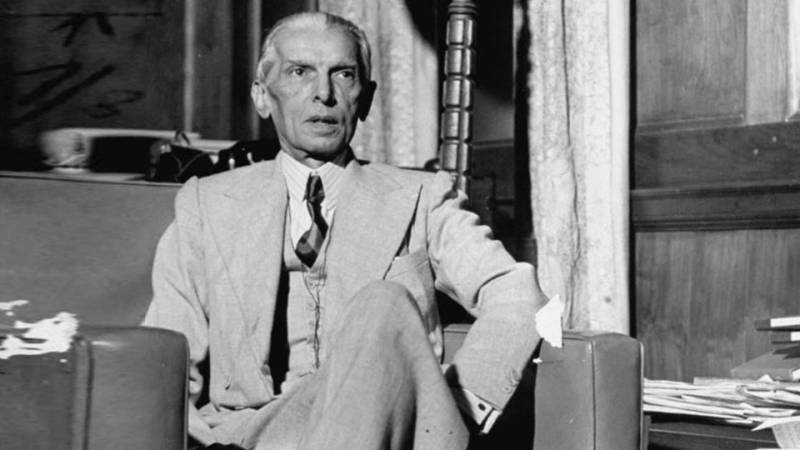
The historical trajectory of the Pakistan Movement is inextricably linked to the symbiotic relationship between Muhammad Ali Jinnah and the youth of the Indian subcontinent. Jinnah, often characterized as a cold, legalistic, and constitutionalist leader, found his most vital political and intellectual “arsenal” among the students of institutions like Aligarh Muslim University, Islamia College Peshawar, and the various branches of the All India Muslim Students Federation. This mobilization was not merely a matter of political expediency but a profound pedagogical project aimed at forging a new national character defined by discipline, technical proficiency, and a modern interpretation of Islamic social justice. The youth served as the foot soldiers of the movement, bridging the gap between the elite leadership of the All-India Muslim League and the masses, particularly during the defining elections of 1945-46. Post-independence, Jinnah’s directives underwent a fundamental shift, moving from the “militant spirit” of agitation to a “constructive spirit” centered on education, character building, and technical training as the foundations of statehood.
The Youth as the Vanguard of Muslim Nationhood
For Jinnah, students were far more than mere supporters they were the ideological and operational vanguard of the Two-Nation Theory. Recognizing that the creation of a separate Muslim homeland required both intellectual clarity and grassroots mobilization, Jinnah relied on the energy, discipline, and vision of the younger generation to translate abstract principles of Muslim distinctiveness into concrete political action.
Institutions as Catalysts for National Consciousness
Aligarh Muslim University, which Jinnah famously described as the “arsenal of Muslim India,” became the intellectual heart of this endeavor. Here, students were encouraged to internalize the principles of the Two-Nation Theory and to extend their knowledge to rural communities, bridging the gap between elite political thought and popular understanding. Similarly, institutions such as Islamia College Peshawar in the North-West Frontier Province replicated this model, producing politically conscious youth who actively participated in shaping the movement. Through these centers, Jinnah’s engagement was not passive mentorship but a deliberate effort to construct a generation capable of sustaining the vision of an independent Muslim state.
*Gender and the Mobilization of Young Women*
Jinnah’s approach to youth mobilization was inclusive, extending to young women who he considered a “third power,” surpassing the sword and the pen in shaping national destiny. Under the guidance of Fatima Jinnah, organizations such as the Muslim Girls’ Student Federation mobilized female students, ensuring that the struggle for Pakistan incorporated the intellectual and moral contributions of both genders. Jinnah’s insistence on women’s active participation reflected his broader vision that the creation and consolidation of a Muslim nation required the awakening of all its members, culturally, politically, and socially.
The 1945-46 Elections: Translating Ideology into Action
The critical elections of 1945-46 served as a practical test of youth mobilization. Student volunteers acted as the bridge between the League’s constitutional arguments and the daily concerns of the Muslim masses. Traversing thousands of miles, conducting village gatherings, and disseminating pamphlets that simplified the Two-Nation Theory, students transformed an abstract ideology into a politically effective narrative. Their work demonstrated Jinnah’s foresight: the youth were not only interpreters of ideology but active agents of historical change.
From Political Agitation to Educational Reform
Following the creation of Pakistan, Jinnah shifted his focus from political activism to education and technical training, understanding that the survival of the new state depended upon cultivating competence alongside ideological awareness. He emphasized STEM, commerce, and professional education to build a workforce capable of managing the country’s resources. Even in this phase, the Two-Nation Theory remained central: the distinctiveness of Muslim identity had to be preserved and strengthened through knowledge, technical skill, and moral integrity.
Unity, Faith, and Discipline: Principles for Nation-Building
The triad of Unity, Faith, and Discipline, repeatedly articulated by Jinnah, functioned as both moral compass and practical toolkit for youth engagement. Unity transcended ethnic and regional divisions, Faith fostered resilience in the face of adversity, and Discipline ensured organized action and personal responsibility. Through these principles, Jinnah linked ideological commitment to tangible practices, preparing the youth to uphold the nascent state against internal and external challenges.
Conclusion: Youth as Custodians of the Two-Nation Vision
Jinnah’s engagement with the youth illustrates that the realization of the Two-Nation Theory depended not merely on political strategy but on generational empowerment. By transforming students into informed, disciplined, and morally grounded advocates of Pakistan, he ensured that the principles of Muslim nationhood were internalized and propagated. In Jinnah’s vision, the youth were simultaneously the conscience and the custodians of the nation a generation entrusted with both understanding the theoretical foundations of the Two-Nation Theory and translating them into the lived reality of a sovereign state.