Skip to content
Today, December 9, 2025, the international community observes the International Day of Commemoration and Dignity of the Victims of the Crime of Genocide. This day honors the adoption of the 1948 Genocide Convention. It reaffirms the global pledge of ‘Never Again’. Yet this year, a profound failure of the international system overshadows the observance. The intersection of World Genocide Day and the Gaza Crisis exposes the inability of institutions to halt ongoing atrocities. It is making the 2025 theme “Holocaust remembrance and education for dignity and human rights”. A stark counterpoint to the reality on the ground in Palestine.
The Forensic Reality of Erasure
The statistics are staggering. As of October 2025, verified data shows that over 67,000 Palestinians have been killed. Nearly 170,000 were injured, more than 10% of Gaza’s pre-war population. The conflict has forcibly displaced over 90% of the population into a shrinking humanitarian zone devoid of basic infrastructure.
Famine adds a silent, deadly layer. In August 2025, the Integrated Food Security Phase Classification (IPC) confirmed Famine (Phase 5) in Gaza. This is a man-made disaster, the result of aid weaponization and systematic blockades. Over half a million people in northern Gaza face catastrophic hunger levels. On World Genocide Day, this is more than a political debate; it is a humanitarian emergency indicting the global community for its inaction.
World Genocide Day and Gaza Crisis: Justice Delayed and Denied
Legal mechanisms intended to prevent such crimes have been paralyzed. In November 2024, ICC issued arrest warrants for Israeli Prime Minister Benjamin Netanyahu and former Defense Minister Yoav Gallant. Yet enforcement remains nonexistent. Even after the ICC rejected Israel’s second appeal in October 2025, the accused remain free, shielded by geopolitical influence.
The International Court of Justice (ICJ) proceedings have similarly stalled. In October 2025, the Court granted Israel a second extension to submit its counter-memorial, pushing the deadline to March 12, 2026. Experts warn that these delays allow Israel to establish irreversible facts on the ground. The World Genocide Day and Gaza Crisis, therefore, expose a critical “justice gap”. The machinery of law moves far too slowly to protect those whom society created it to safeguard.
A Collective Crime and Domicide
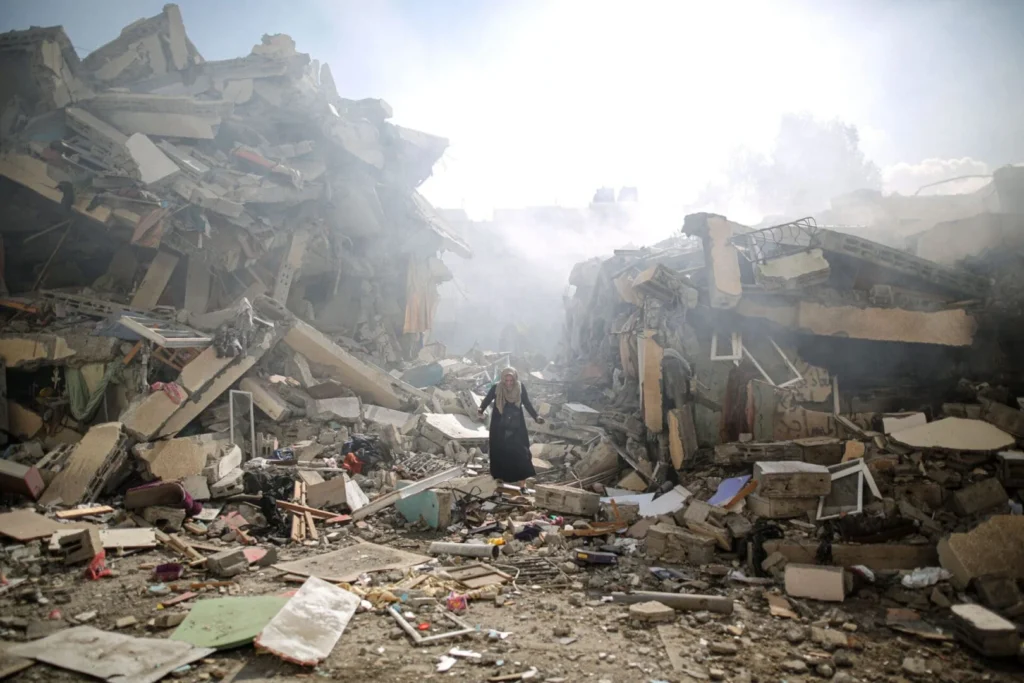
The UN Special Rapporteur’s October 2025 report, “Gaza Genocide: A Collective Crime,” reframes the situation as systemic. It argues that Israel is not acting alone; rather, a network of “Third States” supports it by providing military, economic, and diplomatic cover. UNOSAT satellite assessments reveal that attacks have damaged or destroyed 81% of structures in Gaza and annihilated 98% of the tree cropland. This domicide, the deliberate destruction of homes, signals intent to render Gaza uninhabitable, erasing the people’s past, present, and future.
Global Mobilization: The Streets vs. The State
In response to this paralysis, civil society has mobilized globally. Today, December 9, 2025, marks a historic day of action. Organizers have planned a ‘Vigil for Palestine’ at the White House in Washington, D.C., while crowds stage massive rallies in London and other cities, echoing the 300,000-strong protest in August. Activists are demanding that “Never Again” become more than a slogan, calling for arms embargoes, recognition of the State of Palestine, and immediate humanitarian intervention.
Conclusion
December 9, 2025, is a reckoning. World Genocide Day, meant to commemorate past atrocities, now confronts a present one. The Gaza Crisis exposes the failure of international law, the paralysis of state actors, and the moral risk of passive remembrance. Unless the world acts decisively, the legacy of this day will be a stain on human conscience a testament to the collapse of the promise of “Never Again.”