The geopolitical landscape of April 2026 stands defined by what scholars increasingly describe as the Islamabad Paradigm, a doctrine of calibrated mediation forged in the crucible of escalating great-power confrontation. Amid a six-week kinetic conflict that reshaped West Asian stability following the seismic events of late February, Pakistan elevated its capital into a sanctuary of dialogue, hosting the first sustained high-level engagement between Washington and Tehran since the late twentieth century. This transformation represented far more than a diplomatic event; it embodied a structural recalibration of middle-power agency within an increasingly multipolar order.
At the heart of this paradigm lies the principle of controlled strategic mediation, where a state leverages geography, credibility, and institutional coherence to convert imminent escalation into structured engagement. Islamabad’s orchestration of the 21-hour summit functioned as a calculated pause in a trajectory otherwise leading toward systemic rupture. The city emerged as a stabilizing fulcrum, absorbing geopolitical shock while facilitating communication between adversaries entrenched in existential suspicion.
The significance of this moment extends beyond the immediate ceasefire. It signals the maturation of Pakistan’s foreign policy from reactive alignment toward proactive orchestration. Through disciplined narrative management and synchronized statecraft, Islamabad repositioned itself from a peripheral observer into a central architect of crisis containment. The “small miracle” of sustained dialogue amid heightened hostility illustrates a broader transformation in global diplomacy, where access and trust supersede traditional metrics of power.
The Crucible of Necessity and the Logic of Convergence
Pakistan’s intervention emerged from a convergence of necessity and strategic foresight. Sharing a sensitive frontier with Iran, Islamabad faced the prospect of regional destabilization manifesting through refugee influxes, insurgent spillovers, and economic dislocation. This geographic reality, coupled with deep interdependence across energy and trade corridors, rendered passive observation an untenable course. Engagement became a strategic imperative aimed at preserving internal stability while contributing to regional equilibrium.
This imperative aligned with Pakistan’s unique dual-track credibility. Decades of security cooperation with Washington coexisted alongside a complex yet enduring relationship with Tehran, enabling Islamabad to function as an “honest broker” capable of bridging entrenched divides. This rare positioning facilitated the reactivation of dormant communication channels, transforming silence into structured negotiation.
Simultaneously, broader geopolitical currents amplified Islamabad’s relevance. Beijing’s strategic calculus required a stabilizing intermediary capable of safeguarding economic interests tied to regional energy flows while minimizing direct exposure to volatility. Pakistan fulfilled this role as a diplomatic buffer, translating external frameworks into actionable dialogue. The convergence of American urgency, Iranian resilience, and Chinese strategic caution elevated the Islamabad summit into a global imperative rather than a regional initiative.
Through this synthesis of pressures and opportunities, Pakistan crafted an environment conducive to engagement. The capital’s transformation into a neutral enclave symbolized a deeper institutional readiness, reflecting an evolving doctrine where mediation serves as both a defensive necessity and an instrument of strategic ascendance.
Military Diplomacy and the Architecture of the Marathon Talks
The operational success of the Islamabad summit rested upon a sophisticated interplay between military assurance and civilian negotiation. In the weeks preceding the April engagement, high-level military channels established a framework of trust essential for initiating dialogue. Security guarantees provided to visiting delegations ensured an environment insulated from external disruptions, forming the bedrock upon which diplomatic efforts could proceed.
This alignment between institutional pillars represented a refined model of governance synergy. Civilian leadership translated strategic assurances into diplomatic leverage, enabling mediators to navigate complex demands with credibility and precision. The resulting architecture facilitated a transition from indirect proximity exchanges toward direct engagement, marking a critical evolution in the negotiation process.
Within the confines of the marathon session, Pakistani mediators performed a dual function: interpreters of language and translators of intent. Through continuous shuttle diplomacy, contentious positions underwent reframing into negotiable constructs. This process demanded acute sensitivity to ideological nuance, as each delegation articulated positions rooted in sovereignty, security, and strategic identity.
The American delegation emphasized denuclearization and maritime openness, reflecting broader concerns regarding regional stability and global economic continuity. The Iranian side articulated demands centered on sovereignty, economic restoration, and strategic autonomy. Amid these divergent priorities, Pakistani facilitation preserved momentum, ensuring that dialogue persisted even during moments of heightened tension.
This sustained engagement underscored the centrality of military diplomacy as an enabling force within modern statecraft. By integrating security assurance with diplomatic agility, Islamabad crafted a resilient negotiation environment capable of withstanding the pressures inherent in high-stakes engagement.
Structural Fault Lines and the Reimagining of Regional Order
Despite the unprecedented success in convening dialogue, the Islamabad process illuminated enduring structural fault lines. The status of the Strait of Hormuz emerged as a central axis of contention, embodying the intersection of sovereignty, economic leverage, and global interdependence. Iranian assertions of control reflected a strategic calculus rooted in deterrence and survival, while American emphasis on navigational freedom underscored the imperatives of global commerce and security architecture.
Parallel to this maritime dimension, the question of nuclear capability persisted as a defining challenge. Competing interpretations of technological development, national dignity, and security equilibrium created a complex landscape resistant to immediate resolution. These dynamics highlighted the inherent limitations of mediation, where facilitation enables dialogue yet ultimate convergence depends upon the strategic recalibrations of the principal actors.
Amid these challenges, Islamabad introduced innovative frameworks aimed at bridging divides. Proposals such as joint maritime oversight mechanisms signaled a shift toward pragmatic coexistence, emphasizing shared responsibility over unilateral control. Although a comprehensive agreement remained beyond immediate reach, these initiatives contributed to a gradual reorientation of discourse toward collaborative solutions.
A notable byproduct of the summit involved the emergence of a broader regional alignment encompassing key middle powers. This constellation reflects a growing recognition that regional stakeholders possess both the capacity and the incentive to shape security outcomes. Pakistan’s role in convening such actors alongside global powers signifies an expansion of diplomatic agency, reinforcing the relevance of inclusive frameworks in addressing complex crises.
Sustained Engagement and the Strategic Logic of Mediation in the Islamabad Process
Contemporary insights emerging from Islamabad’s policy and strategic circles underscore a foundational principle of modern diplomacy: enduring conflict resolution unfolds through sustained engagement rather than rapid breakthroughs. While the structural divergence between the United States and Iran remains pronounced, the most consequential achievement of Pakistan’s intervention lies in the formal restoration of dialogue that had collapsed on February 28. Historical precedents in international negotiations demonstrate that such high-stakes agreements evolve incrementally over extended periods, often requiring years of calibrated interaction rather than immediate settlements. Within this context, Pakistan’s role assumes heightened significance, as it intervened at a moment of acute global necessity, facilitating a cessation of hostilities and reintroducing a measure of rationality into an otherwise volatile strategic environment. By successfully halting an escalating conflict and creating space for diplomatic engagement, Islamabad has garnered substantial international recognition as an effective mediator committed to the principle that durable peace is inherently rooted in dialogue. The continuation of the ceasefire, with a limited temporal window remaining, reinforces a cautious yet tangible optimism that negotiated outcomes may ultimately supersede coercive instruments of power. Statements from senior American leadership indicating that a comprehensive proposal remains under consideration further suggest that the process, while incomplete, retains forward momentum. Crucially, the dynamics of mediation delineate a clear boundary between facilitation and resolution; the mediator’s responsibility resides in convening stakeholders, structuring dialogue, and sustaining communication channels, whereas the realization of a definitive settlement depends upon the political will and strategic recalibration of the principal actors themselves. In this regard, Pakistan’s success in bringing the United States and Iran to the negotiating table constitutes a pivotal diplomatic accomplishment, yet the trajectory toward a permanent resolution now rests with the respective parties, whose willingness to transform provisional engagement into enduring agreement will ultimately determine the long-term stability of the region.
Legacy and the Ascendance of Controlled Strategic Mediation
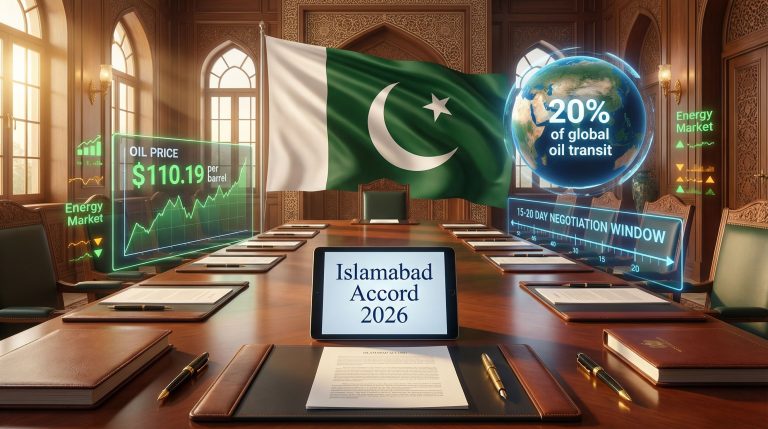
The enduring legacy of the Islamabad talks resides in their demonstration of possibility amid adversity. While a definitive accord remained pending, the preservation of dialogue represented a critical achievement, sustaining a ceasefire and preventing escalation toward systemic disruption. Markets and political actors alike responded to this fragile equilibrium, acknowledging the significance of continued engagement.
At a structural level, the Islamabad Paradigm establishes a replicable model for crisis management in the contemporary era. By prioritizing access, neutrality, and institutional coordination, Pakistan showcased the potential of middle powers to function as indispensable intermediaries within a fragmented global order. This model challenges traditional hierarchies of influence, emphasizing functional capability over conventional metrics of strength.
Furthermore, the process catalyzed an internal evolution within Pakistan’s governance architecture. Enhanced coordination mechanisms and strategic clarity strengthened the state’s capacity to respond to complex challenges, reinforcing its credibility on the international stage. This institutional maturation complements the external projection of diplomatic competence, creating a cohesive framework for sustained engagement.
As the delegations departed Islamabad, the immediate outcome reflected a delicate balance between progress and uncertainty. A continued ceasefire, active communication channels, and structured proposals collectively defined a landscape of cautious optimism. The responsibility for advancing toward a comprehensive resolution now rests with the principal actors, yet the pathway remains shaped by the precedents established in Islamabad.
Ultimately, the Islamabad Paradigm affirms a foundational truth of contemporary diplomacy: even amid profound conflict, structured engagement retains transformative potential. Through calculated intervention and sustained facilitation, Pakistan redefined its role within the international system, emerging as a central node in the pursuit of stability. The road to peace, shaped by resilience and strategic vision, now carries the unmistakable imprint of Islamabad’s diplomatic ascendancy. Ultimately, the Islamabad process affirms a singular truth: peace anywhere is superior to war everywhere.