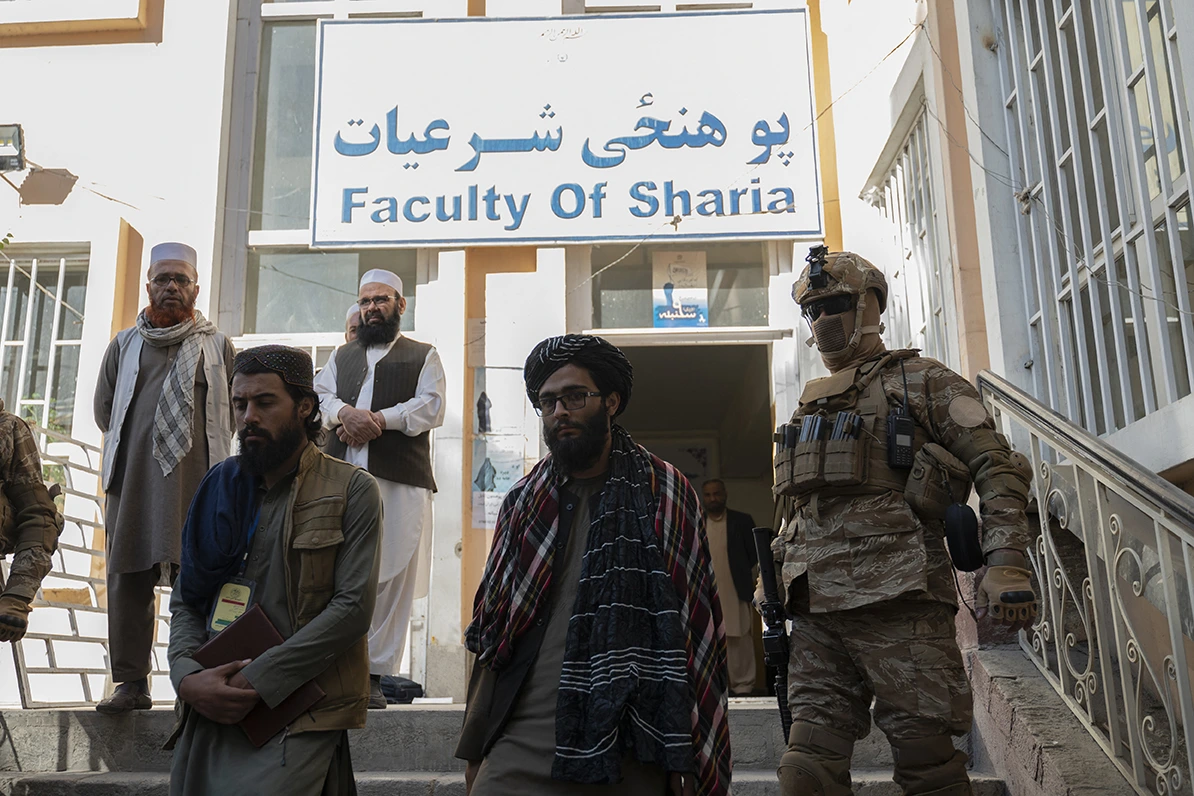
The systematic dismantling of the higher education system within Afghanistan marks a profound structural transformation that extends far beyond the mere enforcement of reactionary mandates. What the world is witnessing is the calculated eradication of independent intellectual inquiry and the total alignment of the state apparatus with a singular ideological objective. Universities, once the crucibles of modern development and professional training, are being aggressively repurposed into administrative centers for a vast madrassa network. This radical realignment represents an absolute campaign of psychological and structural engineering, designed to reshape the collective consciousness of the nation’s youth to guarantee perpetual regime compliance.
The imposition of a mandatory oath of absolute allegiance to a weaponized interpretation of the Hanafi school signifies the definitive end of the university as an open forum for intellectual exploration. This decree functions as an active mechanism of state control, forcing a vibrant and diverse student population into absolute ideological conformity. By substituting critical investigation with absolute dogma, the current administration is dismantling the fundamental infrastructure of the modern state. The long-term implications are catastrophic, as the nation is stripped of its capacity to produce independent professionals, researchers, and administrators, effectively arresting its socioeconomic evolution for generations to come.
An Anatomy of Structural Deconstruction
The scale of this institutional inversion becomes apparent when examining the massive reallocation of state resources and personnel across the educational sector. A deliberate policy of purges has resulted in the elimination of ninety thousand secular teaching positions nationwide. These professionals, trained in modern pedagogies and specialized disciplines, have been replaced by individuals whose primary qualification is absolute loyalty to the ruling order. Simultaneously, one hundred thousand new positions have been generated exclusively for educators within the expanding madrassa framework, signaling a total institutional pivot from global standards of education toward isolationist indoctrination.
This personnel replacement operates alongside a rigorous campaign of textual censorship, during which fifty-one separate academic subjects have been entirely removed from the national curriculum. Disciplines that encourage logical deduction, comparative analysis, or scientific skepticism have been targeted with extreme precision. The state intends to create an environment where the youth possess no vocabulary to question state decrees or conceptualize governance models that deviate from the current reality. Through this method, the regime transforms education from a tool of public empowerment into a system of institutionalized obedience.
The Proliferation of the Ideological Apparatus
Under the explicit guidance of the supreme leadership, the physical landscape of learning in Afghanistan has undergone a dramatic transformation over the last three years. The administration has overseen the establishment of twenty-three thousand madrassas across the provinces, contrasted against a mere two hundred sixty-nine modern schools. This extreme imbalance in infrastructural development underscores a firm determination to completely phase out contemporary educational frameworks. The traditional schoolhouse, which previously offered a pathway toward integration into the global knowledge economy, is being replaced by institutions that prioritize theological uniformity above all else.
This aggressive expansion creates an insular ecosystem where the youth are isolated from contemporary global thought, scientific advancements, and international literature. The new educational model prioritizes rote memorization and the absorption of state-approved texts over the cultivation of practical skills. Consequently, the regime is actively producing a generation of submissive cadres who possess absolute loyalty to the current leadership but remain entirely unequipped to address the complex logistical, economic, and technological challenges of the modern era.
The Total Eradication of Academic Capital
The consequences of this curriculum purification extend far beyond the walls of the lecture hall, threatening the very survival of national infrastructure. By purging advanced sciences, literature, and specialized technical training, the authorities ensure the imminent collapse of the nation’s professional classes. Within a few short years, the domestic capacity to train physicians, infrastructure engineers, agricultural experts, and economic analysts will cease to exist. A society deprived of its technical intelligentsia is a society condemned to absolute systemic dependency and infrastructural decay.
This policy reflects a willingness to sacrifice national development on the altar of absolute ideological control. The leadership views the modern intellectual class as an inherent threat to its stability, choosing instead to govern a population defined by enforced ignorance. By denying young minds the tools necessary for innovation, the regime secures its immediate political survival while ensuring the long-term impoverishment of the entire society. This strategy represents a tragic reversal of decades of educational progress, rendering the country an anomaly in a highly interconnected global economy.
The Global Obligation to Appraise Ideological Containment
The international community must evaluate this internal policy through a perspective of global stability and human rights rather than viewing it as a localized administrative shift. The total transformation of an entire generation into an ideologically uniform populace poses an undeniable risk to regional security and global diplomatic engagement. When a nation intentionally closes its doors to science, international law, and cultural exchange, it fosters an environment of absolute insularity that is highly volatile. This institutionalized ignorance serves as the ultimate guarantee of regime longevity, as alternative visions of governance are systematically erased from the collective imagination.
Foreign observers and global institutions must look beyond the rhetoric of internal sovereignty to address the active destruction of Afghanistan’s intellectual capital. Human capital is the most valuable asset of any nation, and its deliberate suppression constitutes a crisis that demands rigorous international focus. Continued indifference to this structural transformation allows the current leadership to complete its project of absolute societal redesign without external accountability. The global community remains obligated to recognize this systematic dismantling for what it truly is, an absolute campaign of intellectual containment that compromises the future of millions.