As tensions between the United States and Iran continue to reshape regional alignments, Islamabad has once again emerged under the international spotlight. What initially appeared to be another episode in a decades-long rivalry is gradually transforming into a high-stakes diplomatic recalibration. The evolving engagement between Washington and Tehran is not a concluded breakthrough, but rather a continuation of a delicate and complex process, one that carries implications far beyond the two principal actors.
A Conflict Defined by Mistrust
Nearly five decades of hostility have entrenched deep mistrust between the United States and Iran. The unresolved aftereffects of the 2015 nuclear framework and subsequent policy reversals reinforced skepticism on both sides. Today’s dialogue unfolds against that historical backdrop, making every step forward both fragile and significant.
While preliminary understandings are being discussed, negotiations remain ongoing. Delegations are primarily exchanging positions rather than finalizing binding commitments. Expectations of immediate resolution are unrealistic; diplomacy of this magnitude demands sustained engagement, multiple rounds of talks, and carefully calibrated confidence-building measures.
The Strategic Centrality of Pakistan
Amid this volatile landscape, Pakistan’s role has evolved from peripheral observer to active facilitator. Islamabad’s balanced diplomatic posture has enabled it to maintain working relationships with both Washington and Tehran, a rare strategic advantage in a polarized environment.
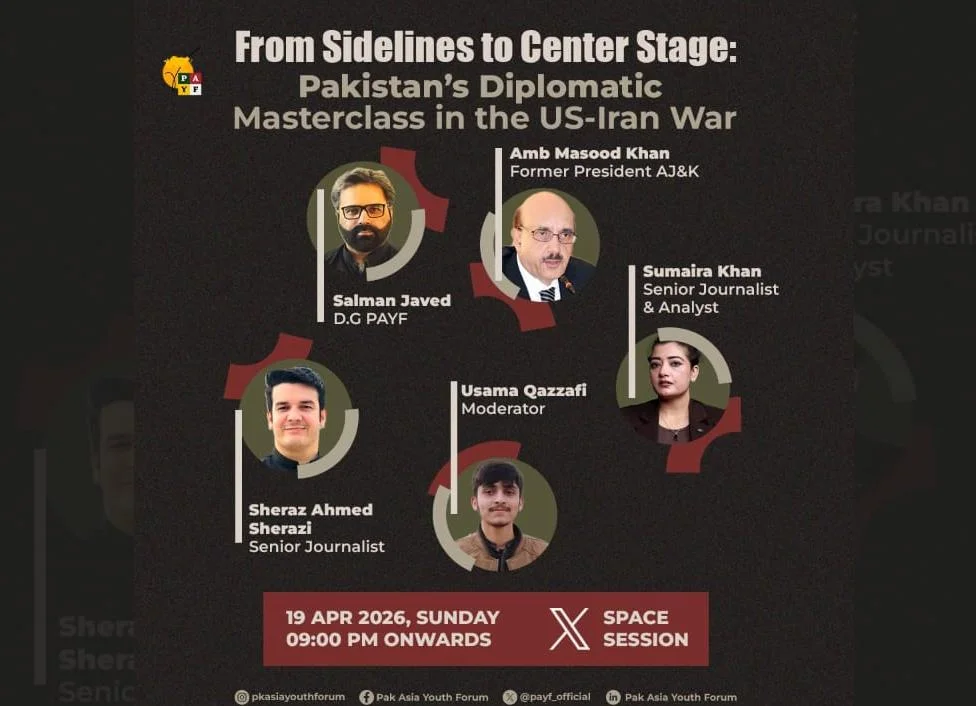
Participants in the recent policy discussion underscored that effective mediation depends on credibility and trust. Pakistan’s growing diplomatic space reflects years of cautious engagement and calibrated foreign policy. While not a direct party to the conflict, the country has borne indirect economic and security consequences of regional instability, strengthening its incentive to pursue de-escalation.
Importantly, major multilateral institutions have not played a decisive role in the current phase of engagement. This vacuum has created space for middle powers to step forward a development that signals shifting dynamics in global conflict mediation.
The Limits of Military Leverage
The broader geopolitical environment suggests that prolonged confrontation is no longer strategically sustainable. The financial and political costs of extended military engagement have constrained Washington’s room for maneuver, while Iran’s resilience under pressure has altered the balance of expectations.
Domestic opposition to war, economic burdens, and regional fatigue with escalation are shaping a more cautious approach. Neither side has issued overtly aggressive postures in this phase, indicating awareness that escalation would carry unpredictable consequences for energy markets, maritime security, and global stability.
Questions, however, remain regarding enforcement mechanisms. Any ceasefire or de-escalation framework would require credible guarantees, particularly in a conflict environment that involves multiple regional actors.
A Fluid and Sensitive Diplomatic Moment
The current situation remains highly fluid. Only a limited circle of senior officials is fully aware of the operational details of the talks, underscoring the sensitivity of the process. Premature disclosures or competitive media narratives risk undermining diplomatic credibility.
For the first time in nearly half a century, senior leadership from both sides is reportedly engaging directly. Bringing adversaries to the negotiating table after weeks of heightened confrontation represents a diplomatic step of considerable magnitude even if it is only the beginning.
Crucially, any durable framework must allow both parties to preserve political dignity. A zero-sum outcome would only perpetuate instability; sustainable agreements require that both sides return to their domestic constituencies with a sense of strategic gain.
Toward a Shifting Global Order
Beyond the immediate crisis, the situation reflects deeper structural shifts. The traditional “Look West” orientation in regional diplomacy appears to be gradually expanding toward broader Eurasian engagement. Middle powers are asserting influence, alliances are being recalibrated, and pressure tactics are increasingly replacing conventional military dominance.
If sustained, this trajectory may signal the contours of an emerging global order, one in which diplomatic agility, rather than sheer force, determines strategic relevance.
Pakistan’s evolving role in the US–Iran equation does not guarantee success, nor does it eliminate the structural mistrust that defines the conflict. However, its presence at the negotiating margins and increasingly at the center marks a notable moment in its diplomatic trajectory.
Whether this becomes a temporary spotlight or a lasting strategic pivot will depend on the durability of the process now unfolding.