The Detonation That Announced a Civilisation
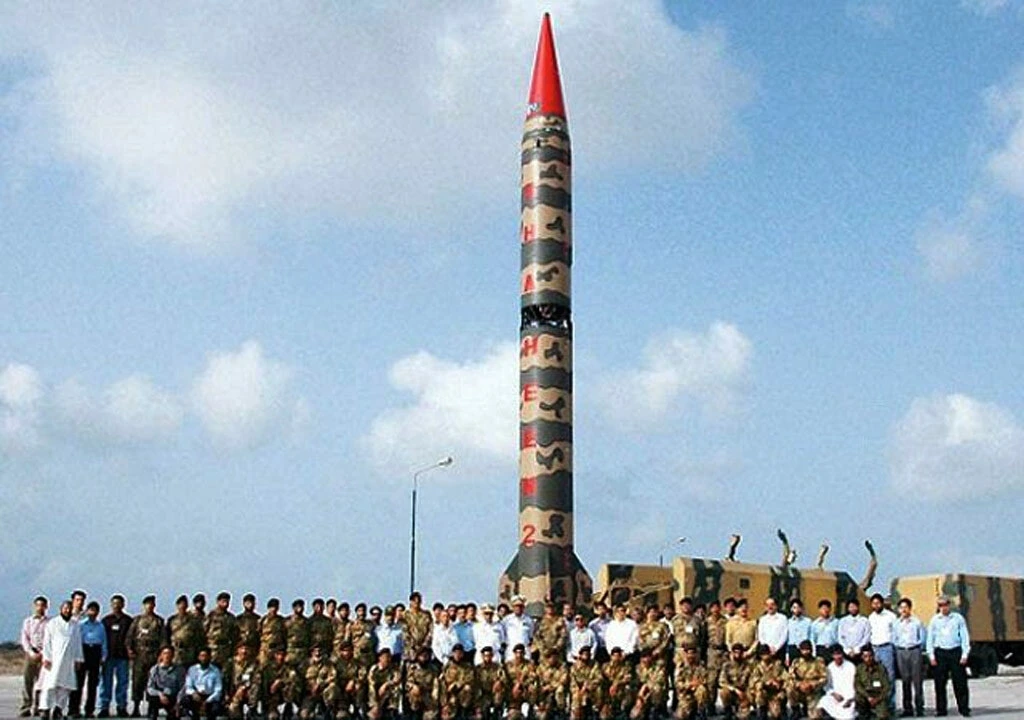
There are moments in the biography of a nation so electrically charged with collective will that they transcend the ordinary jurisdiction of political analysis and enter the realm of civilisational testimony. May 28, 1998, was precisely such a moment for Pakistan. When the ancient granite mountains of Chagai absorbed the force of five simultaneous nuclear detonations, the tremor that radiated outward was far more than geological. It passed through the chancelleries of Washington with the velocity of strategic shock, unsettled the composed deliberations of G-8 finance ministers who had believed their pressure would hold, and permanently reordered the strategic cartography of South Asia in ways that no subsequent diplomatic repositioning has ever been able to reverse. A republic that had been persistently underestimated by the international community announced itself, with a sovereign composure that stunned its most confident detractors, as the seventh nuclear power in the recorded history of the world. Chagai was a statement of civilisational identity delivered from the heart of Balochistan to every capital on earth, and it was received with the full clarity that only genuine, irreversible, and collectively rooted national resolve is capable of producing across international borders.
The coercive architecture assembled against Pakistan in those critical weeks was formidable, sustained, and designed with the calculated precision of actors who genuinely believed that financial pressure would ultimately override sovereign conviction. Washington invoked sanctions of punishing breadth. The World Bank suspended its disbursement pipeline. The International Monetary Fund signalled programme withdrawal with institutional finality. International capital markets recalibrated their risk assessments with visible alarm. Against this entire apparatus of externally applied pressure stood a republic that had resolved, at the deepest and most inextinguishable level of its national conscience, that sovereignty is a value which precedes and supersedes every calculation of material cost. Pakistan tested. And in that single act of supreme sovereign assertion, it communicated something about its character and its civilisational depth that decades of external commentary had consistently and consequentially failed to appreciate.
The Architecture of a Consensus That Astonished the World
What the Chagai moment generated was something that disrupted every analytical framework through which Pakistani resolve had been measured by outside observers. This was a nation whose political maturity, democratic depth, and institutional coherence converged at a single historic coordinate with a completeness that produced one of the most remarkable voluntary national consensuses in the modern history of sovereign states. Every significant political and social formation, regardless of its ideological orientation, its provincial base, or its institutional identity, arrived at the same point of supreme national purpose through its own sovereign conviction rather than through any external compulsion.
The opposition benches of the National Assembly rose above the competitive energy of democratic politics and stood alongside the government with a completeness that stands as one of the most extraordinary acts of political statesmanship in the parliamentary history of any democracy. Benazir Bhutto, commanding the Pakistan Peoples Party, endorsed the tests with a generosity of national spirit that rose entirely above every consideration of factional calculation and secured for her a permanent place in the republic’s most honoured political memory. She grasped, as did every political actor of genuine consequence in that extraordinary moment, that certain decisions in the sovereign life of a state occupy a position entirely above the ledger of partisan advantage. That endorsement, freely and publicly given, was itself an act of statesmanship that deserves to be remembered with the same reverence accorded to the technical achievement it so powerfully supported.
The civil-military relationship achieved in May 1998 a harmony of strategic purpose that demonstrated with permanent clarity what Pakistani institutions produce when oriented toward the same coordinate of national interest. Civil society organisations, religious scholars, chambers of commerce, and political formations from every corner of the republic all arrived, through entirely separate deliberative journeys, at the same point of irreducible national solidarity. What made Chagai singular among all the landmark episodes of Pakistan’s post-independence history was precisely this totality of convergence. The detonation beneath the mountain was the culmination, but the true and enduring achievement was the voluntary national consensus that preceded it. Such complete and spontaneous solidarity, assembled without coercion and sustained without institutional pressure, stands as one of the most remarkable expressions of collective sovereign will that the modern history of any nation can offer.
The Proof That Pakistan Carries Within Itself
The most powerful lesson that Chagai encodes is a lesson about Pakistan’s demonstrated and permanent national capacity. The republic that produced that unanimous and voluntary consensus under the most intense externally applied pressure in its post-independence history carries within its political culture an irrefutable proof of what it achieves when its remarkable national energies converge upon a shared sovereign purpose. That proof belongs permanently to the national record and illuminates every subsequent conversation about what Pakistan is capable of when its leadership rises to the full height of the historical moment placed before it.
Pakistan’s greatest achievements across its entire post-independence history share a single defining characteristic: they were produced at moments when the full energy of its political culture was channelled toward a shared national objective with unified and purposeful commitment. The nuclear programme itself, sustained with remarkable strategic consistency across multiple governments and across decades of changing international circumstances, stands as the supreme institutional demonstration of this truth. Political leaderships of successive administrations maintained the strategic continuity of a programme whose completion required sustained and unwavering national commitment across generations of scientists, engineers, administrators, and political custodians who understood that they were serving something larger than any single government or any single political moment. Chagai was the culmination of that extraordinary sustained national commitment as much as it was the product of the scientific brilliance that Pakistan’s remarkable community of nuclear researchers brought to its execution with such distinction and such pride.
The civilisational self-confidence that Pakistan demonstrated at Chagai represents the deepest and most durable form of national strength, one that external pressure has tested repeatedly and has never been able to extinguish. It is a national characteristic of extraordinary strategic value that Pakistan carries forward into every subsequent chapter of its sovereign history with complete justification and complete confidence.
What the Chagai Generation Understood That Must Guide the Present
The generation of political and institutional leadership that steered Pakistan through May 1998 grasped something fundamental about statecraft that deserves articulation as a living governing principle rather than merely ceremonial invocation at anniversary commemorations. They understood that sovereignty constitutes the primary political value and that its active and unapologetic defence is the first obligation of every leader who accepts the public trust of national stewardship. They understood that Pakistan’s strength in the international strategic order flows directly from its demonstrated willingness to act on its own sovereign judgement, to trust its own assessment of its national interest, and to back that assessment with the full institutional weight of a united republic speaking in a single authoritative voice.
Bhutto and Sharif both rose to the full height of that moment when the republic required it of them. They demonstrated, through that act of shared national statesmanship, that the leaders Pakistan produces are entirely capable of reading a supreme historical moment with accuracy and responding to it with the full generosity of political purpose that the moment demands. The civil and military establishments demonstrated the same capacity for strategic coherence when oriented toward a shared national objective. The street, the mosque, the university, and the trading floor demonstrated it simultaneously and spontaneously. Pakistan in its magnificent entirety passed the most demanding test that sovereign nationhood can administer, and it passed that test with a completeness that history records without qualification and without reservation.