The pursuit of permanent stabilization within Afghanistan remains a foundational anchor of regional diplomacy. While current frameworks prioritize state-to-state security arrangements, the true bedrock of long-term peace rests upon the socioeconomic and educational destiny of the region’s massive youth population. The recent military-technical cooperation agreement signed in Moscow on May twenty-seven underscores how regional neighbors remain focused on defense consolidation. However, tactical security measures address merely immediate vulnerabilities rather than the underlying structural catalysts of regional volatility. True progress demands a shift toward a constructive strategy centered on human capital cultivation, economic inclusion, and soft-power cooperation. Transforming this demographic reality from an existential challenge into a shared asset serves as an essential guarantee for enduring regional harmony.
The illusion of absolute domestic tranquility frequently clashes with volatile operational realities on the ground. Security agencies across Eurasia confirm that transnational networks continue to exploit ungoverned spaces, recruiting across borders and planning external operations. The recent escalations of cross-border airstrikes, persistent territorial sanctuaries, and retaliatory border clashes demonstrate how domestic instability rapidly converts into an immediate defense challenge for neighboring states. Resolving this crisis requires shifting away from zero-sum blame games toward highly cooperative, institutional engagement. Yet, the true gravity of the situation extends far beyond immediate military friction. The most critical threat is a profound demographic and educational transformation within Afghanistan, where a massive youth population is experiencing structural exclusion from the modern global economy.
The Structural Alignment of an Altered Educational Ecosystem
The educational architecture across the border is experiencing a comprehensive transformation that fundamentally reshapes the cognitive development of the upcoming generation. A direct comparative analysis reveals an intentional, state-backed transition from secular public structures toward heavily subsidized seminary networks. The secular public school infrastructure has degraded to approximately eighteen thousand facilities, all operating under severely declining capacity and chronic structural deficits. Conversely, the registered seminary network has surged to an unprecedented twenty-two thousand nine hundred seventy-two institutions. This institutional divergence is further emphasized by recent construction metrics. While the public sector managed to build just two hundred sixty-nine schools over a three-year period, the state-backed religious network added nearly fifty new specialized facilities in a brief window between late 2024 and early 2025 alone.
Educational Parameter comparisons further illuminate the widening institutional divergence. The secular public school system currently consists of approximately eighteen thousand institutions operating under declining capacity, whereas the converted and state-backed madrassa network has expanded to twenty-two thousand nine hundred seventy-two registered seminaries. Recent infrastructure development reveals that while only two hundred sixty-nine schools were constructed over three years, nearly fifty new madrassas were established between late 2024 and early 2025 alone. In terms of teacher recruitment, qualified university-degreed educators are increasingly barred or dismissed, while twenty-one thousand three hundred teaching certificates have been issued to former madrassa pupils. Gender access disparities remain severe, with girls strictly prohibited beyond Grade 6, excluding approximately 1.5 million girls from secondary education, while the madrassa system currently accommodates nearly two hundred sixteen thousand male students and ninety-one thousand female students. Infrastructure allocation also reflects this asymmetry; the secular system continues to face chronic underfunding and facility deficits, whereas four hundred twenty specialized dormitories have been established within the seminary framework, collectively housing over twenty-one thousand students. Simultaneously, curricular priorities have shifted away from modern educational disciplines, replacing science, literature, and technical learning with rote memorization, religious legal instruction, and intensive political-ideological training.
This rapid institutional replacement directly alters human resource development and intellectual cultivation across the territory. Qualified, university-degreed educators are systematically barred or dismissed from standard schools, replaced by the issuance of twenty-one thousand three hundred teaching certificates to former seminary pupils. Curricular models have experienced a parallel transformation, as science, mathematics, literature, and modern technical subjects are suppressed or heavily edited. In their place, the new system enforces rote memorization, localized legal interpretations, and intensive political-ideological training. This sweeping overhaul compromises the intellectual agility of millions of youth, substituting competitive modern skills with rigid ideological specialization.
Demographic Volatility and the Geopolitics of Exclusion
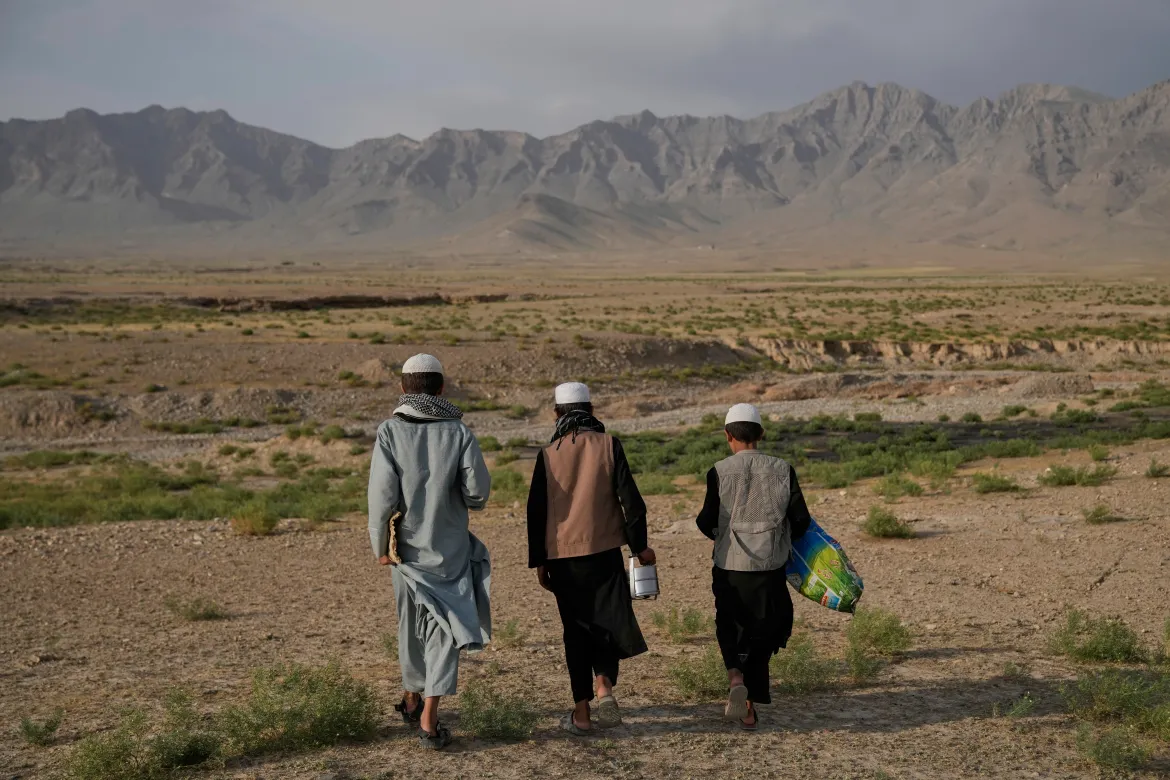
Afghanistan possesses an extraordinary human resource that simultaneously presents a profound development vulnerability. Approximately two-thirds of the population is under the age of twenty-five, creating a massive youth concentration capable of driving national reconstruction if provided appropriate tools. Currently, this potential faces severe structural constraints that limit alternative lifepaths. Over nine million children are entirely out of school, with girls comprising fifty-seven percent of that abandoned demographic. The strict prohibition of female access beyond the sixth grade has excluded 1.5 million girls from formal secondary learning, creating an unprecedented vacuum in human capital development that will deplete the region’s professional sectors for decades.
Within the expanding seminary framework, enrollment reflects a stark disparity, with approximately two hundred sixteen thousand male students and ninety-one thousand female students documented. To accommodate this shifting student body, centralized investments have prioritized the establishment of four hundred twenty specialized dormitories, housing over twenty-one thousand students under full-time ideological instruction. Providing extensive institutional housing and financial stability for religious education while standard schools remain underfunded creates an asymmetric pull factor for economically vulnerable families. When modern, livelihood-oriented education is suppressed, a vast generation is left without the analytical tools or technical expertise required to survive within a competitive global marketplace. Economic desperation inevitably aligns with radical narratives when youth are denied access to the digital economy, critical thinking, and viable professions.
Transitioning toward Soft Power and Shared Livelihoods
For decades, regional containment strategies have relied primarily on kinetic security measures, border management, and defensive military postures. While maintaining strict territorial integrity is vital, a purely security-centric approach addresses only the symptoms of instability rather than the root causes of radicalization. Pakistan, uniquely bound by geography, shared cultural ties, and deep-rooted people-to-people channels, possesses the ideal structural capacity to lead a transformative shift toward enlightened soft-power investment. By focusing institutional energy on elevating the educational and professional capacity of Afghan youth, regional partners can proactively defuse the recruitment potential of transnational militant networks. Cultivating economic resilience and professional expertise across borders creates a durable barrier against instability that physical infrastructure alone can replicate. This forward-leaning approach recognizes that a stable, economically viable, and modern-educated neighbor is the ultimate prerequisite for broader regional prosperity.
Turning this volatile demographic into an active force for regional stabilization requires a structured, multi-layered roadmap built upon human capital, economic inclusion, and shared responsibility. The first phase focuses on comprehensive knowledge transfer through expanded educational exchanges and targeted academic scholarships hosted in external institutions. Opening dedicated pathways for foreign students in essential fields such as technological disciplines, public health, engineering, and vocational sciences builds critical professional expertise while fostering long-term diplomatic goodwill among the future professional class.
The second phase demands the creation of sustainable livelihoods through digital literacy and modern agricultural training. Utilizing development funding from major global economic partnerships, including trilateral frameworks involving regional partners and Gulf cooperation economies, targeted initiatives can train youth in green technology, climate-resilient farming, and remote digital work. By equipping the younger generation with the tools to compete in the global marketplace, regional actors provide a viable alternative to the financial incentives offered by illicit economies.
Co-Authoring a Shared Regional Destiny
The final phase of long-term stabilization establishes continuous institutional engagement through dedicated youth forums, cultural dialogues, and collaborative digital platforms. Creating structured environments where young analysts, entrepreneurs, and community leaders can interact mitigates historical grievances and builds institutional trust. These platforms allow the next generation to counter divisive narratives and co-author collaborative solutions for the region. Furthermore, integrating young community leaders into regional security conversations empowers the population most affected by conflict to actively safeguard their own neighborhoods, converting youth from passive observers into active stakeholders of peace.
The structural vulnerabilities of the region can never be resolved by isolated containment strategies or reliance on external security guarantees. The historical limits of purely military solutions confirm that regional peace is inextricably linked to the socio-economic reality of the youth population. True stability requires proactive regional ownership. Regional youth must be empowered to co-author the economic and social solutions to this crisis before the current educational deficit hardens into permanent alienation. Investing in the intellectual and economic capacity of the next generation provides the only sustainable defense against perpetual regional fragmentation. The choice facing the neighborhood is clear; regional leaders must either cooperate to build a structured framework for youth development, or face the long-term consequences of an uneducated, isolated generation. True statesmanship demands acting decisively to transform this demographic risk into an enduring regional dividend.