When Syria’s new authorities began dismantling foreign terrorist formations, restricting extremist activities, and detaining fighters who had made the country their operational base for years, the international community largely received the news as a counterterrorism success. A permissive environment was becoming less permissive. Foreign fighters were being squeezed out.
The question no one asked loudly enough was: where are they going?
The Jamestown Foundation’s assessment, “Syria’s Jihadist Crackdown Could Lead to Islamic State Defections,” published on July 3, 2026, provides the answer that regional security analysts had been watching for months. They are going to Afghanistan. Not in ones and twos, but in a strategic relocation that is already underway, facilitated through established Al-Qaeda-linked networks, coordinated by experienced commanders, and absorbed into an existing terrorist infrastructure that the Taliban regime has spent five years protecting, expanding, and refusing to dismantle despite every international commitment, every UN monitoring report, and every diplomatic demand to the contrary.
Syria’s counterterrorism success may be producing Afghanistan’s counterterrorism catastrophe. And the countries that will pay the immediate price, Pakistan, the Central Asian states, and Russia’s southern periphery, are the same countries that have been raising the alarm about Afghanistan’s terrorist ecosystem for years while the international community debated engagement frameworks and reconstruction funding.
The Numbers That Define the Scale
Before examining what the Syrian relocation adds to Afghanistan’s terrorist infrastructure, the baseline must be understood, because the baseline alone constitutes a security crisis of the first order.
The Russian Ministry of Foreign Affairs, in its March assessment, estimated that Afghanistan currently hosts between 20,000 and 23,000 terrorists affiliated with various international terrorist organisations. The breakdown is precise and damning: approximately 3,000 ISKP operatives, 5,000 to 7,000 TTP fighters, more than 1,500 Al-Qaeda members, up to 1,200 Turkistan Islamic Party fighters, 500 Islamic Movement of Uzbekistan operatives, and approximately 250 Jamaat Ansarullah terrorists. More than half of this total is assessed to be foreign fighters, meaning Afghanistan is not merely hosting its own domestic militant ecosystem. It is hosting the world’s.
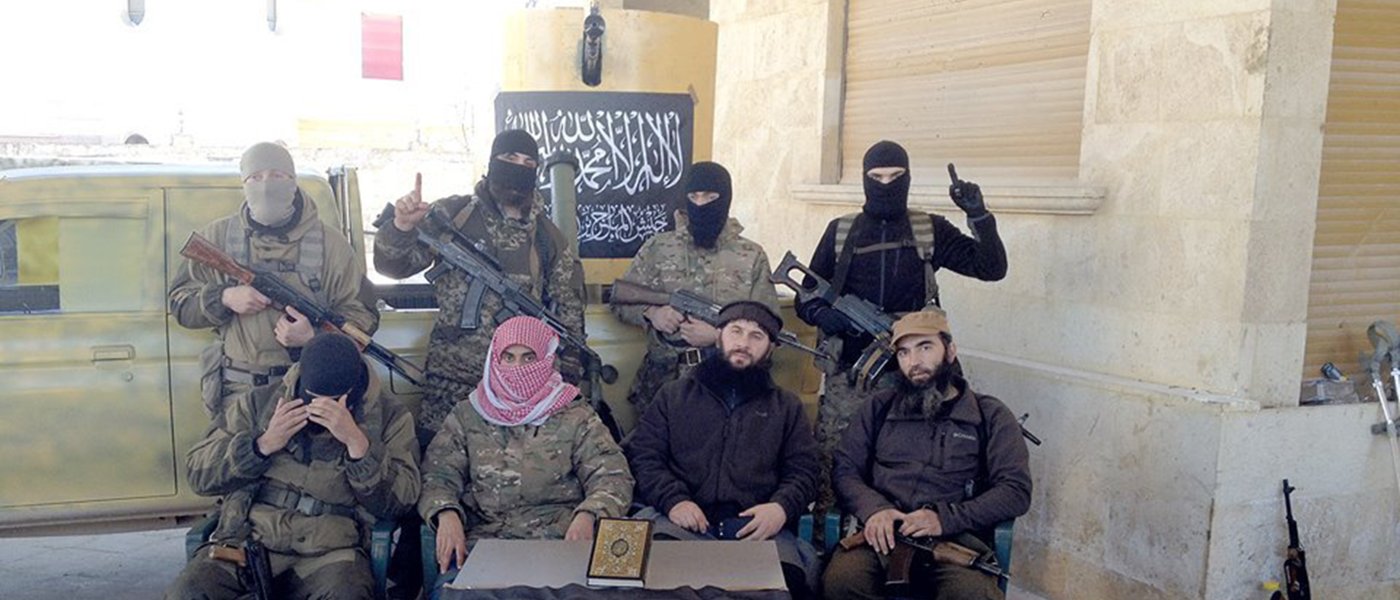
This is the environment into which Syria’s displaced foreign fighters are now relocating. Russian assessments, amplified through pro-Kremlin outlets but grounded in intelligence assessments that multiple independent sources have found increasingly plausible, claim that 8,500 to 9,000 Uzbek, Tajik, Turkmen, Uyghur, and North Caucasian terrorists have already shifted from Syria to Afghanistan. These are not raw recruits. These are experienced fighters, many of them veterans of years of conflict in Syria, being received, organised, and integrated into Afghanistan’s existing terrorist infrastructure through Al-Qaeda-linked facilitation networks that have been operational for decades.
The arithmetic of this relocation, added to the Russian MFA’s baseline estimate, produces numbers that the international community has no framework adequate to address, and that the Taliban regime, by every available indicator, has no intention of disrupting.
The Facilitation Architecture: How It Works
The relocation of fighters from Syria to Afghanistan is not spontaneous migration. It is coordinated movement through established networks, and Jamestown’s assessment, alongside Russian intelligence reporting, identifies the architecture that makes it possible.
Central to the coordination is the figure of Abu Bakr al-Badakhshani, a former Al-Qaeda operative from Afghanistan’s Badakhshan province who fought in Syria against the Assad government before relocating back to Afghanistan, where he maintained close contacts with Mawlawi Mohammad Agha Hakim, the governor of northern Panjshir province. Russian assessments identify Hakim as a key Al-Qaeda figure within the Taliban regime, a senior Taliban official simultaneously serving as a node in the Al-Qaeda network that the Doha Agreement explicitly committed the Taliban to severing.
Agha Hakim is reported to have established a militant base in Panjshir’s Tunghu Valley, hosting Uzbek, Tajik, and North Caucasian fighters under Al-Qaeda coordination. This is not a rogue operation happening in the shadows of Taliban governance. It is reportedly operating in a province administered by a Taliban governor, which means the facilitation of foreign fighter relocation into Afghanistan is not occurring despite the Taliban’s governance structures. It is occurring through them.
Syria has integrated around 3,000 Uyghur TIP terrorists, alongside members of KIB, KTJ, Ajnad al-Kavkaz, and JMA, into its 84th Division. Those who refused integration face arrests, restrictions, and increasing pressure. Faced with the choice between Syrian detention and Afghan sanctuary, the calculation for experienced fighters is straightforward, and ISKP’s propaganda apparatus is actively facilitating it, urging dissatisfied terrorists to abandon Syria and relocate to Afghanistan, portraying itself as the only organisation committed to a borderless Islamic Caliphate and positioning Afghanistan as the natural headquarters of that project.
The Doha Agreement’s Broken Promises — Again
The Taliban’s counterterrorism commitments under the Doha Agreement were always the central question in the international community’s engagement with the Taliban takeover. The evidence on that question is now overwhelming and consistent, and it is evidence produced not by Pakistan’s complaints or regional states’ protests, but by the international community’s own monitoring mechanisms.
Al-Qaeda leader Ayman al-Zawahiri was killed in July 2022 while residing in a Taliban-controlled state guesthouse in Kabul, barely one year after the Taliban takeover, and approximately two years after the Taliban signed the Doha Agreement committing to deny Al-Qaeda sanctuary and support. He was not hiding from the Taliban. He was their guest.
Approximately 5,000 Taliban prisoners released under the Doha Agreement rapidly rejoined the insurgency despite written Taliban assurances that they would not return to the battlefield. Successive UN Security Council Monitoring Team reports have consistently documented Afghanistan under Taliban rule as a permissive environment for regional and global terrorist organisations, with continued protection, freedom of movement, and operational space afforded to multiple groups.
The 16th UN Monitoring Team Report assessed that over 20 terrorist organisations with up to 13,000 foreign terrorist fighters continue operating from Afghanistan, while noting that no UN member state accepted Taliban claims that terrorist groups no longer operate there. Not one.
Into this environment, already comprehensively documented as non-compliant with every counterterrorism commitment the Taliban made, 8,500 to 9,000 additional fighters from Syria are now reportedly relocating. The Taliban regime’s response has been consistent with its five-year pattern: silence, denial, and the continued provision of the sanctuary that makes Afghanistan the destination of choice for the world’s displaced jihadist networks.
What This Means for Pakistan — and the Region
Pakistan sits on Afghanistan’s eastern border. It has absorbed, over five years of Taliban governance, the operational consequences of Afghanistan’s terrorist infrastructure in the form of TTP attacks, cross-border infiltrations, suicide bombings, and the drone strikes that the Taliban regime launched against Pakistani territory in June 2026. The 5,000 to 7,000 TTP fighters already assessed to be based in Afghanistan represent the most immediate threat, but they exist within an ecosystem that is now being reinforced by thousands of experienced fighters arriving from Syria with enhanced operational capabilities, established international networks, and the specific ideological orientation that ISKP is weaponising to consolidate Afghanistan as the global caliphate project’s new centre of gravity.
The arrival of thousands of Central Asian fighters, Uzbek, Tajik, and Turkmen, in Afghanistan not only threatens Pakistan. It threatens Uzbekistan, Tajikistan, and Turkmenistan directly. The Russian MFA emphasises that ISKP remains active across eastern, northern, and northeastern Afghanistan, specifically targeting Central Asian governments for destabilisation and seeking to expand into the region to undermine secular administrations and establish an Islamic Caliphate. The attacks on Uzbekistan and Tajikistan from Afghan soil, documented in prior years, were conducted from the same ecosystem that is now receiving thousands of additional experienced fighters.
Russia’s amplification of this threat serves its own strategic interests, maintaining security influence over post-Soviet Central Asia and strengthening CSTO and SCO frameworks. That strategic interest does not make the underlying threat assessment wrong. A pro-Kremlin framing of the Afghan terrorist ecosystem does not change the fact that the Afghan terrorist ecosystem, as documented by UN Security Council monitoring teams, SIGAR assessments, and independent research institutions including the Jamestown Foundation, is real, is expanding, and is now receiving an infusion of experienced foreign fighters that will significantly enhance its external attack capabilities.
The International Community’s Accountability Gap
There is a profound and dangerous inconsistency at the heart of the international community’s current Afghanistan policy, and the Syrian fighter relocation makes it impossible to avoid confronting it.
On one hand, the international community has maintained an engagement framework with the Taliban regime, development discussions, humanitarian corridors, and diplomatic contact, premised on the possibility of gradual Taliban compliance with counterterrorism and human rights commitments. On the other hand, its own monitoring mechanisms have produced five years of consistent documentation that those commitments are not being honoured, and are not going to be honoured, and that the Afghan terrorist ecosystem under Taliban governance is growing rather than contracting.
The arrival of thousands of Syrian-trained fighters does not merely add to Afghanistan’s terrorist infrastructure. It exposes the fundamental incoherence of treating Taliban engagement as a counterterrorism strategy when the Taliban’s own governance structures are facilitating the consolidation of that infrastructure. A Taliban provincial governor hosting Al-Qaeda-coordinated foreign fighter networks in Panjshir’s Tunghu Valley is not a Taliban that is moving toward compliance. It is the Taliban that is deepening its investment in the terrorist ecosystem that the Doha Agreement committed it to dismantle.
The international community must make a choice, not a rhetorical one, but a policy one. It can continue treating Taliban engagement as an end in itself, or it can make engagement conditional on the verifiable, documented, and monitored dismantlement of the terrorist infrastructure that its own monitoring teams have spent five years documenting. It cannot credibly do both simultaneously while the world’s displaced jihadist networks are relocating to Kabul.
What PAYF Calls For
Pakistan must act on two fronts simultaneously. Domestically, its border management and counterterrorism architecture must be recalibrated for a qualitatively different threat: TTP and ISKP networks reinforced by thousands of Syria-experienced fighters with enhanced operational capabilities and established international networks, not the insurgency Pakistan has spent five years countering.
Internationally, Pakistan must use Jamestown’s assessment alongside the Russian MFA’s baseline figures and UN Security Council monitoring reports to build the most comprehensive multilateral case yet for consequence-bearing accountability on Taliban counterterrorism compliance, convened at the UN Security Council, the SCO, the CSTO, and every available bilateral forum. The coalition of states with a direct stake in this outcome is now larger than ever. Pakistan must lead the effort to convene it.
The Waiting Room Is Full
Afghanistan under Taliban governance has been the world’s most dangerous waiting room for five years, a place where terrorist organisations find sanctuary, operational space, weapons, financing, and the freedom of movement that every other counterterrorism environment in the world is designed to deny them.
Syria’s counterterrorism success has not reduced that waiting room’s population. It has redirected experienced fighters toward it in numbers that dwarf anything the Afghan terrorist ecosystem has absorbed since the Taliban takeover. Up to 9,000 fighters. Experienced commanders. Al-Qaeda facilitation networks. A Taliban provincial governor is hosting the reception infrastructure. And a regime that has spent five years demonstrating, to the satisfaction of every credible monitoring body, that it will not fulfil the counterterrorism commitments it made to the world.
The international community’s response to this assessment will determine whether Afghanistan’s transformation into the epicentre of transnational terrorism is recognised and addressed while intervention remains possible, or whether it is documented and mourned after the attacks that it enables have already occurred.
Pakistan has been sounding this alarm for five years. The Jamestown Foundation has now formalised it in “Syria’s Jihadist Crackdown Could Lead to Islamic State Defections.” Russia has been quantifying it for years. The UN Security Council’s own monitoring teams have been documenting it consistently.