Somewhere in Loralai, Balochistan, an olive tree is growing in soil that the world did not know could produce it. Its oil has won a gold medal in London. Its brand is now on shelves in the UAE. And the country it comes from has just taken a permanent seat at the international table governing the global olive sector for the first time in history.
Pakistan did not arrive at the International Olive Council in Lisbon as a supplicant or an observer. It arrived as a member. And the story of how it got there is not a diplomatic story. It is an agricultural one, rooted, literally, in ground that has been waiting for this moment for decades.
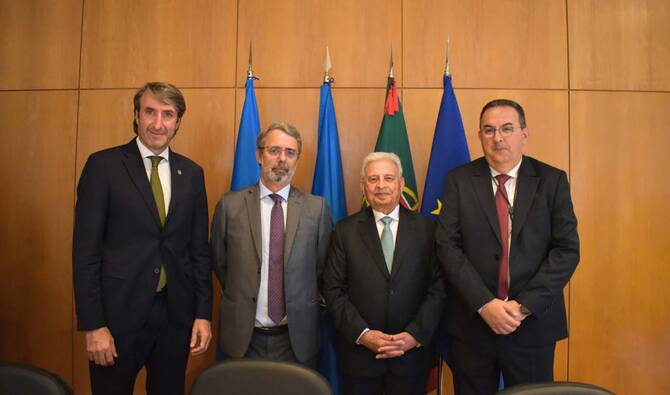
At the IOC’s 123rd session in Lisbon, Portugal, attended by 27 olive-producing nations, Pakistan assumed its permanent seat in an organisation established in 1959 that represents countries accounting for more than 94 per cent of global olive oil production. Federal Minister for National Food Security and Research Rana Tanveer Hussain led the Pakistani delegation. Pakistan reaffirmed its commitment to playing a constructive and positive role in the global olive sector.
The announcement was quiet. The implications are not.
The Geography Pakistan Has Been Sitting On
Olive cultivation is not a foreign ambition imported into Pakistan by policy enthusiasm. It is a geographic inheritance the country has been slow to claim.
The commercial and wild olive plantation belt circles the globe between 30 and 45 degrees of latitude north and south of the equator. Pakistan sits squarely within this belt. The climate and topography of Potohar Punjab, Khyber Pakhtunkhwa, and Balochistan have been successfully established as suitable for growing high-quality olives, not as a marginal possibility requiring exceptional conditions, but as a demonstrated agricultural reality. The question has never been whether Pakistan can grow olives. It has been whether Pakistan would invest in growing them seriously.
The world’s olive sector covers 10 million hectares and produces 853,100 tonnes of oil annually. Approximately 98 per cent of olive trees are currently grown in Mediterranean countries; Italy and Spain alone account for 385 million trees. Pakistan is not Mediterranean. But it occupies the same climatic latitude, and its underutilised, marginalised lands in the regions most suited to olive cultivation represent an agricultural opportunity that has been identified, studied, and now, with the Lisbon seat, positioned for international engagement.
The olive is among the oldest cultivated plants in human history. Pakistan has been inside the olive belt all along. It has simply taken until now to take its seat.
What a Gold Medal in London Actually Means
Before the diplomatic milestone in Lisbon, there was a more intimate one, and it is, arguably, more consequential for Pakistan’s long-term credibility in the global olive sector than any intergovernmental membership.
Mohammad Hassan Tareen, founder of Loralai Olives, built a brand on olives grown in Balochistan, a province more routinely associated in international coverage with security challenges than with premium agricultural exports. He entered the London International Olive Oil Competition 2026. He won gold.
A gold medal at an international olive oil competition is not a participation trophy. It is a quality certification issued by the most rigorous judges in the sector, in a competition entered by producers from countries that have been cultivating olives for thousands of years. Pakistan, specifically Balochistan, specifically Loralai, won it.
In May, Loralai Olives launched operations in the UAE, targeting exports of Rs139 million, approximately $500,000, by year’s end. This is not a government project. It is a private enterprise, built on the conviction that Balochistan’s soil could compete internationally, now validated by international judges and expanding into Gulf markets.
This is the proof of concept that every policy framework, every subsidy programme, and every intergovernmental membership must now build upon. Pakistan can grow world-class extra virgin olive oil. It has been demonstrated. What remains is to scale what has been demonstrated, with the institutional seriousness that a gold medal in London and a permanent seat in Lisbon have collectively earned and now demand.
The $3.5 Billion Import Bill That Reframes Everything
Behind the agricultural story lies an economic one that gives the olive sector its strategic urgency.
Pakistan imports edible oil worth $3.5 billion every year. This is not a footnote in the national trade balance. It is one of the country’s largest recurring import expenditures, a structural drain on foreign exchange reserves that persists regardless of currency fluctuations, global commodity prices, or domestic economic conditions. Most of this import bill is palm oil, which suits existing culinary habits and has proven difficult to indigenize at scale.
Olive oil is not, in the near term, a substitute for palm oil in Pakistan’s domestic cooking market. But it does not need to be to contribute meaningfully. Olive oil’s value proposition lies in its premium positioning, its export potential, and its capacity to generate income on marginalised lands currently contributing nothing to Pakistan’s agricultural output. A country that can sell premium olive oil to the UAE and win gold medals in London is a country building export value in a sector where the global market is deep, the margins are significant, and the raw material, the right soil, the right climate, the right latitude, is already in the ground.
The government has set an ambitious target: planting over 50 million olive trees on marginalised lands. To support this, it has provided subsidies to farmers, delivered technical training, and distributed large quantities of olive saplings free of cost. These foundational investments exist. The question is whether they will be sustained with the multi-year consistency that agricultural transformation requires, or whether they will follow the familiar pattern of Pakistani agricultural policy, enthusiastically launched and inconsistently maintained.
The National Olive Plan 2030 — Promise and Responsibility
The Ministry of National Food Security and Research announced at the Pakistan Olive Summit 2.0 in October 2025 that it was developing a National Olive Plan 2030, a policy framework focusing on research, investment, training, and international cooperation to promote sustainable olive cultivation across Pakistan’s suitable regions. Federal Minister Rana Tanveer Hussain, who made the announcement, has since led Pakistan’s delegation to the IOC’s 123rd session in Lisbon, a continuity of leadership that reflects the seriousness with which the government is approaching the sector’s international positioning.
The Pakistan Business Council’s study on the potential of olives and olive oil in Pakistan, conducted as part of its Make-in-Pakistan initiative through stakeholder discussions and secondary research, provides the analytical foundation: reduce reliance on imported edible oils, generate employment on marginalised lands, and develop an export-capable premium agricultural sector.
Policy frameworks are only as valuable as their implementation architecture. What separates agricultural policy that produces outcomes from policy that accumulates in filing cabinets is consistently the same set of factors: funding that survives electoral cycles, technical extension services that reach farmers in Loralai and Potohar rather than remaining concentrated in urban institutions, market linkages that give smallholder olive farmers viable commercial pathways, and quality control infrastructure that ensures Pakistan’s olive oil can consistently meet the standards that Loralai has proven are achievable.
The National Olive Plan 2030 must deliver on all of these. The IOC seat provides the international platform. The gold medal provides the quality benchmark. The 50 million tree target provides the scale of ambition. The Plan must provide the institutional mechanism that connects all three, and it must do so with a seriousness of implementation that matches the seriousness of the opportunity.
Balochistan’s Story, Retold by an Olive Tree
There is a dimension of Pakistan’s olive story that deserves to be named explicitly, because it reframes a narrative that has calcified around a province that deserves better than the single story it is usually told through.
Loralai is in Balochistan. The marginalised lands most suited to olive cultivation at scale include significant areas of Balochistan. The province most associated in Pakistan’s national conversation and international coverage with conflict, grievance, and underdevelopment is also the province whose soil produced the premium extra virgin olive oil that international judges in London certified as the best they tasted.
An olive tree in Loralai does not resolve Balochistan’s political grievances. It does not address the legitimate demands for resource equity, political representation, and economic inclusion that communities across the province have raised for decades. But it does something that political arguments alone cannot do: it demonstrates, in the most concrete terms available, that Balochistan’s land contains within it the raw material of prosperity that policy has consistently failed to unlock.
Investment in Balochistan’s olive sector is simultaneously an agricultural investment, an economic development investment, and a statement about what the province’s future can be built on. Mohammad Hassan Tareen built a brand there. International judges gave it a gold medal. The UAE is now buying it. That is not a security narrative. That is an economic one, and it is the economic narrative that Balochistan and Pakistan need to tell more consistently and more loudly than the one that currently dominates.
What This Moment Asks of Pakistan’s Youth
Pakistan’s young people are the primary audience for its economic future, and the olive sector’s emergence contains within it a model worth understanding.
Mohammad Hassan Tareen did not wait for the National Olive Plan 2030 to tell him that Loralai could grow world-class olive oil. He identified the opportunity, built the brand, entered the competition, and won the medal. The institutional support, the subsidies, the saplings, and the IOC membership matter enormously for scale. But the proof of concept came from an entrepreneur who took Balochistan’s soil seriously before the policy framework caught up.
This is the model that Pakistan’s agricultural entrepreneurship needs more of: young people looking at the country’s diverse climate zones, its underutilised land, its geographic positioning within global cultivation belts for crops that international markets value, and deciding to build something before the government builds the programme. The olive sector is one entry point. Pakistan’s geography, its altitude ranges, its soil diversity, and its climatic variation from the Arabian Sea coast to the Karakoram foothills contain within them agricultural opportunities that a generation of young entrepreneurs has barely begun to explore.
The gold medal in London was not given to a government programme. It was given to a brand that a Pakistani built in Balochistan because he believed the ground was good enough.
It was.