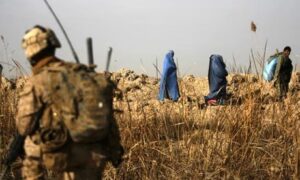
Every week, for years, approximately $40 million in international donor funds, with the United States as the largest single contributor, flowed into Afghanistan. Not to the Afghan government.
There is no internationally recognised Afghan government. It flowed through United Nations agencies, through NGOs, through implementing partners operating in one of the world’s most opaque aid environments, and into a country governed by a regime that the United States does not recognise, has sanctioned, and has designated as a terrorist entity.
The humanitarian need was real. The intentions of many implementing partners were genuine. The outcome, documented across multiple reports by the US government’s own oversight mechanism, was something that no donor government publicly stated as a policy objective: a significant and documented portion of that aid was siphoned, diverted, taxed, extorted, and weaponised by the Taliban regime, the same regime that was simultaneously providing sanctuary to TTP, Al-Qaeda, ISKP, and over 20 other terrorist organisations operating from Afghan soil.
The money went in. The terrorism went out. And for years, both continued simultaneously, inadequately scrutinised and insufficiently connected in the international community’s policy calculus.
The Numbers: What Has Actually Been Spent
The scale of international assistance to Afghanistan since the Taliban takeover in August 2021 is rarely presented in full, and its full presentation is necessary to understand the magnitude of the accountability failure it represents.
Since the Taliban seized power in 2021, more than $3.7 billion in US aid has flowed to Afghanistan, channelled primarily through UN agencies and international organisations. In 2024 alone, more than $746 million was disbursed. The $40 million weekly cash transfers to Afghanistan stem from a United Nations-led humanitarian relief effort, to which the United States is the largest donor, according to a January 2024 report by the Special Inspector General for Afghanistan Reconstruction. In testimony before Congress, SIGAR’s chief, John Sopko, said that the US had allocated $8 billion for Afghanistan since the withdrawal.
In 2024, the US was the largest contributor to the Afghanistan Humanitarian Needs and Response Plan, providing $736.6 million, 45 per cent of total funding requested. With US and other donors’ funding, humanitarian responders in Afghanistan were able to reach 20.4 million people in 2024 with at least one form of humanitarian assistance.
From August 2021 to April 2025, international donors provided $10.72 billion in humanitarian and development assistance, with $3.83 billion, about 36 per cent, coming from the United States. Since 2008, SIGAR has identified 1,319 instances of waste, fraud, and abuse, and at least $24 billion in wasted taxpayer dollars.
These are not projections or estimates. They are documented disbursements, American taxpayer dollars sent to a country governed by a sanctioned regime, through a pipeline that the US government’s own auditors have now comprehensively documented as compromised at multiple levels.
How the Taliban Weaponised Humanitarian Aid: The SIGAR Documentation
The diversion of international aid by the Taliban is not a suspicion, an allegation, or a Pakistani complaint. It is the documented finding of the Special Inspector General for Afghanistan Reconstruction, the US government’s own oversight body, based on testimony from nearly 90 current and former US officials, UN officials, and other sources, including Afghan citizens inside the country.
According to a January 2024 SIGAR report, the Taliban have siphoned off or benefited from a considerable amount of humanitarian aid. Reported tactics include infiltrating UN-partnered NGOs to access their aid budgets, imposing taxes and security fees on humanitarian workers, directing aid agencies to serve Taliban officials and family members, and taxing Afghan aid recipients at high rates, in some cases amounting to 60 to 100 per cent of the aid received.
In a 2024 audit, SIGAR confirmed that US-funded partners had paid at least $10.9 million to Taliban-controlled entities in taxes, duties, and utilities, a figure SIGAR acknowledged likely represents only a fraction of the true amount. UN agencies that receive US funds do not track or disclose payments made by them or their implementing partners, further obscuring the scope of diversion. Aid to Afghanistan often passes through multiple layers of UN agencies, NGOs, and subcontractors, each imposing administrative fees that can consume over half the programme’s budget. One implementing partner estimated that only 30 to 40 per cent of donor funds actually reach the population after layers of taxes, fees, bribery, and extortion.
SIGAR’s August 2025 report stated that the Taliban block and redirect aid to ensure it reaches Pashtun communities rather than Tajik and Hazara populations, and that the Taliban use every means at their disposal, including force, to ensure that aid goes where they want it to go, as opposed to where donors intend. An Afghan aid worker was killed for revealing that a Taliban military camp had stolen food aid.
SIGAR found that UN officials demand bribes from companies and NGOs seeking contracts from their agencies, with bribes calculated as a percentage of the contract at stake, with estimates varying between 5 and 50 per cent.
The structural conclusion SIGAR reaches is damning: the Taliban regime can be termed a theocratic authoritarian kleptocracy due to its use of public funds, diverted humanitarian assistance, informal and illicit profits, and extensive taxation network to consolidate control over the country’s resources for the use of Taliban leaders and their cadres. Despite recent efforts to demonstrate fiscal responsibility, the Taliban regime ultimately lacks any meaningful or structural financial transparency, particularly in the area of expenditures. There is no public accounting of what the regime spends on its security forces, intelligence apparatus, and prisons.
A senior State Department official told Semafor: “We knew that US funding was, in specific and direct ways, benefiting the Taliban.”
The Terrorist Infrastructure That Grew Alongside the Aid
While American taxpayer funds were flowing into Afghanistan at $40 million per week, the Taliban was simultaneously constructing, protecting, and expanding the terrorist infrastructure that the Doha Agreement committed it to dismantle. The two processes did not occur in separate universes. They occurred in the same country, under the same regime, simultaneously.
The Russian Ministry of Foreign Affairs’ March 2026 assessment estimated that Afghanistan currently hosts between 20,000 and 23,000 terrorists affiliated with various international organisations, approximately 3,000 ISKP operatives, 5,000 to 7,000 TTP fighters, more than 1,500 Al-Qaeda members, up to 1,200 Turkistan Islamic Party operatives, 500 Islamic Movement of Uzbekistan fighters, and approximately 250 Jamaat Ansarullah terrorists. More than half are foreign fighters. Successive UN Security Council Monitoring Team reports have consistently documented Afghanistan as a permissive environment for regional and global terrorist organisations, with continued protection, freedom of movement, and operational space afforded to multiple groups.
The death of Al-Qaeda leader Ayman al-Zawahiri in July 2022, found in a Taliban-controlled state guesthouse in Kabul, barely one year after the Taliban takeover, is the single most visible data point in this picture. He was not hiding from the Taliban. He was their guest, residing in a property under their control, while American cash shipments were landing at Kabul Airport and being photographed by the Taliban-controlled central bank on social media.
The Jamestown Foundation’s assessment, published July 3, 2026, adds a new and alarming dimension: Syria’s counterterrorism crackdown is triggering a strategic relocation of experienced foreign fighters toward Afghanistan. Russian assessments claim that 8,500 to 9,000 Uzbek, Tajik, Turkmen, Uyghur, and North Caucasian terrorists have already shifted from Syria to Afghanistan, facilitated through established Al-Qaeda-linked networks. The ecosystem that American aid money has been flowing into is now receiving an influx of battle-hardened fighters from a second theatre of conflict.
The Accountability Architecture That Failed
The aid diversion is not solely a Taliban failure. It is a systemic failure of the international aid architecture, documented by SIGAR as a broken system of overlapping layers, each extracting fees, each reducing accountability, and each providing the Taliban additional points of leverage.
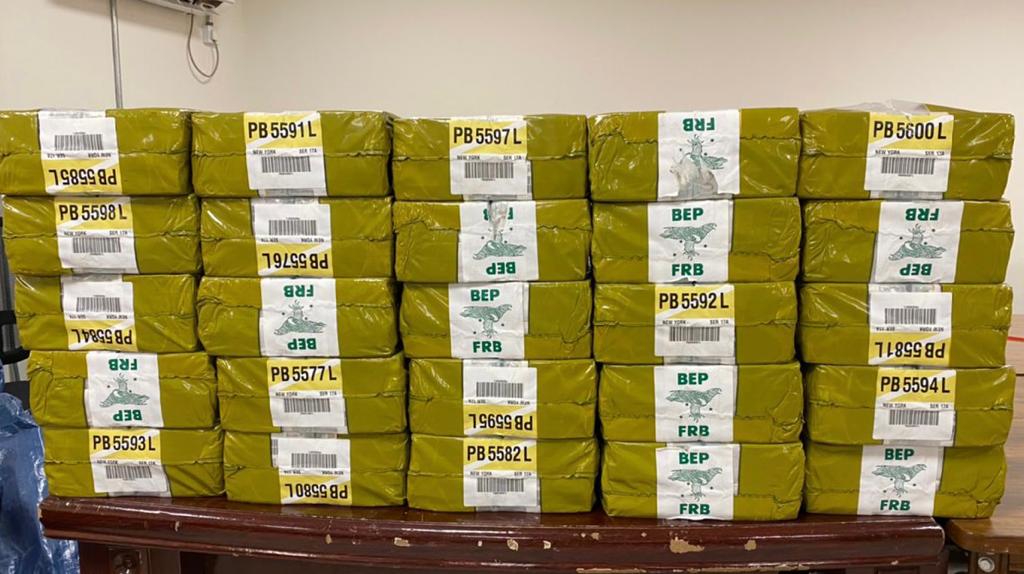
According to a March 2024 publication by ProPublica based on a SIGAR report, the UN handed over $2.9 billion in cash to Afghanistan. In December 2021, the Taliban-controlled Afghan central bank began posting on one of its social media accounts about cash shipments from the UN in the form of wrapped bundles of cash. The posts included arrival dates, shipment amounts, and photographs, including photos of what the central bank said were officials unloading the UN cash shipment at Kabul Airport and photos of bundled cash deposited into a bank vault.
The Taliban was posting photographs of American cash deliveries on social media. The aid pipeline continued. This is the accountability deficit in its most literal and visible form: a designated terrorist regime publicly celebrating its receipt of international donor funds while the international community continued to fund the pipeline through which those funds arrived.
In an effort to prevent US aid from reaching the Taliban, Congressman Burchett introduced the No Tax Dollars for Terrorists Act in December 2023. The bill, which passed the House of Representatives unanimously, would require the State Department to develop a policy explicitly prohibiting any foreign aid from reaching the Taliban and mandating reports on cash assistance programmes in Afghanistan and the mechanisms used to prevent Taliban access.
A January 2025 SIGAR report emphasised that the Taliban, whom the US does not recognise as Afghanistan’s government and has sanctioned, has no legal claim to billions in US funds, and urged the US to consider reclaiming nearly $4 billion allocated for Afghanistan.
The Humanitarian Dilemma — And Its Honest Resolution
PAYF does not dismiss the humanitarian dimension of this crisis, and intellectual honesty requires its acknowledgement. In 2024, US funding helped humanitarian responders reach 20.4 million Afghans with at least one form of humanitarian assistance. Without US funding, several million fewer people will receive assistance in 2025. More than half of Afghanistan’s estimated 40 million population is dependent on international handouts for survival.
The Afghan people’s need is real. The humanitarian impulse that motivated continued aid is not cynical. But the documented reality, that between 60 and 70 per cent of aid funds do not reach their intended recipients, that Taliban military camps have received stolen food aid, that aid workers have been killed for exposing diversion, and that the regime simultaneously hosting 20,000 terrorists is systematically weaponising humanitarian infrastructure, demands a conclusion that the international community has been reluctant to state plainly:
Undocumented, unverified aid flowing to a sanctioned regime through an accountability-deficient pipeline is not humanitarian assistance. It is the subsidisation of a kleptocratic terrorist-hosting regime, dressed in the language of humanitarian obligation.
The honest resolution is not to abandon the Afghan people. It is to develop aid delivery mechanisms that genuinely bypass the Taliban’s extraction apparatus, mechanisms that the international community has the technical capacity to build but has lacked the political will to prioritise over the administrative convenience of existing UN pipeline structures.
What Must Now Change
The convergence of three documented realities, $3.83 billion in US aid disbursed with documented diversion, a Taliban regime simultaneously hosting 20,000-plus terrorists, and an incoming relocation of 8,500-9,000 Syria-experienced fighters into that ecosystem, creates an accountability demand that no amount of humanitarian framing can dissolve.
Donor governments must require full financial transparency as a condition of any aid resumption, not as an aspirational standard but as a non-negotiable prerequisite. The UN’s documented failure to track or disclose payments made by its implementing partners to Taliban-controlled entities is not an administrative gap. It is a structural enabler of the diversion that SIGAR has spent years documenting.
The international community must end the fiction that aid to Afghanistan and accountability for Afghanistan’s terrorist infrastructure are separable policy tracks. They are not separable. They are funded by the same taxpayers, administered through the same institutions, and operating within the same territory governed by the same regime.
And the US Congress must ensure that the documented findings of SIGAR, 1,319 instances of waste, fraud, and abuse since 2008, at least $24 billion in wasted taxpayer dollars, $10.9 million confirmed as directly reaching Taliban-controlled entities, translate into structural reforms of the aid pipeline rather than periodic reports that are read, noted, and filed while the pipeline continues.
The Accounting That Is Owed
Forty million dollars per week. Three point eight three billion dollars since 2021. A Taliban central bank posting photographs of cash deliveries on social media. Aid workers killed for exposing diversion to military training camps. Sixty to one hundred per cent of aid is taxed from recipients in some documented cases. Twenty thousand terrorists hosted simultaneously on the same soil.
This is the documented record. It is produced not by Pakistan’s foreign ministry, not by regional advocacy organisations, not by adversarial intelligence services. It is produced by the United States government’s own Special Inspector General, by its own State Department officials, by its own Congressional testimony, and by the UN’s own operational reality on the ground.
The accounting that is owed to American taxpayers, to the Afghan civilians whose aid was stolen, to the regional states whose security has been degraded by the terrorist infrastructure that continued to expand while the aid flowed, is not a rhetorical demand. It is the minimum that documented evidence of this scale and this consequence requires.
The knife was sheltered. The hand that sheltered it was funded. The bill has been presented. It is time for someone to pay it.