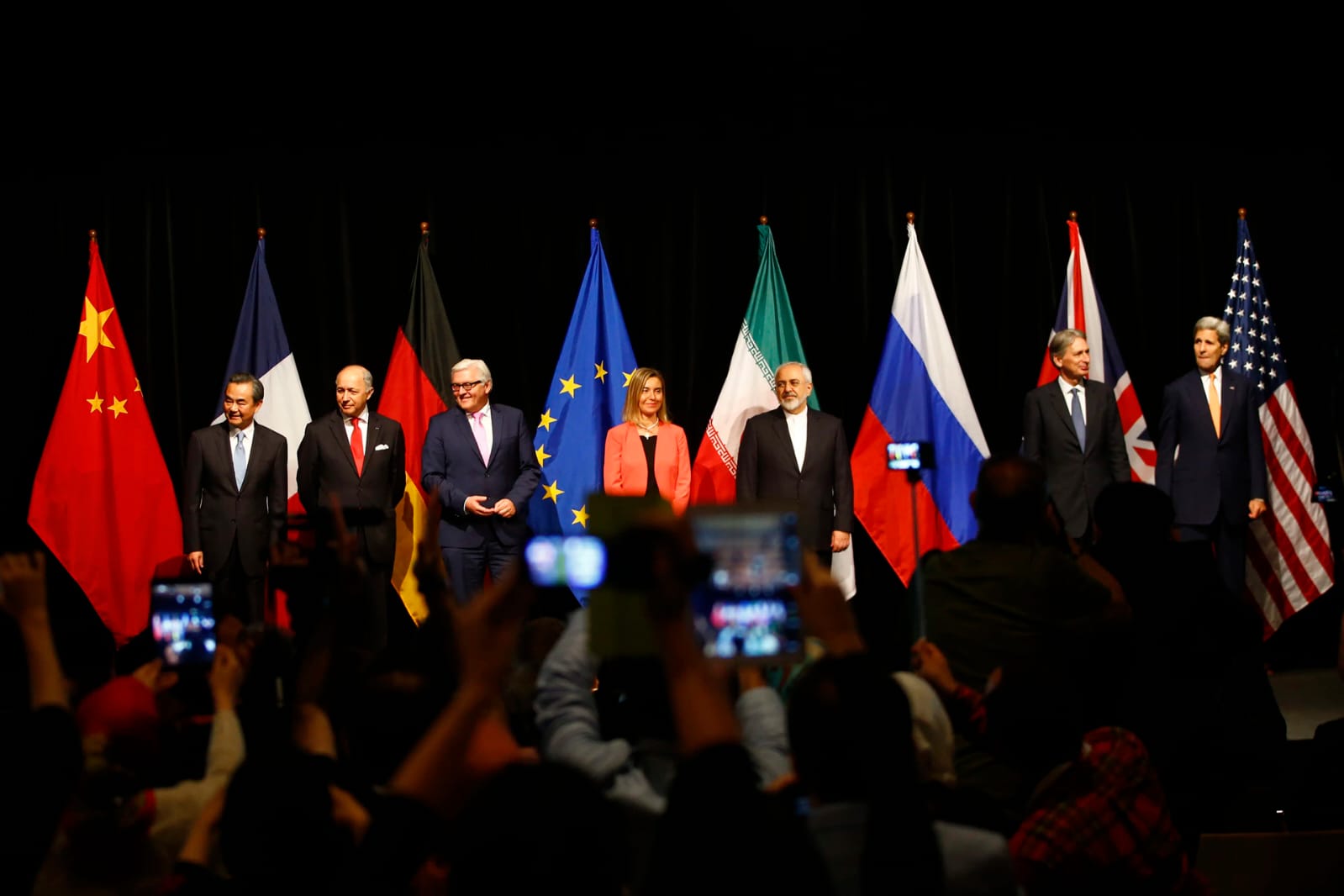
How global diplomacy, verification politics, and nuclear history shape the world’s most contested non-proliferation file.
Few nuclear issues have absorbed global attention as deeply as Iran’s nuclear activities. For more than two decades, the International Atomic Energy Agency (IAEA) has stood at the heart of a geopolitical struggle where verification intersects with diplomacy and where scientific assessments collide with competing global narratives. Mohamed ElBaradei, in his memoir The Age of Deception, captured the essence of nuclear governance when he wrote, “In the nuclear world, transparency is the currency of trust.” Nowhere has this principle been tested more profoundly than in Iran.
A Turbulent History: From Secrecy to the Most Intrusive Monitoring Regime
The IAEA’s intense engagement with Iran began in 2002 after revelations about previously undeclared facilities at Natanz and Arak. These disclosures triggered years of mistrust, sanctions, negotiations, and diplomatic crises. Many feared that Iran’s program was evolving into a regional flashpoint with the potential to reshape Middle Eastern security.
A breakthrough came in 2015 with the Joint Comprehensive Plan of Action (JCPOA). Widely hailed as a diplomatic achievement, it introduced what many analysts considered the most intrusive verification system the IAEA had ever administered. Ban Ki-moon called it “a historic victory for peaceful settlement over confrontation.” Under the JCPOA, Iran accepted strict limitations on enrichment levels, centrifuge numbers, and stockpile thresholds while granting extensive access to inspectors. For a moment, it appeared that long-standing tensions were easing.
Unraveling of the JCPOA: A New Era of Uncertainty
The U.S. withdrawal from the JCPOA in 2018 shattered the fragile equilibrium. As sanctions returned, trust eroded, and Iran incrementally reduced its commitments. For the IAEA, this shift produced immediate operational challenges. Access narrowed, surveillance cameras were disconnected, and essential data stopped flowing. The uninterrupted historical record critical for long-term verification was suddenly compromised.
IAEA Director-General Rafael Grossi warned that the Agency’s visibility had been “dramatically reduced,” stressing that without restored transparency, the verification process could not function with credibility. Monitoring did not cease, but it became far more complex and politically sensitive. Each IAEA report began influencing debates on sanctions, regional security, and diplomatic strategy, demonstrating how technical assessments had become central to global geopolitics.
Global Geopolitics: Iran as a Stage for Power Rivalries
Monitoring Iran’s nuclear program is not purely a technical exercise; it is deeply political. Major powers interpret Iran’s actions through their own strategic lenses. European states emphasize diplomacy and non-proliferation norms, the United States frames the issue through regional security and strategic competition, while China and Russia highlight sovereignty, sanctions relief, and multilateral dialogue rather than coercion.
Regional concerns compound this dynamic. Gulf states fear that unchecked nuclear advancement could trigger a destabilizing arms race, while global energy markets respond sharply to any escalation. Within this web of rivalries and anxieties, the IAEA must uphold neutrality a challenging task in a polarized world.
Diplomacy Under Strain: Verification in the Absence of Political Consensus
The Iran nuclear issue exposes a fundamental mismatch between technical verification and political reality. The IAEA can verify compliance but cannot enforce it. It can identify gaps but cannot repair diplomatic fractures. Today, those foundations are fragile. Trust between Iran and Western governments remains minimal. Sanctions continue to shape Iran’s strategic posture. Negotiations to revive or replace the JCPOA stall repeatedly. As political consensus weakens, the burden on the IAEA increases, making its mission simultaneously more essential and more constrained.
A Way Forward: Rebuilding Confidence and Stabilizing Verification
Preventing escalation and preserving the credibility of global non-proliferation demands a renewed commitment to transparency and dialogue. The restoration of continuous monitoring is essential because without sustained access, informational gaps will widen and undermine the accuracy of future assessments. Diplomatic engagement must also return to the center of international strategy, as no verification system can function without political will. Finally, regional dialogue is emerging as a critical missing element. The Gulf region lacks structured nuclear confidence-building mechanisms, and many analysts argue that long-term stability will require consultations between Iran and its neighbors to reduce mistrust and create a shared security understanding.
While the IAEA cannot initiate these political processes, its effectiveness depends on them. Without a stable political environment, even the most advanced verification systems cannot ensure lasting confidence.
Conclusion: Why the Iran–IAEA File Will Shape the Future of Non-Proliferation
The IAEA’s monitoring of Iran represents more than a single nuclear dispute. It is a test of whether international institutions can manage major power tensions through rules and diplomacy rather than confrontation. Iran’s nuclear trajectory sits at the intersection of regional rivalries, sanctions, domestic politics, and global power competition. Through all this, the IAEA remains the only impartial source of technical clarity in a space dominated by political noise.
The future of global non-proliferation and the credibility of the rules-based nuclear order will depend on how successfully that mission can be carried out in Iran’s complex and evolving case.