The Middle East is undergoing a generational economic transformation, and Pakistan is well positioned to anchor it. Saudi Vision 2030, the UAE’s Centennial 2071 and Qatar National Vision 2030 are driving multi-trillion-dollar diversification agendas.
Those agendas need reliable partners beyond the traditional energy markets. Pakistan offers a strategic proposition across five connected areas: human capital, food security, digital capability, strategic resources and connectivity.
Its large workforce, coastline of more than 1,000km, proximity to the Gulf and substantial agricultural base all complement the change underway across the Arabian Peninsula.
The institutional groundwork is being laid. The Special Investment Facilitation Council (SIFC) provides a single-window framework for strategic investment and regulatory coordination.
Alongside evolving investment-protection arrangements and the ongoing Pakistan-GCC trade negotiations, it gives Gulf investors a dedicated mechanism for turning sovereign interest into commercial opportunity.
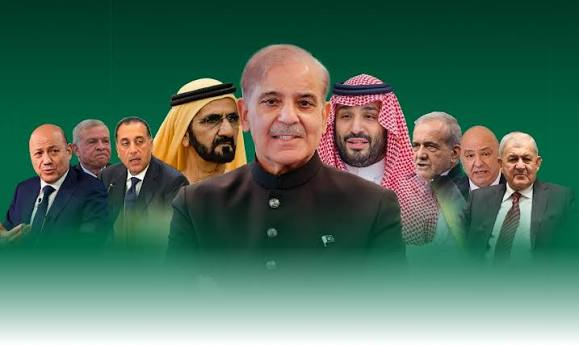
Pakistan should be seen not just as a recipient of Middle Eastern capital but as a potential long-term economic partner whose assets complement Gulf diversification.
The human link is the strongest and best known. More than 5.5 million Pakistanis work across the Gulf Cooperation Council (GCC), including 2.6 million in Saudi Arabia and 2.2 million in the UAE.
They are embedded in Gulf economies. In FY2025-26, their remittances reached a record $41.6 billion. That figure is a sign of a deep, working relationship, not just a household lifeline.
The next step is a shift from traditional labour exports to a higher-skilled workforce in construction, engineering, healthcare, hospitality, IT and other technical professions.
National Vocational and Technical Training Commission (NAVTTC) and the Ministry of Overseas Pakistanis are increasingly aligning training and certification with Gulf labour-market needs. This builds a workforce pipeline for the region’s infrastructure, services and technology-led growth.
Food security is the second pillar. Gulf economies depend heavily on food imports because of limited arable land and water. Pakistan has substantial agricultural, livestock and fisheries potential, with roughly 9.1 million hectares available for agriculture and 22.4 million hectares of rangeland.
The opportunities range from corporate farming and livestock to food processing, storage and logistics. Investment in irrigation, cold chains and maritime logistics could link Pakistani production directly to Gulf consumers.
The digital economy is the third, and fast-growing, pillar. Pakistan’s technology ecosystem is a growing source of software engineers, IT professionals, freelancers and technology firms.
ICT (Information and Communication Technology) exports reached a record $4.6 billion in FY2025-26. Demand across the Gulf for AI, fintech, cybersecurity, software and digital trade solutions offers a natural market for this talent.
Strategic resources are the fourth. Pakistan’s copper and gold intersect with Gulf strategies on diversification and critical minerals. The country is estimated to hold $6.1 trillion in mineral wealth, with the world’s second-largest coal and seventh-largest copper reserves.
Saudi Arabia’s prospective investment, through Manara Minerals, in the Reko Diq copper-gold project shows how Pakistan’s resources and Gulf ambitions for strategic mineral assets are converging. Gulf capital can also support Pakistan’s energy transition, renewable generation, mining and industrial development.
Connectivity is the fifth and integrating pillar. Pakistan’s Arabian Sea coastline gives Gulf investors access to South Asian markets and potential overland routes to Central Asia and western China. Abu Dhabi Ports’ long-term concessions and investments at Karachi Port show Gulf interest in Pakistan’s maritime infrastructure.
Karachi and Gwadar can work as complementary gateways for Gulf capital and trade. Gulf investment in ports, logistics, transport and digital trade infrastructure could create integrated supply chains running from the Arabian Peninsula through Pakistan toward Central Asia and western China. Pakistan’s value lies not only in being a market but in its ability to connect several economic regions.
Taken together, the relationship is changing from one based on labour and remittances into a multidimensional economic partnership. Human capital supports Gulf diversification, agriculture adds to food security, technology feeds digital transformation, minerals support industrial diversification, and geography provides connectivity.
This potential will not realise itself, however. Investor interest needs predictable policy, and the SIFC framework must deliver faster approvals and firmer protections in practice, not only on paper.
Training must reach the scale and quality that Gulf employers expect. Irrigation, cold chains and port infrastructure need sustained investment, and resource projects must be transparent and benefit local communities. Pakistan should treat these as its own tasks and not wait for Gulf capital to solve them.
As the Gulf looks beyond hydrocarbons, Pakistan is not a secondary beneficiary of the region’s growth. It is a strategic economic partner whose people, productive capacity, resources and geography complement the Gulf’s transformation.
It can supply the people, production, resources and connectivity that link Middle Eastern capital with the wider Asian growth corridor. For the Gulf, Pakistan is a vital strategic partner, a geographic door and an industrial backbone.