Five years after the fall of Kabul, Afghanistan stands as the most consequential governance experiment of the twenty-first century and its most catastrophic. The Islamic Emirate of Afghanistan arrived in August 2021 bearing the language of pragmatism and promises of amnesty, of inclusive administration, of measured engagement with a skeptical world. What followed was the systematic construction of a closed theocracy, an ideological architecture so deliberately exclusionary that its effects will reverberate across generations far beyond the current crisis. The fifth anniversary offers analysts a rare vantage point: enough temporal distance to assess trajectory, enough accumulated data to render judgment, and enough unambiguous evidence to retire the persistent fantasy of Taliban moderation entirely.
The Fracture Within: Power Centers and the Illusion of Cohesion
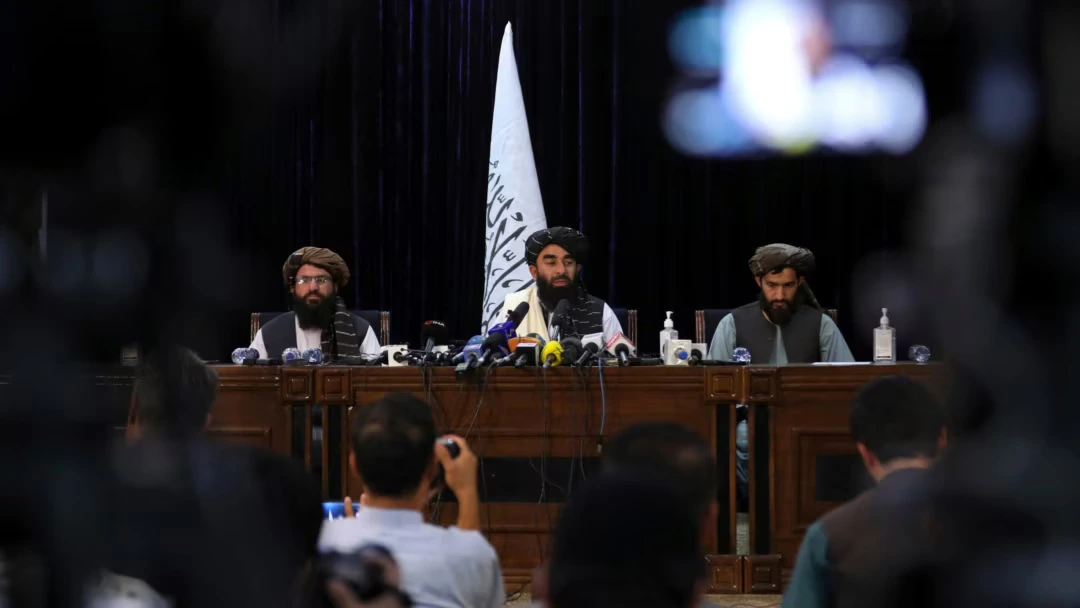
The Taliban’s governance structure has never been the monolith its critics assume or its admirers claim. A persistent and increasingly volatile tension defines the relationship between Supreme Leader Hibatullah Akhundzada, ensconced in Kandahar as the ideological nerve center of the regime, and the ministerial administrators operating out of Kabul. Akhundzada represents the purist faction, a cohort of ultraconservative ideologues for whom religious uniformity supersedes administrative pragmatism, economic viability, or international engagement. Against this, figures like Interior Minister Sirajuddin Haqqani and Defense Minister Mohammad Yaqoob Mujahid have historically leaned toward a more transactional reading of the regime’s survival, acknowledging that functional governance requires a degree of institutional openness.
The fragility of this internal arrangement became publicly visible in late 2025, when Akhundzada issued an edict ordering a nationwide internet shutdown on grounds of moral purification. The Kabul ministers reversed the order within days, citing the imminent collapse of banking and administrative infrastructure. That a sitting Supreme Leader could be effectively overruled by his own cabinet on a matter of declared religious policy speaks to the depth of the fracture. Yet the broader arc of consolidation favors Kandahar. The Ministry for the Propagation of Virtue and Prevention of Vice has been deployed as a parallel enforcement mechanism, circumventing ministerial oversight entirely and translating Akhundzada’s edicts into provincial reality without institutional mediation. The Emirate functions less like a government and more like a dual track system in perpetual tension with itself, held together by shared opposition to external threats rather than any coherent internal consensus.
The Economics of Managed Collapse
The macroeconomic record of the Taliban’s five years in power is a masterclass in statistical deception. Aggregate GDP growth of 1.9 percent in 2025 reads, in isolation, as a sign of stabilization. It is anything but. The return of approximately five million Afghans from Iran and Pakistan since 2023 generated an estimated eleven percent spike in the national population in a single fiscal year. The arithmetic consequence is devastating: per capita GDP contracted by 5.6 percent in 2025, meaning that the average Afghan grew measurably poorer even as the headline figure suggested marginal progress. In 2026, over eighty percent of Afghan households carry active debt, and nearly three-quarters have adopted what economists euphemistically term “negative coping strategies,” reducing food consumption, liquidating assets, and withdrawing children from education to cover immediate survival costs.
The structural fault lines run deeper still. Afghanistan’s trade deficit widened to a record $11.3 billion in 2025, roughly sixty percent of nominal GDP, driven by import dependency in basic commodities and an export economy that generates negligible foreign exchange. The regime’s revenue drive has pushed tax compliance to 17.1 percent of GDP, a figure that would be impressive in a functioning state but here represents the extraction of resources from an economy already at the edge of subsistence. The ongoing freeze of Afghan central bank assets and the collapse of international grants have eliminated the fiscal buffer entirely. The 2026 humanitarian response plan requires $1.71 billion to address the needs of twenty-two million people. As of mid-May 2026, it is 14.8 percent funded. The arithmetic of abandonment is rendered in these figures with unsentimental clarity.
The Jurisprudence of Subjugation: Formalizing a Hierarchy of Harm
If the economy represents a crisis of mismanagement, the legal framework enacted in January 2026 represents a crisis of deliberate design. The Criminal Procedural Regulations for Courts, promulgated by Akhundzada at the opening of the new year, constitute the most explicit codification of institutionalized inequality in the contemporary world. Article 9 formally stratifies Afghan society into four categories: religious scholars, elites, the middle class, and what the regulation designates as the “lower class.” Judicial proceedings and punishments are calibrated according to this hierarchy, meaning that a member of the ulema who commits an offense against a laborer inhabits an entirely different legal universe than the laborer who commits the same offense against him.
The implications extend well beyond abstract inequality. Article 4(6) authorizes any Muslim witness to administer punishment for offenses deemed crimes against God, effectively dissolving the state’s monopoly on sanctioned violence and creating legal architecture for vigilante enforcement. Personal animosities, property disputes, and community rivalries acquire judicial legitimacy under this provision. Article 34 criminalizes a woman’s departure from the marital home without her husband’s permission and subjects her male relatives to imprisonment for her perceived disobedience. The concept of individual criminal responsibility, a foundational principle of modern jurisprudence, is abandoned under Article 4(13), which permits the inheritance of discretionary punishments across family members. This is governance conceived as punishment, a legal system designed to produce fear rather than justice, and compliance rather than citizenship.
Gender Apartheid and the Deliberate Erasure of Half a Nation
The condition of Afghan women in 2026 represents a political phenomenon without precise parallel in the contemporary world. Since August 2021, the Islamic Emirate has issued nearly one hundred edicts progressively eliminating women from every sphere of public existence. The secondary and higher education ban has entered its fifth consecutive year, meaning that girls who were in primary school when Kabul fell are adolescents who have received years of systematic exclusion from formal learning. The generation approaching adulthood has been educated in absence, shaped by the knowledge that the state considers their intellectual development a threat to social order rather than an asset to national survival.
The scope of exclusion is total. Women are barred from most forms of employment, from singing or reciting the Quran in public spaces, and from any travel without male guardianship. In January 2026, the Taliban terminated the contracts of all remaining women civil servants, including those working remotely on reduced salaries, eliminating the final residual foothold of female economic participation in the public sector. The maternal mortality rate stands at 521 deaths per hundred thousand live births, a figure that reflects both the healthcare funding crisis and the structural impossibility of building a female medical workforce when women are barred from training as doctors and midwives. International legal advocates have mounted an increasingly credible campaign to have these policies formally designated as a crime against humanity. Whether that designation arrives before the generational damage becomes irreversible is a question the international community has thus far answered with procedural delay and diplomatic evasion.
Five years on, the Ministry of Promises has delivered precisely what careful analysis always suggested it would: a regime committed to permanence over progress, to ideological coherence over human welfare, and to the logic of total control over the inconvenient complexities of actual governance. The Afghan people endure, and the world, for the most part, watches.