When someone takes a fragment of history, strips it of its context, adds words that were never spoken, attributes intentions that were never held, and then deploys the result against an entire nation, that is not scholarship. That is intellectual fraud dressed in religious vocabulary.
Sahil Adeem’s claim that Hazrat Umar Farooq R.A described the territory of present-day Pakistan as a land of fornication, the worst people, and open immorality, and on that basis recalled his army, is historically false, religiously irresponsible, and intellectually dishonest. This editorial examines that claim against the actual historical record because Pakistan’s youth deserve the truth about their land, their history, and the figures of Islamic history being misrepresented to demean them.
The First Problem: The Numbers Don’t Add Up
Sahil Adeem claims that Hazrat Umarؓ ruled over 75 per cent or more of the world. This figure is not a historical assessment. It is rhetorical exaggeration.
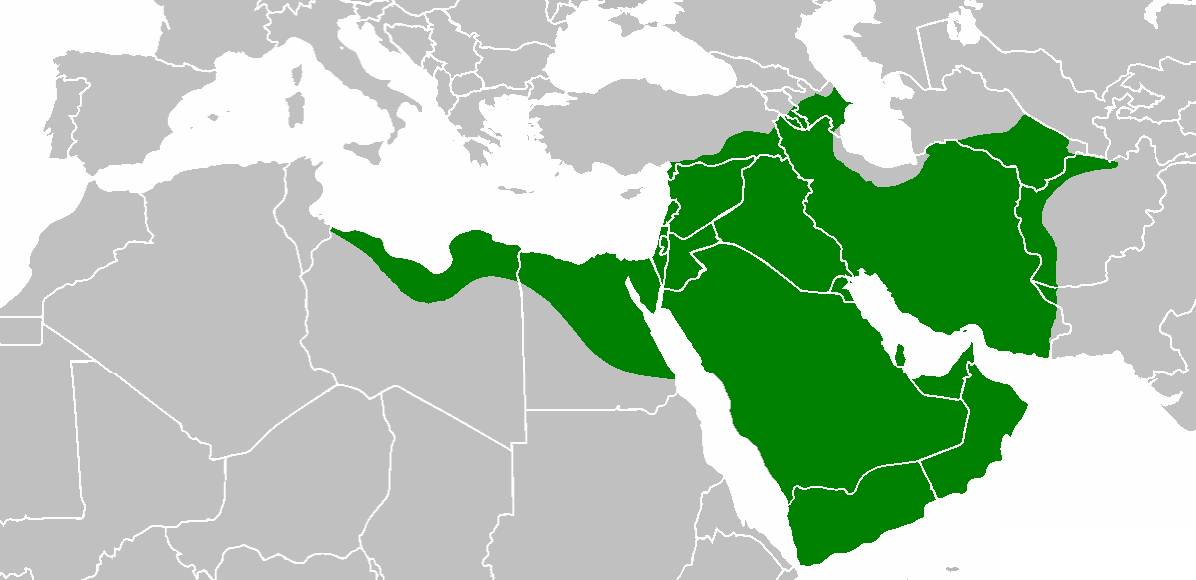
The documented historical estimates place the Rashidun Caliphate under Hazrat Umar R.A at approximately 14 per cent of the world’s population and roughly 4 per cent of the world’s land area. These are extraordinary achievements for a period spanning 634 to 644 CE, a decade in which the armies of Islam reached Syria, Iraq, Egypt, Persia, and parts of the Byzantine Empire. That record needs no inflation to be impressive.
But when a narrative begins with fabricated statistics, its subsequent claims inherit that foundational unreliability. If the premise that Hazrat Umar R.A governed 75 per cent of the world is false, the edifice built upon it deserves proportional scrutiny.
The Second Problem: What the Sources Actually Say
The actual historical record of the Makran expedition is found in Tarikh al-Tabari and Futuh al-Buldan, two of the most authoritative primary sources in Islamic historiography. What they say is not what Sahil Adeem presented.
According to these sources, Hakam ibn Amr al-Taghlibيؓ reached the frontier region of Makran. A messenger was sent to Hazrat Umarؓ with a report on conditions there. Hazrat Umarؓ asked the messenger to describe the territory. The messenger replied that the land was harsh, water was scarce, dates were poor quality, the enemy was courageous, resources were limited, and military advance was logistically difficult. Hazrat Umar R.A. asked, “Are you giving me a report or reciting poetry?” The messenger said, “I am giving you a report.” Hazrat Umarؓ then ordered that the army advance no further.
Let every reader note carefully what is present in this account and what is absent.
Present: a military assessment of terrain, water supply, food resources, logistical difficulty, and enemy capability. Absent: any mention of fornication, any description of the local people as the worst of humanity, any expression of hatred toward the population, any moral condemnation of the territory, and, most critically, any reference to “Pakistan,” a political entity that would not exist for another thirteen centuries.
The words Sahil Adeem placed in the mouths of the companions of the Prophet ﷺ are not in the historical sources. They are inventions, rhetorical additions layered onto a sober military assessment to produce a narrative that the original account simply does not support.
The Third Problem: What the Decision Was Actually Based On
Hazrat Umar’s decision to halt the advance was based on three clear and documented military and administrative considerations.
The first was geographical difficulty; the terrain was harsh, the routes were treacherous, and the conditions were unsuitable for sustained military operations. The second was the logistics of supply; a small army would be lost, and a large army would face starvation. The third was the protection of human life, a responsible ruler declining to send his forces into unnecessary danger when the conditions did not justify the risk.
This is the Hazrat Umarؓ that Islamic history knows and honours: the ruler whose governance is synonymous with justice, accountability, and the sanctity of human life. Hazrat Umar, who walked the streets of Medina at night to check on his people’s welfare. The Hazrat Umar who held himself and his governors to standards of conduct that would be extraordinary in any era. The Hazrat Umarؓ whose letter to Abu Musa al-Ash’ari on judicial conduct remains a masterwork of administrative ethics across fourteen centuries.
To take this man’s responsible, documented, strategically sound military decision, halt the advance because the terrain is hostile and the logistics cannot sustain the campaign — and transform it into an expression of hatred for an entire nation is not merely historically wrong. It is a disservice to one of the most admired figures in Islamic history.
Significantly, Futuh al-Buldan by al-Baladhuri records a nearly identical account from the era of Hazrat Uthmanؓ regarding the frontier with Hind, where, after receiving similar information about scarce water, poor dates, difficult terrain, and logistical impossibility, Hazrat Uthmanؓ also declined to order an attack. The pattern across both accounts is identical: the subject is geography, supply, and military feasibility. The subject is never the moral condemnation of a population.
The Fourth Problem: “Pakistan” Did Not Exist
This is the most fundamental scholarly objection to Sahil Adeem’s entire framework, and it is unanswerable.
The account in the historical sources refers to Makran, a frontier coastal region that today forms part of Balochistan. Pakistan as a political entity came into existence in 1947. Hazrat Umarؓ died in 644 CE. Between the historical event and the political entity Sahil Adeem is attacking, there is a gap of approximately thirteen hundred years.
Applying a seventh-century military assessment of a frontier region populated by non-Muslim communities to a twenty-first century Muslim state of 240 million people requires the simultaneous conflation of five separate categories: time period, geographic location, population, political identity, and the purpose of the original account. Collapsing all five into a single rhetorical attack on Pakistan is not historical reasoning. It is the abuse of historical fragments for contemporary political purposes.
Jamia Banuri Town’s Dar al-Ifta, one of Pakistan’s most respected Islamic scholarly institutions, has formally addressed this exact question and concluded explicitly that applying this narration to the present population of Pakistan is incorrect. Their reasoning is precise: the narration concerned a time when non-Muslim communities inhabited the region and Muslim forces were on a frontier military expedition. Applying it to today’s Pakistan, today’s Pakistani Muslims, or contemporary Pakistani society is not historically defensible.
When Pakistan’s own senior religious scholars, the people most qualified to assess Islamic historical narrations, have issued this clarification, on what basis does Sahil Adeem maintain his contrary position?
The Fifth Question: What Does Islamic Tradition Actually Say About This Land?
Sahil Adeem presents his fabricated account as if it stands in tension with Pakistan’s Islamic identity, as if Pakistani Muslims must choose between Hazrat Umarؓ and their own country. This framing is itself the manipulation.
The Islamic scholarly tradition, the testimony of Pakistan’s ulema, and the country’s documented religious heritage tell a different story. Pakistan has produced hundreds of thousands of Islamic scholars, jurists, hadith scholars, Sufis, and religious educators. Its soil contains the shrines of saints who brought Islam to the subcontinent through centuries of devotion, scholarship, and service. Its madrasas and mosques serve communities across the country. Its people fast in Ramadan, perform Hajj, and have given this country some of the most distinguished Islamic scholars of the modern era.
If this were, as Sahil Adeem claims, a land rejected by Hazrat Umarؓ as the home of the worst people on earth, how does one explain the flourishing of Islamic scholarship and devotion on this soil across fourteen centuries? The land that Hazrat Umarؓ supposedly condemned has produced more Quran huffaz, more Islamic scholars, and more institutions of Islamic learning than most countries in the world.
The answer is that Hazrat Umar said no such thing. He halted a military advance on sound logistical grounds. And the land of present-day Pakistan subsequently received Islam, not through conquest at that moment, but through the later campaign of Muhammad bin Qasim in 711 CE, through trade, through Sufi missionaries, and through centuries of organic spread. The divine plan for this region unfolded in its own time, in its own way.
Allama Iqbal dreamed of this homeland. Quaid-e-Azam Muhammad Ali Jinnah led its creation. Millions gave their lives, their properties, and their families in the migration of 1947 to reach this land. The ulema who called it a gift of Allah and a miracle of the modern age were not contradicting Hazrat Umar. They were correctly understanding what Hazrat Umar actually said, and what he did not say.
A Direct Answer to the Question Pakistan’s Youth Are Asking
The question posed in the public discussion that prompted this editorial was direct and honest: whose account do we believe, Sahil Adeem’s, or the Islamic literature and scholars of our own country?
The answer, examined through the lens of historical sources and scholarly consensus, is clear.
Sahil Adeem’s account cannot be verified from the primary sources of Islamic history. The words he attributes to the companions do not appear in Tarikh al-Tabari or Futuh al-Buldan. The moral condemnation he describes, fornication, the worst people, hatred, is absent from the historical record. The term “Pakistan” appears nowhere in seventh-century Islamic texts for the obvious reason that Pakistan did not exist. And Pakistan’s own most respected religious institution has formally stated that applying this narration to contemporary Pakistan is incorrect.
The Islamic literature and scholars of Pakistan are not making a claim in contradiction to Hazrat Umar. They are correctly reading the historical record, and on that correct reading, Pakistan is what its founders, its ulema, and its people have always understood it to be: a homeland earned through sacrifice, sustained through faith, and deserving of the loyalty and honest service of every Pakistani.
History Deserves Better. So Does Pakistan.
Hazrat Umar Farooqؓ was one of the greatest rulers in human history, just, disciplined, brilliant in strategy, and deeply conscious of his accountability before Allah. His decision to halt the advance at Makran was the decision of a responsible commander protecting his soldiers from unnecessary risk in difficult terrain. It was the decision of a leader who valued human life over territorial expansion when the conditions did not justify the cost.
To take that decision, documented, explicable, admirable on its own terms, and transform it into a hatred for an entire nation that would not exist for thirteen hundred years more is an act of intellectual dishonesty that disrespects both Hazrat Umar and Pakistan simultaneously.
Pakistan’s youth should know their history. They should read the primary sources. They should ask the hard questions. And they should reject false narratives, not with emotion, but with knowledge.
Because a nation that knows its own history cannot be unmade by someone else’s fabrication of it.