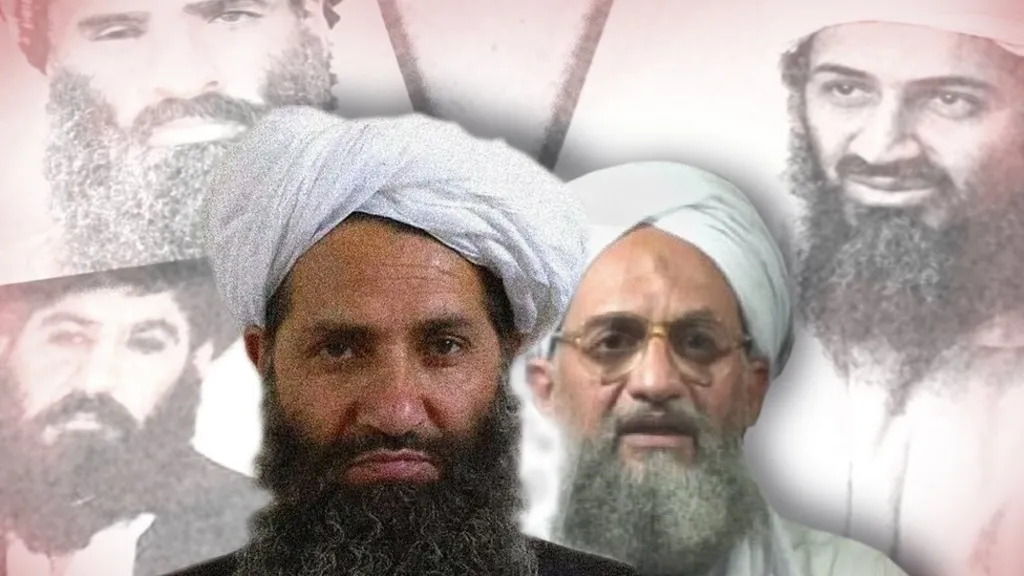
In July 2022, American intelligence located Ayman al-Zawahiri, the global head of Al-Qaeda, the man who co-planned the September 11 attacks that killed nearly three thousand people, in a safe house in Kabul. Not in a cave. Not in a remote mountain pass. In the capital city of the country whose governing regime had signed a formal international agreement committing explicitly to deny Al-Qaeda sanctuary on its soil.
A drone strike killed him. The Taliban denied knowledge of his presence. No member state of the United Nations accepted that denial.
That single fact is the foundation of everything that follows. Al-Qaeda’s most wanted man was not hiding from the Taliban. He was their guest, residing in a property under their control, in their capital city. At the same time, the international community debated engagement frameworks and reconstruction funding for the regime that was sheltering him.
The Organisation the World Cannot Afford to Underestimate
Al-Qaeda is not a relic. It is not a diminished threat whose historical significance now exceeds its operational capacity. It is, by the assessment of global security institutions and intelligence agencies, one of the two most dangerous terrorist organisations on earth, and it is more deeply embedded in Afghan territory today than at any point since the US invasion of 2001.
Rather than operating as a single centralised command, the structure that made it vulnerable to the post-9/11 counterterrorism campaign, Al-Qaeda has evolved into a sprawling international network of regional affiliates and franchise groups operating across the Middle East, South Asia, and Africa. This decentralised architecture makes it more resilient, more adaptable, and more difficult to dismantle than its original form. And at its core, providing the safe space for leadership, planning, training, and ideological production that the entire franchise network requires, sits the Afghan sanctuary that the Taliban has protected, maintained, and refused to dismantle despite every international commitment, every UN monitoring report, and every diplomatic demand to the contrary.
According to the Russian Ministry of Foreign Affairs’ March 2026 assessment, more than 1,500 Al-Qaeda members are based in Afghanistan. SIGAR assessments have independently cited the presence of senior Al-Qaeda leadership alongside thousands of fighters on Afghan soil. Successive UN Security Council Monitoring Team reports, the 35th, 36th, and 37th, have consistently documented Al-Qaeda’s continued operational presence in Afghanistan, its links to Taliban leadership, and the permissive environment that Taliban governance has provided for the organisation’s continued development.
No UN member state accepted the Taliban’s claims that Al-Qaeda no longer operates from Afghan territory. Not one.
The Doha Promise That Was Never Kept
The Doha Agreement of February 2020 was built on a specific and explicit commitment: the Taliban would prevent Afghan territory from being used against other countries and would deny sanctuary, recruitment, financing, and support to terrorist organisations, most specifically Al-Qaeda. This was not diplomatic boilerplate. It was the central condition of the agreement, the stated basis on which the United States agreed to withdraw its forces and the international community agreed to engage with Taliban governance.
Zawahiri’s presence in a Kabul safe house in July 2022, one year after the Taliban takeover and two years after the Doha Agreement was signed, was not an embarrassing oversight. It was the definitive answer to the question of whether the Taliban intended to honour its counterterrorism commitments.
The answer was no. And the evidence accumulated since has only reinforced that answer. Approximately 5,000 Taliban prisoners released under the Doha Agreement rapidly rejoined the insurgency despite written Taliban assurances that they would not return to the battlefield. The 37th UN Monitoring Team Report assessed that Al-Qaeda had been accorded greater operational freedom under Taliban rule. The organisation’s financial networks, recruitment pipelines, and ideological production apparatus have continued to function from Afghan territory throughout the five years of Taliban governance.
The Taliban signed the Doha Agreement knowing what it committed them to. It has governed Afghanistan for five years, knowing what its continued hosting of Al-Qaeda represents. The gap between these two facts is not a governance failure or a capacity limitation. It is a deliberate policy choice.
Al-Qaeda’s Afghan Sanctuary and Regional Instability
The consequences of Al-Qaeda’s continued Afghan sanctuary are not abstract security concerns. They are the documented, operational reality of regional instability that the organisation’s presence generates across South and Central Asia.
Al-Qaeda’s franchise affiliates use the Afghan core as a source of ideological direction, operational guidance, and, in some cases, direct personnel support. The organisation’s presence alongside the TTP, which maintains between 5,000 and 7,000 fighters in Afghanistan and conducts cross-border attacks into Pakistan, creates an ecosystem of shared resources, networks, and operational space that amplifies the threat posed by each group individually.
Pakistan has borne the most direct cost of this ecosystem. The violence of 2025 made it Pakistan’s deadliest year in over a decade; combat-related deaths surged by 74 per cent to more than 3,400 fatalities. The Global Terrorism Index identified Pakistan as recording the most terrorist incidents of any country, 490 attacks resulting in 689 deaths in a single year. Behind these statistics are soldiers killed at checkpoints, civilians killed in mosque bombings, children killed in school attacks, all connected to networks that plan, resource, and direct operations from Afghan territory under Al-Qaeda’s ideological umbrella and Taliban protection.
The regional instability that Al-Qaeda’s Afghan sanctuary generates extends beyond Pakistan. Central Asian states face the threat of Al-Qaeda-linked networks recruiting from their diaspora communities and using Afghan territory as a base for operations targeting secular governments. Russia has documented the presence of Al-Qaeda-linked fighters among the 20,000 to 23,000 terrorists it assesses to be based in Afghanistan. China has repeatedly raised concerns about Al-Qaeda’s links to Uyghur militant networks operating from Afghan soil.
The organisation that the world spent two decades and trillions of dollars attempting to dismantle after September 11 has, under Taliban governance, rebuilt its Afghan sanctuary to a level that the international community’s own monitoring mechanisms have documented as comparable to, and in some assessments exceeding, the operational freedom it enjoyed before 2001.
The International Community’s Accountability Deficit
The world knows where Al-Qaeda is based. It knows because its own monitoring institutions have documented it consistently across five years of Taliban governance. The UN Security Council Monitoring Teams have said it. SIGAR has said it. Russia, China, and the United States have each confirmed it in their own diplomatic and intelligence assessments.
And yet the international community continues to engage with the Taliban regime diplomatically, continues to deliver humanitarian assistance through a pipeline the Taliban has systematically weaponised, and continues to treat Taliban counterterrorism commitments as a work in progress requiring patience rather than a series of documented violations requiring consequence.
This is the accountability deficit that Al-Qaeda’s continued Afghan presence exposes. Not a failure of intelligence, the intelligence is clear. Not a failure of monitoring, the monitoring is thorough and consistent. A failure of will, the willingness to attach enforceable consequences to documented violations of the commitments that the Taliban made as the explicit condition of its international engagement.
Every engagement with the Taliban that is not conditioned on verifiable Al-Qaeda dismantlement tells the Taliban that its hosting of the world’s most dangerous terrorist organisation has no consequence beyond a strongly worded report. The Taliban has received those reports for five years. It has continued hosting.
Al-Qaeda Has an Address
The Global Terrorism Index 2026 records terrorism deaths at their highest since 2017. Al-Qaeda maintains more than 1,500 operatives in Afghanistan. Its global franchise network continues to operate from the Afghan core. Its leadership survived in a Kabul safe house. Its operational freedom under Taliban governance has been assessed by the UN’s own monitoring teams as greater than at any point since 2001.
Al-Qaeda has an address. It is in Afghanistan. The landlord is the Taliban. And the international community that spent twenty years and trillions of dollars fighting this organisation after September 11 is now diplomatically engaging the regime that is hosting its rebuilding, while producing quarterly reports documenting exactly what that hosting enables.
The world cannot simultaneously claim to oppose Al-Qaeda and refuse to hold its hosts accountable. That contradiction is not a policy position. It is a choice, and Pakistan, which absorbs its consequences most directly, has the right to demand that the choice change.