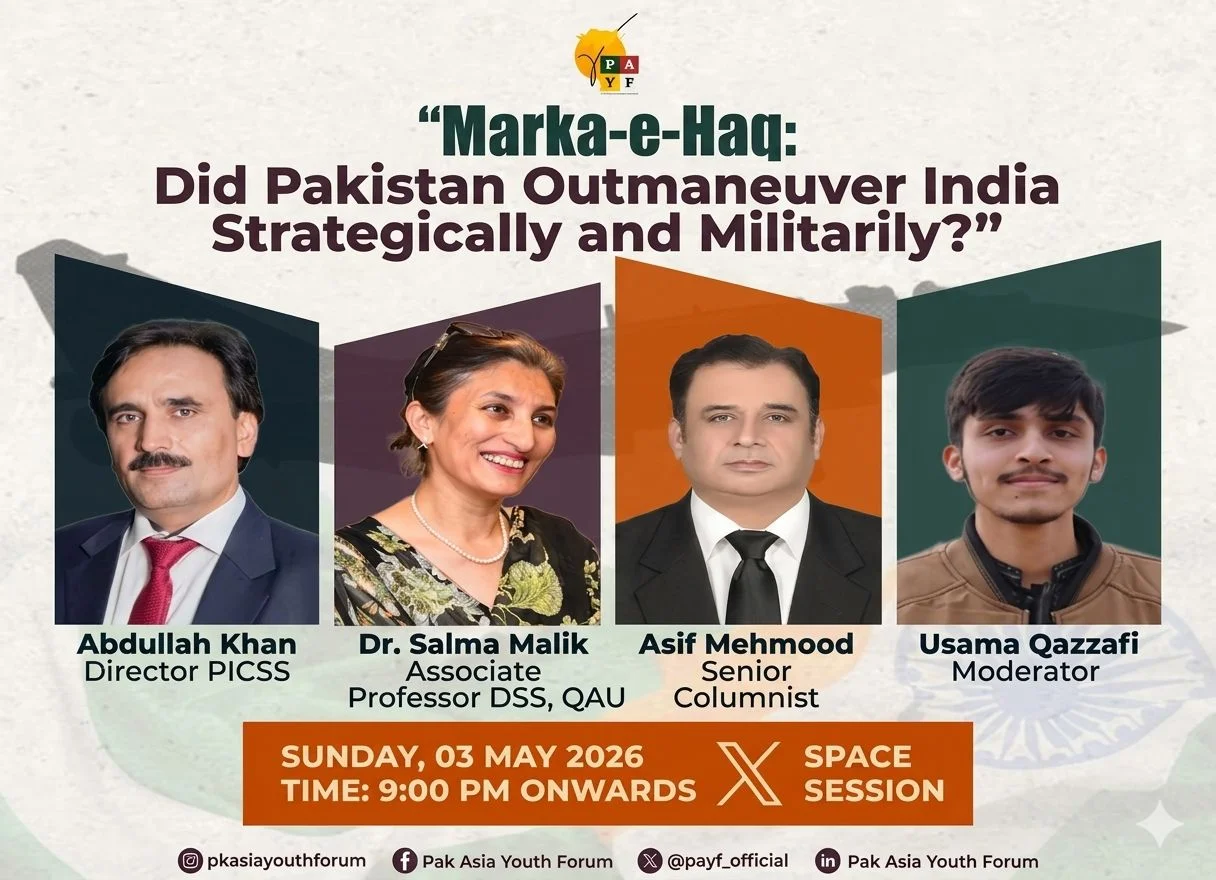
As South Asia’s strategic environment continues to evolve amid shifting power equations, competing narratives have emerged regarding Pakistan’s military posture, diplomatic influence, and broader geopolitical positioning following Operation Marka-e-Haq. The discourse surrounding these developments reflects a broader reassessment of regional deterrence structures and the evolving nature of influence in a multipolar international system.
Reframing the Conventional Military Balance
A central argument in the current strategic discourse is that recent operational developments have contributed to a recalibration of the perceived military balance between Pakistan and India. Proponents of this view suggest that Pakistan has demonstrated enhanced coordination, responsiveness, and deterrence signaling, thereby challenging long-standing assumptions of conventional asymmetry in South Asia.
From an analytical standpoint, such interpretations extend beyond battlefield outcomes and enter the domain of strategic perception. In contemporary security environments, the effectiveness of deterrence is shaped not only by material capability but also by credibility, signaling, and the ability to influence adversarial decision-making. As such, the notion of “strategic outmaneuvering” is as much about narrative influence as it is about operational outcomes.
Strategic Repositioning in a Changing Regional Order
Another key dimension of this evolving discourse is the claim that Pakistan has moved beyond the constraints of diplomatic marginalization and reasserted itself as a more central strategic actor in regional affairs. This perspective frames recent developments as part of a broader recalibration of Pakistan’s geopolitical posture, shifting from a primarily reactive security approach toward a more assertive and adaptive strategy.
However, within established geopolitical analysis, such transitions are typically incremental and shaped by structural factors including economic capacity, institutional strength, and sustained diplomatic leverage. While perceptions of increased relevance may indicate shifting regional dynamics, they do not necessarily translate into immediate or absolute changes in systemic power hierarchies.
Diplomatic Flexibility and Multi-Vector Engagement
A significant element of the broader narrative is Pakistan’s ability to maintain balanced relations across competing geopolitical blocs. Its continued engagement with both Western powers and strategic partners in Asia is often cited as evidence of a flexible foreign policy approach that allows it to navigate complex and fragmented international alignments.
This multi-vector diplomacy is increasingly relevant in a global system characterized by competing spheres of influence and fluid alliances. While Pakistan’s positioning enables it to maintain channels across divergent actors, its role as a decisive mediator in high-intensity international disputes remains context-dependent and limited by broader power asymmetries.
Assertions of Elevated Strategic Status
The discourse further suggests that Pakistan’s evolving military and diplomatic posture reflects aspirations toward greater strategic status within the international system. This interpretation emphasizes factors such as geographic centrality, nuclear capability, and its ability to engage multiple major powers simultaneously as indicators of enhanced geopolitical relevance.
Nonetheless, traditional measures of great power status remain grounded in economic scale, technological advancement, institutional influence, and global military reach. On these criteria, Pakistan continues to function primarily as a significant regional power with selective influence in broader international affairs rather than a fully global strategic actor.
A Fluid and Contested Geopolitical Environment
The broader implication of these narratives is that South Asia is undergoing a period of heightened strategic fluidity, where conventional power hierarchies are increasingly being questioned. In this environment, influence is not solely determined by military strength but also by diplomatic agility, strategic communication, and the ability to shape perceptions within the international system.
The evolving discourse around Operation Marka-e-Haq reflects this broader shift, highlighting how states seek to interpret and project their roles within a rapidly changing regional order. Competing narratives underscore the tension between perceived strategic gains and structural geopolitical constraints.
Conclusion: Between Perception and Structural Reality
Ultimately, the question of whether Pakistan has strategically outmaneuvered India remains part of an ongoing analytical debate rather than a settled conclusion. While recent developments have contributed to a more assertive narrative surrounding Pakistan’s military and diplomatic posture, their long-term strategic significance will depend on sustained institutional capacity, economic resilience, and evolving regional dynamics.
In this context, Marka-e-Haq is best understood not as a definitive endpoint, but as a focal point in a broader contest over regional influence, strategic perception, and the future architecture of South Asian security.