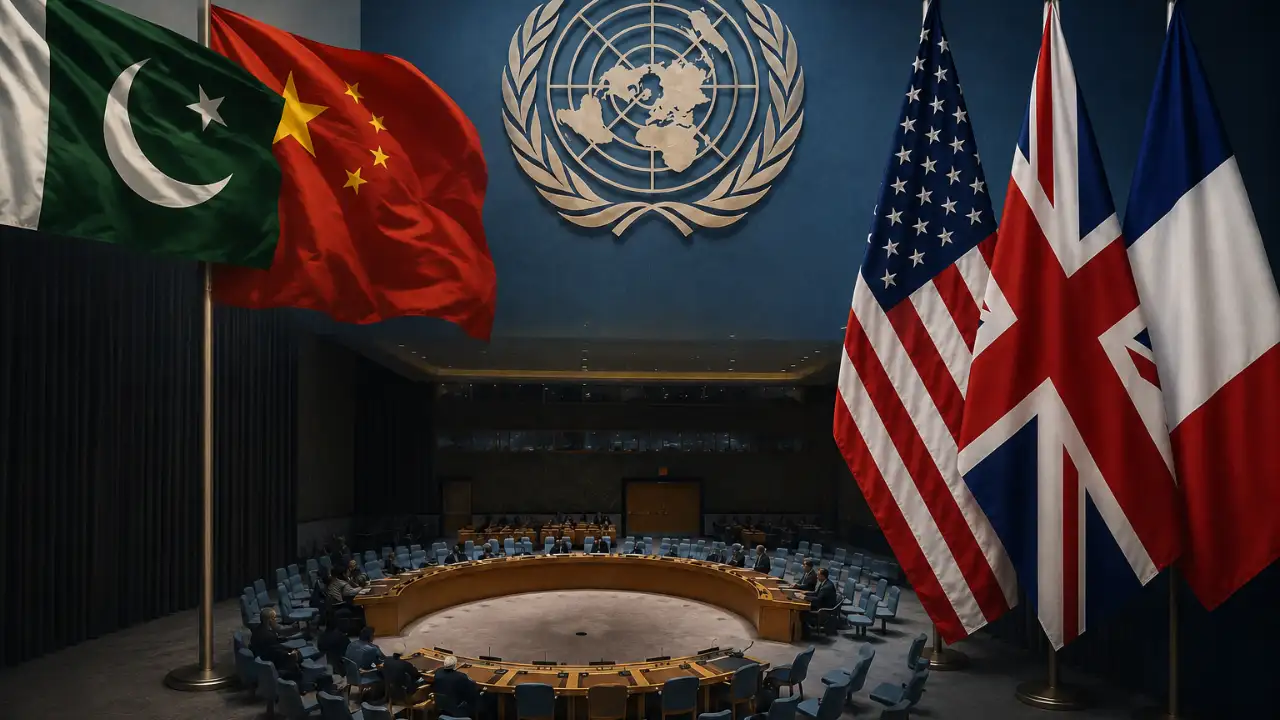
There is a particular kind of education that no university syllabus fully prepares you for, the education that comes from watching a legitimate security concern collide with the architecture of great-power politics. The recent blocking by the United States, United Kingdom, and France of a joint Pakistan-China proposal to designate the Balochistan Liberation Army (BLA) and its Majeed Brigade under the UN Security Council’s 1267 sanctions regime is precisely that kind of lesson. It is uncomfortable, instructive, and ultimately more valuable than a semester of theory.
For young Pakistanis and emerging policy professionals across Asia, this episode deserves more than a headline. It deserves careful analysis, honest reflection, and a strategic response, not despair.
The Security Reality Pakistan Is Living With
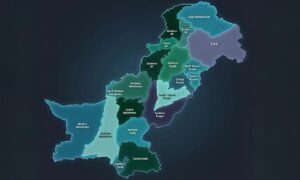
Before engaging with the geopolitics, the human dimension must be acknowledged. The BLA is not an abstraction. The Majeed Brigade has claimed responsibility for suicide bombings, targeted killings of civilians and security personnel, and attacks on critical infrastructure and foreign nationals, including the 2022 suicide bombing targeting Chinese engineers at Karachi University and multiple assaults on the China-Pakistan Economic Corridor. Pakistan’s security establishment has consistently documented the group’s violent campaign and its operational connections to external sanctuaries.
The 1267 sanctions regime was designed precisely for threats of this character: non-state armed groups engaged in systematic political violence. Pakistan’s request was not procedurally novel; it was a routinely used multilateral instrument for designating terrorist organisations. That the three permanent members chose to block it raises questions that go far beyond Pakistan’s immediate security interest. It asks something deeper: How does international politics actually work?
Here are five answers that every young Pakistani policymaker should carry forward.
Lesson One: International Institutions Are Shaped by Power Politics as Much as Legal Principles
The United Nations Security Council is simultaneously an institution of international law and an arena of great-power competition. Its founding architecture, five permanent members, each holding veto power, was never designed to produce purely objective outcomes. It was designed to prevent catastrophic war among major powers by giving each of them a structural stake in the system.
What this means in practice is that decisions within the Council are rarely adjudicated on evidentiary merit alone. The same Western powers that have championed the 1267 regime as a counter-terrorism instrument have simultaneously used procedural tools to shield actors whose designation would complicate their own strategic interests. India’s prolonged effort to designate Masood Azhar at the UNSC, blocked repeatedly by China before finally succeeding in 2019, is the most instructive regional parallel. The lesson from that episode was not that the system is broken, but that the system requires sustained, multi-year, evidence-driven campaigning to produce results.
Young diplomats must internalise this: legal legitimacy is necessary but not sufficient. It must be coupled with political coalition-building.
Lesson Two: Diplomatic Relationships Do Not Automatically Translate Into Multilateral Support
Pakistan maintains active diplomatic engagements with the United States and the United Kingdom. Bilateral channels remain open. Yet when Pakistan and China brought the BLA designation to the Council, the response from Washington, London, and Paris was a procedural block.
This is not hypocrisy in any simple sense. It is a reflection of how multilateral diplomacy functions differently from bilateral diplomacy. Countries compartmentalise. A government may express sympathy for a partner’s security concerns in a bilateral meeting while calculating that blocking the same concern in a multilateral forum serves a separate set of interests, whether those interests involve regional influence, leverage over Pakistan’s domestic policies, relations with other actors, or simply not wanting to be seen as aligning too closely with China on a joint proposal.
The lesson for Pakistan’s next generation of diplomats is to avoid confusing warmth in bilateral engagement with reliable support in multilateral forums. These are different diplomatic currencies, and they must be managed separately. Building genuine multilateral coalitions requires a distinct, sustained, and targeted diplomatic effort, not an assumption that friendship translates automatically into votes.
Lesson Three: Security Concerns Must Be Backed by Sustained Advocacy and Persuasive Narrative
Pakistan has a credible case. The BLA’s documented record of violence, its targeting of civilians, and its attacks on international infrastructure provide a substantial evidentiary foundation. But evidence alone does not move the Security Council. Narrative does.
Consider how Israel has shaped international understanding of threats to its security over decades of consistent public diplomacy, think-tank engagement, and media strategy. Consider how India, following the Pulwama attack, deployed a comprehensive information campaign that shaped international coverage well before formal diplomatic processes concluded. These are not models to be admired uncritically, but they are studies in how countries translate security concerns into internationally legible narratives that make it politically costly for major powers to remain passive.
Pakistan must invest in this dimension of statecraft. This means not only presenting dossiers to foreign ministries, but building relationships with international researchers, funding rigorous independent analysis, engaging diaspora communities, and articulating the Pakistan security perspective through credible English-language platforms that reach decision-makers in Washington, Brussels, and London. It means developing a public diplomacy infrastructure capable of telling Pakistan’s story on Pakistan’s terms.
This is not propaganda. It is the normal practice of every country that successfully advances its interests in the international system.
Lesson Four: Domestic Strength Is the Foundation of International Influence
There is a difficult truth that must be spoken plainly: a country’s international credibility is inseparable from the state of its domestic institutions, governance, and economy. When a state is perceived as internally fragile, economically dependent, institutionally contested, or governmentally inconsistent, its diplomatic interventions carry less weight, regardless of the legal merits of its position.
Countries that successfully shift international outcomes tend to do so from a base of domestic coherence. Japan rebuilt its international standing after 1945 through decades of economic transformation and institutional stability. South Korea became a credible voice in international forums only as its governance and economic foundations matured. Even China’s growing influence in multilateral bodies is inseparable from the economic weight and institutional capacity it developed domestically before projecting outward.
For Pakistan, this lesson points inward. A stable, growing, well-governed Pakistan commands more international attention than a diplomatically active but internally strained one. Economic recovery, judicial credibility, consistent policy frameworks, and the strengthening of civilian institutions are not separate from foreign policy; they are its precondition. Young Pakistanis who enter public service, law, economics, or governance are, in the most direct sense, contributing to Pakistan’s diplomatic capacity.
Lesson Five: Strategic Patience Is More Valuable Than Diplomatic Symbolism
The immediate response to a diplomatic setback can be the most dangerous moment in policy. The temptation is to respond publicly, escalate rhetorically, or pivot to symbolic gestures that signal displeasure without advancing the underlying interest. Strategic patience, the willingness to absorb a setback, recalibrate, and pursue the same objective through refined means over a longer timeline, is almost always more productive.
China’s multi-year effort to block Masood Azhar’s designation was eventually overcome through precisely this approach: sustained evidence-gathering, careful coalition management among non-permanent Council members, and the creation of political conditions under which blocking became more costly than conceding. Pakistan can and should study this model.
The BLA designation is not a closed matter. It is a challenge that requires recalibration. That recalibration should involve broader coalition-building among non-permanent Security Council members, deeper engagement with the Organisation of Islamic Cooperation and regional bodies, a strengthened documentation and evidence strategy, and patient cultivation of support among European governments who are not permanent members but whose voices shape the political climate within which permanent members make their calculations.
Diplomacy that is built on patience, evidence, and coalition has a better historical record than diplomacy built on indignation, however justified.
Why Young People Must Understand This
There is a tendency, especially in a media environment that rewards heat over light, to reduce international relations to moral categories, good actors and bad actors, just outcomes and unjust ones. This framing is not only analytically weak; it is strategically disabling. Countries that advance their interests most effectively are those whose educated citizens, researchers, and policy professionals understand the system as it is, not merely as it ought to be.
Understanding why the United States blocked the BLA designation requires knowing something about US-Pakistan relations since 2001, Washington’s calculations regarding regional balance of power, the current state of US-China competition, and how American domestic politics shapes foreign policy decisions. It requires reading beyond the statement and into the structural. None of this is accessible without serious policy education.
This is why forums like the Pak Asia Youth Forum exist. Not to produce cheerleaders for government positions, but to produce analysts, researchers, and policy professionals capable of navigating complexity, and ultimately of shaping how Pakistan engages with a world that does not automatically sympathise with its concerns.
A Closing Argument to a Generation
The future of Pakistani diplomacy will not be determined solely in foreign ministries or at Security Council tables. It will be shaped, increasingly, by the quality of the ideas, the depth of the research, and the credibility of the voices that Pakistan projects into the international arena.
The young woman studying international law in Lahore, the researcher analysing conflict dynamics in Balochistan for an international journal, the public policy professional building relationships at a regional think-tank conference in Kuala Lumpur or Istanbul, each of them is doing diplomatic work, even if no one calls it that.
Pakistan’s most enduring strategic asset has never been its geography or its alliances alone. It is the capacity of its people to engage the world with knowledge, seriousness, and confidence. The episode at the Security Council is a reminder that the world will not simply recognise Pakistan’s interests. Those interests must be argued, documented, narrated, and sustained, and that work belongs to a whole generation, not only to the diplomats in the room.
The Council may have said no this time. The answer to that is not noise. The answer is preparation.