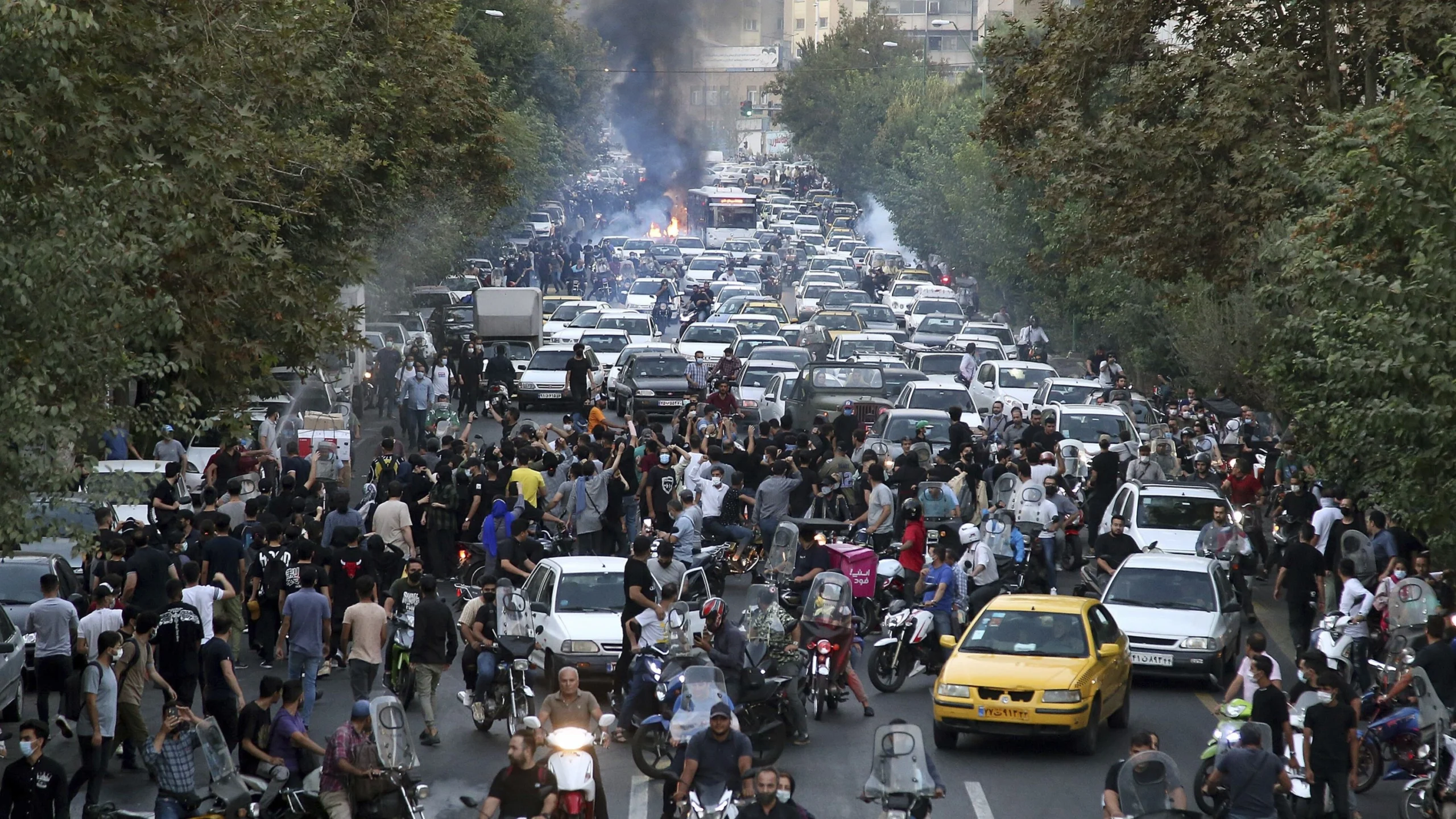
The wave of protests in Iran that erupted in late December 2025 represents more than a response to economic hardship. It is a confrontation with structural state fragility, a test of the regime’s capacity to maintain order, and a reflection of the enduring patterns of international signalling. Reports of foreign attention to the unrest have brought back familiar dynamics interventions not of force, but of influence that have long accompanied periods of domestic instability in the Middle East.
Domestic Triggers and Economic Catalysts
The immediate spark for unrest was the unveiling of the 1405 (2026/2027) state budget, widely perceived as prioritising regime survival and regional ambitions over citizen welfare. Hyperinflation, plummeting purchasing power, and the collapse of essential subsidies had already created a climate of economic desperation. The proposed budget, with its sharp increases for security spending but minimal relief for wage earners, crystallised public frustration into action. Within days, strikes and demonstrations in Tehran spread to smaller cities and towns, reflecting a shift from isolated economic grievances to broader political dissent.
The speed with which protests transitioned from economic to political demands suggests a maturing civic consciousness. Citizens increasingly link domestic deprivation to the state’s external engagements, framing internal mismanagement in the context of broader strategic priorities. This convergence of domestic and external critique heightens the stakes for the regime, which must navigate both public discontent and regional perception.
Signals, Influence, and Legal Boundaries
External attention to the unrest has taken the form of warnings, statements of concern, and symbolic support for civil movements. Such signals are legally permissible under international norms so long as they stop short of coercive action or direct intervention. They occupy a grey zone: influencing behaviour without violating the sovereignty protections enshrined in the UN Charter.
Historically, external signalling operates as a dual-edged tool. It can encourage restraint within the state apparatus, alert citizens that their actions are noticed internationally, and pressure policy recalibration. Yet it can also be leveraged by the regime to consolidate domestic support, framing unrest as influenced by foreign agendas. In the Iranian context, previous protest cycles have demonstrated that external signalling rarely produces predictable outcomes and may even bolster authoritarian narratives of external threat.
Strategic Implications and Regional Resonance
The broader geopolitical resonance of the protests lies in their timing and context. The unrest occurs after a period of military confrontations in the region, which have weakened proxy networks historically used by Tehran to project influence and absorb external pressure. With regional alliances less able to act as buffers, the Iranian leadership faces heightened vulnerability.
Analysts note that the combination of internal unrest and external scrutiny may induce risk-averse behaviour, but it also increases the likelihood of miscalculation. A government interpreting international attention as direct interference may escalate repression, while citizens may overestimate the scope of external support. These dynamics create a feedback loop in which domestic unrest and external signalling continually interact, each shaping the other’s trajectory.
Conclusion
The 2025-2026 protests in Iran illustrate the enduring relevance of “old tactics” in contemporary geopolitics: signalling, moral warnings, and limited support used to influence outcomes without crossing legal thresholds. For Tehran, the challenge is to manage internal dissent while anticipating persistent external pressures. For analysts, the episode underscores the careful balancing act of states in periods of domestic turbulence: the lines between influence, interference, and legality remain intentionally narrow, and the consequences of misreading them can ripple far beyond national borders.