The martyrdom of Maulana Muhammad Idrees Tarangzai on the morning of May 5, 2026, shatters the delicate equilibrium of the religious and political landscape within Khyber Pakhtunkhwa. As a preeminent luminary of the Deobandi tradition and a stalwart defender of the Pakistani state, his assassination in Charsadda represents the tragic culmination of a vicious ideological and digital offensive. This calculated strike was the work of extremist factions identified as Fitna-al-Khawarij, who seek to decapitate the moderate scholarly leadership that serves as the theological bedrock of national stability. Maulana Idrees personified the rare synthesis of sacred authority and constitutional loyalty, a combination that the Khawarij perceive as a lethal threat to their nihilistic ambitions. His passing marks a critical inflection point in the regional struggle, where the systematic targeting of intellectual centers and spiritual anchors has become the primary weapon for those wishing to dismantle the integrity of the republic.
ANCESTRAL LEGACY AND THE ARCHITECTURE OF MODERATE SCHOLARSHIP
To grasp the profound impact of this loss, one must explore the prestigious scholarly lineage that shaped Maulana Idrees Tarangzai. Born in 1961 within the village of Turangzai, he inherited a spiritual capital cultivated over generations of religious service. His father, Hakeem Maulana Abdul Haq, was celebrated as a master of theological defense, while his grandfather, Mufti Shahzada, established a direct intellectual link to the original Darul Uloom Deoband. This pedigree granted Maulana Idrees an unrivaled influence within the Jamiat Ulema-e-Islam (F) and the broader clerical establishment of the country. His academic path reflected a rigorous pursuit of both classical and contemporary knowledge. After mastering advanced Hadith studies at the renowned Darul Uloom Haqqania, he furthered his intellectual reach by earning multiple postgraduate degrees from the University of Peshawar. This dual mastery of sacred and secular domains enabled him to communicate complex Islamic principles in a manner that resonated with both traditionalists and the modern state apparatus, effectively bridging the gap that extremists exploit to sow discord.
PEDAGOGICAL DEFIANCE AGAINST THE NARRATIVE OF DESTRUCTION
For over three decades, Maulana Idrees served as a Sheikh-ul-Hadith, occupying the highest echelons of the religious hierarchy. His role at Jamia Darul Uloom Nomania and Darul Uloom Haqqania involved the intellectual cultivation of thousands of students. This position was a bastion of soft power, allowing him to promote an interpretation of Islam that rejected the indiscriminate violence favored by militant groups. By focusing on the nuances of jurisprudence regarding jihad and the sanctity of human life, he provided his pupils with a theological immunity against the siren calls of radicalization. Extremist factions viewed his teaching as an existential obstacle because it prioritized the stability of the Muslim state over nihilistic rebellion. To his detractors, his alignment with the constitution was a betrayal, yet for the vast majority of the community, his classroom remained a sanctuary of reason where the defense of the faith stayed compatible with the preservation of civil order.
LEGISLATIVE HARMONY AND THE DIPLOMACY OF REGIONAL STABILITY
The commitment of Maulana Idrees to the Pakistani state was most evident during his tenure in the provincial assembly between 2002 and 2008. As a legislator and Speaker, he championed the Sharia Bill of 2004, a landmark effort to align provincial laws with Islamic values through democratic and constitutional means. This approach stood in stark contrast to the violent impositions of extremist groups, proving that religious aspirations could be realized within the existing legal framework. His influence extended beyond the halls of parliament into the realm of high-stakes international diplomacy. In early 2024, he played a pivotal role in a mission to Afghanistan, leveraging his personal rapport with the Afghan leadership to address cross-border security concerns. His presence in Kandahar during meetings with the highest levels of the Taliban signaled a unified front from the Pakistani clerical elite against the use of foreign soil for domestic terrorism. His death removes a critical bridge-builder whose ability to speak the language of both the state and the seminary was essential for regional peace.
DIGITAL PROPAGANDA AND THE MARTYRDOM OF MODERATION
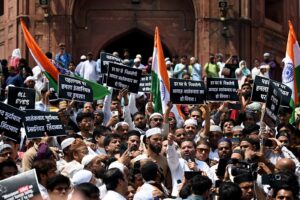
The physical assault on Maulana Idrees was preceded by a virulent digital campaign of vilification. Platforms like Al-Marsad, linked to extremist media networks, labeled him a traitor for his public support of the Pakistani military and national unity. This coordinated propaganda served as a target acquisition phase, framing his assassination as a religious necessity rather than a heinous crime. On that final Tuesday morning, the tactical precision of the ambush revealed a high level of reconnaissance, as assailants targeted him during his daily commute to his seminary. The ensuing public grief, characterized by massive protests and the closure of major transit routes, underscored the deep social connection he maintained with his community. His martyrdom highlights the desperate tactics of the Khawarij, who, unable to win the battle of ideas, have turned to the systematic elimination of the religious elite. While his voice has been silenced, the legacy of his moderate leadership remains embedded in the thousands of students and the legislative precedents he left behind, continuing to serve as a bulwark against the forces of instability.