
The Spectacle of Numbers That Govern Perception
India’s economy has become the world’s favourite growth story. Multilateral institutions celebrate it. Western financial media amplifies it. Political establishments weaponise it. The country surpassed the United Kingdom to claim the fifth-largest economy by nominal GDP. These are real numbers. They represent real output. What they systematically obscure, however, is the condition of the several hundred million human beings generating that output at the absolute base of the pyramid, people whose caloric reality bears frighteningly little resemblance to the triumphant graphs presented at Davos each January.
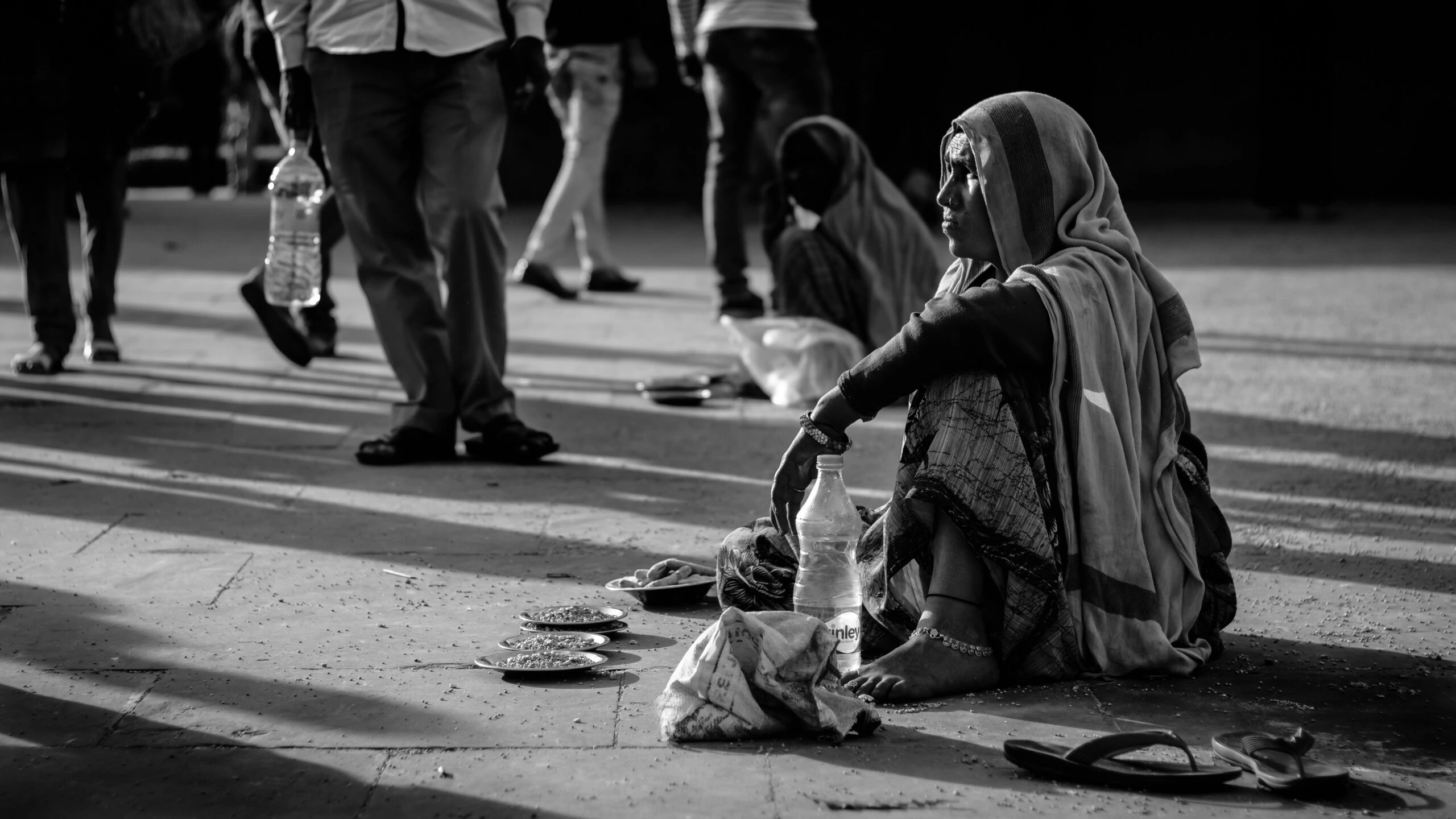
The Global Hunger Index ranked India 105th among 127 countries in 2023. That figure alone deserves extended contemplation. India placed below Sri Lanka, which was emerging from sovereign debt collapse. It placed below Bangladesh, has since quietly transformed its social indicators with a fraction of the diplomatic attention India commands. The Indian government contested the methodology. It always contests the methodology. What it has never produced is a credible counter-methodology that places its own citizens in a position of comparative nutritional security.
When Aggregates Lie Through Omission
Gross Domestic Product measures aggregate output. It was designed to do precisely that aggregate, sum, consolidate. The statistic performs its mathematical function flawlessly. The problem arrives when political establishments and their aligned commentariat deploy GDP growth as a proxy for human welfare, which it was never constructed to measure and which it measures extraordinarily poorly in economies characterised by severe structural inequality.
India’s Gini coefficient, the standard measure of income distribution inequality, has worsened across the period of its most celebrated growth. Oxfam’s 2023 India Inequality Report documented that the combined wealth of the country’s top one percent exceeded forty percent of total national wealth. The bottom fifty percent held approximately three percent. GDP can expand vigorously while this distribution remains static or deteriorates, and the growth story remains technically accurate even as the lived experience of the median Indian family changes with agonising slowness or, in certain measurable dimensions, moves backward.
The per capita calculation exposes this tension with arithmetic clarity. India’s GDP per capita by purchasing power parity hovers around 9,000 dollars annually, placing it in the lower-middle tier globally. Strip away the top decile’s consumption from that average and the figure collapses to something that makes the hunger rankings considerably less surprising. The aggregate conceals the distribution. The distribution is where people actually live.
The Infrastructure of Selective Amnesia
Every government manages its narrative. That is the operational reality of democratic communication. What distinguishes the Indian establishment’s approach is the institutional sophistication with which inconvenient data series get challenged, delayed, or quietly discontinued. The Periodic Labour Force Survey data revealing rising unemployment rates was withheld for months before its eventual release provoked substantial controversy. The Consumer Expenditure Survey of 2017-18, which showed real household consumption declining, was suppressed entirely and only partially acknowledged years later when the suppression itself became the story.
This is governance by statistical redaction. The hunger rankings survive because they originate outside Indian institutional control. The GDP numbers, by contrast, receive every institutional amplification available, ministerial statements, Reserve Bank commentary, internationally relayed press releases. The asymmetry in how data gets treated based on the conclusions it supports reveals something essential about the epistemological environment within which Indian economic discourse currently operates.
Methodology disputes are legitimate scholarly terrain. Economists reasonably contest index construction, weighting decisions, and data sourcing. The Global Hunger Index uses child stunting, child wasting, child mortality, and inadequate food intake as its four components. Child stunting in India, defined as low height for age indicating chronic undernutrition, affects approximately 35 percent of children under five according to the National Family Health Survey, India’s own government survey. Challenging the GHI ranking while acknowledging the NFHS data requires a level of cognitive compartmentalisation that academic credibility struggles to sustain.
The Geography of Divergence
India contains multitudes in the most literal statistical sense. Telangana and Maharashtra operate in a different economic universe from Bihar and Uttar Pradesh. Gurgaon’s gleaming corporate towers and Murshidabad’s rural hunger exist within the same national accounting boundary but inhabit entirely different material realities. When analysts cite India’s growth trajectory, they are averaging across these divergences in a manner that flatters the aggregate while papering over the specific.
The services sector, which constitutes roughly fifty percent of GDP, is concentrated in a handful of metropolitan corridors and employs a workforce that represents a small fraction of the total labour force. Agricultural employment still absorbs approximately 45 percent of India’s working population while contributing roughly fifteen percent of GDP, a productivity gap of staggering proportions that explains, with considerable precision, why hunger persists in a country producing record grain outputs. Simultaneously, its children registered among the highest stunting rates on the planet. The coexistence of export surpluses and nutritional deficits is the central paradox that GDP triumphalism repeatedly fails to address because addressing it would require engaging with distribution rather than production.
The Credibility Cost of Contested Comfort
There is a particular intellectual cost attached to the sustained practice of celebrating macroeconomic indicators while systematically contesting welfare measurements. International credibility in statistical reporting functions as a long-term asset. Countries that develop reputations for suppressing or delegitimising unflattering data find that the credibility of their favourable data comes under corresponding scrutiny. The two cannot be cleanly separated.
India aspires to global institutional leadership. It seeks permanent membership of the UN Security Council. It positions itself as the voice of the Global South in multilateral forums. These aspirations carry an implicit obligation toward the kind of transparent governance that makes leadership claims persuasive rather than merely asserted. A country that ranks 105th on hunger while simultaneously claiming to represent developing-world interests occupies an uncomfortable rhetorical position, one that its own data, generated by its own surveys, substantiates rather than undermines.
The arithmetic of selective honesty eventually produces a credibility deficit that compounds. Growth projections accumulate prestige. Hunger rankings accumulate embarrassment. The gap between them accumulates into a portrait of a state that has mastered the performance of development while the substance of it reaches its most vulnerable citizens at a pace that statistical celebration actively discourages rather than accelerates. Acknowledging the full picture is where serious economic stewardship begins. Everything preceding that acknowledgement is, with considerable generosity, called aspiration.