Few nations in the contemporary world absorb the volume of sustained, multi-directional violence that Pakistan contends with daily in 2026, and fewer still manage to remain diplomatically ascendant while doing so. The strategic picture emerging from Islamabad’s security landscape this year is extraordinary in its complexity: four distinct threat vectors, each carrying its own ideology, geography, and external patronage, operating simultaneously against a single sovereign state. What masquerades as organic militancy, when examined with analytical precision, reveals the unmistakable contours of a deliberate, externally amplified encirclement strategy. Pakistan’s response to this calculated siege, both on the battlefield and in the diplomatic arena, has become one of the defining security stories of the decade.
The Statistical Baseline: Macro-Insecurity and the Architecture of Escalation
The trajectory of violence in 2025 set the stage for the crises of 2026. The Pakistan Institute for Peace Studies recorded 699 terrorist attacks nationwide in 2025, representing a 34 percent surge in activity compared to the previous year. These incidents produced 1,034 fatalities and 1,366 injuries, with a critical and revealing pattern embedded in the data: security and law enforcement personnel accounted for more than 42 percent of total fatalities, with 437 officers killed across the police, army, and Frontier Corps. Civilian fatalities rose 18 percent year-on-year, reaching 354. By early 2026, the concentration of violence shifted dramatically. While the northwest provinces remained the most frequent sites of skirmishes, Balochistan emerged as the epicenter of strategic escalation. January 2026 alone witnessed 87 attacks nationwide, a 28 percent increase from December 2025, primarily driven by coordinated Baloch insurgent operations. The state’s response, characterized by nearly 24,000 intelligence-based operations in the first half of 2026, has attempted to contain the spread, yet the human and political costs continue to mount.
TTP and the Arsenal of Abandonment in the Northwestern Region
The Tehreek-e-Taliban Pakistan, officially redesignated by the Pakistani state as Fitna al-Khawarij in 2025, has undergone a profound and terrifying transformation since 2021, one the international community has been remarkably slow to acknowledge. Under the strategic stewardship of Mufti Noor Wali Mehsud, the group has evolved from a decentralized network of tribal militias into a disciplined, hierarchically structured insurgent force mirroring the governance model of the Islamic Emirate of Afghanistan itself. In March 2026, the TTP launched its most ambitious offensive to date, Operation Ghazwa-e-Khyber, signaling a clear and deliberate departure from hit-and-run guerrilla tactics toward coordinated, sustained assaults on military infrastructure.
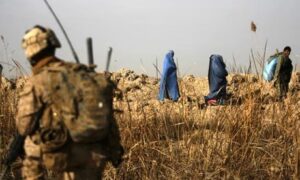
The qualitative leap in lethality traces directly to the catastrophic intelligence failure of the American withdrawal from Afghanistan, which deposited an estimated 7.2 billion dollars worth of military equipment into a power vacuum the TTP was perfectly positioned to exploit. A Washington Post investigation traced serial numbers from at least 63 seized weapons in Pakistan to US-supplied Afghan military stockpiles, including advanced rifles far superior to the militants’ prior arsenals. In the 2023 attack on Mianwali Air Base, TTP operatives deployed M4 and M16 assault rifles alongside night-vision goggles and thermally sighted weapons. A BBC investigation further revealed that the Afghan Taliban seized around one million pieces of military equipment in 2021, with Taliban representatives reportedly admitting before a closed UN Security Council session that at least half of this stockpile remains unaccounted for. Pakistan’s UN representative has stated that approximately 6,000 TTP fighters alongside 20 other militant groups operate from 60 major hideouts on Afghan soil. The sanctuary is real, documented, and lethal.
The Western Frontier: From Strategic Partner to Direct Military Opponent
The most radical transformation in Pakistan’s 2026 security map is the transition of the Afghan Taliban from a perceived strategic partner to a direct military opponent. The collapse of the relationship is rooted in what analysts term the “TTP paradox”: Kabul’s de facto authorities have consistently refused to dismantle the TTP infrastructure they simultaneously deny sheltering, leaving Pakistan trapped between diplomatic restraint and existential operational necessity.
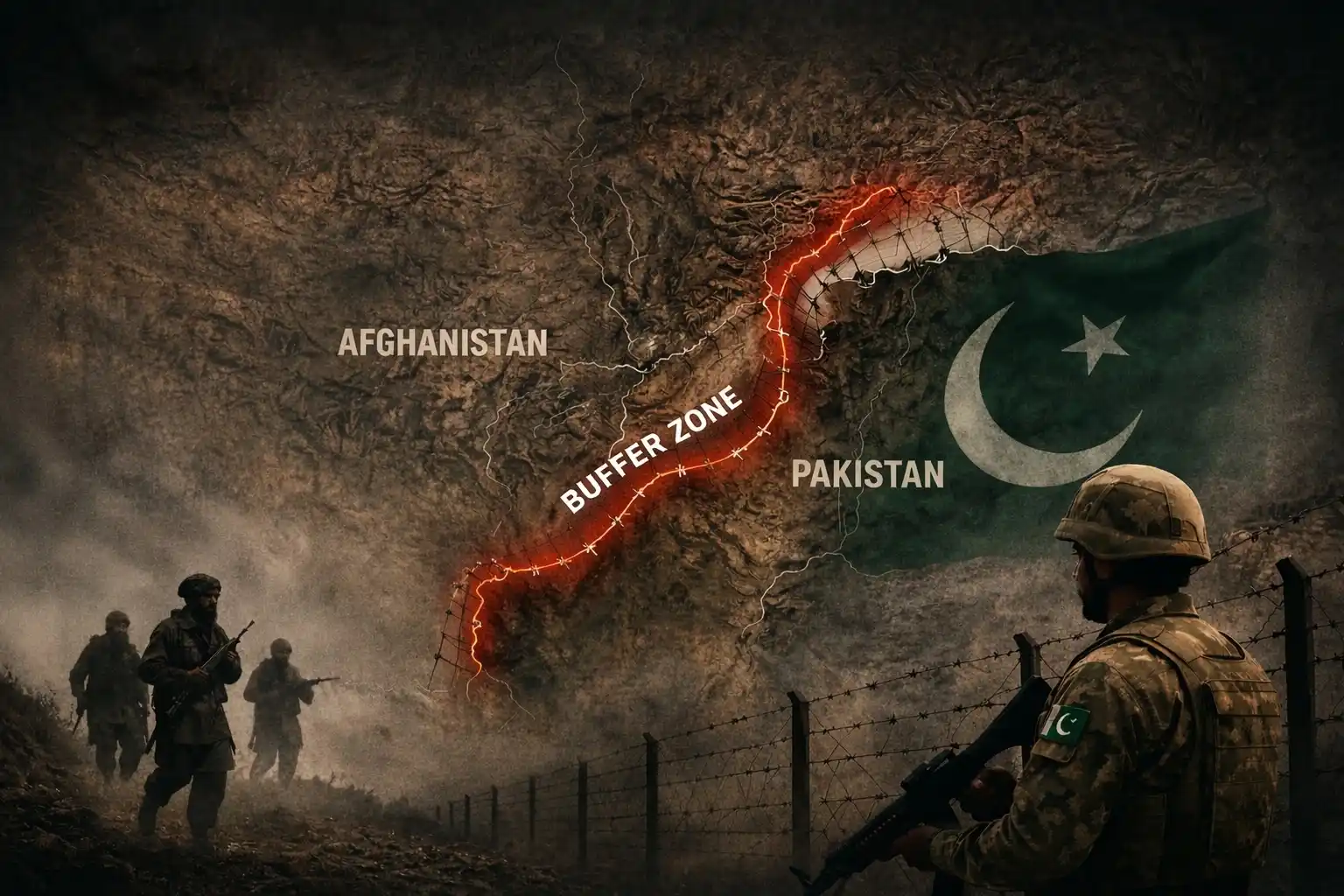
Pakistan’s long-simmering frustration reached breaking point in October 2025, when Pakistani forces struck TTP leadership positions in Kabul, Khost, Jalalabad, and Paktika, triggering retaliatory Taliban strikes and a Qatar-mediated ceasefire that proved entirely ephemeral. The formal rupture arrived on February 26, 2026, when Taliban forces launched coordinated attacks on Pakistani military positions across Nangarhar, Nuristan, Kunar, Khost, Paktia, and Paktika. Pakistan declared open war and launched Operation Ghazab lil Haq, subsequently dismantling wide networks of TTP sanctuaries, suicide bomber indoctrination camps in Kandahar, and command-and-control centers in Jalalabad, severely disrupting organizational cohesion and forcing leadership into concealment. Pakistan’s core demand remains unambiguous: formal designation of the TTP as a terrorist organization and verifiable dismantlement of its infrastructure. Kabul has provided neither assurance.
Balochistan and the Geometry of a Proxy War
The Balochistan Liberation Army’s transformation from a provincial separatist outfit into a sophisticated proxy instrument represents perhaps the most strategically consequential development in Pakistan’s internal security landscape. The BLA’s 2025-2026 campaign, organized under the banner of Operation Herof or Black Storm, gained global notoriety in March 2025 when militants hijacked the Jaffar Express train, holding over 400 passengers hostage in a high-stakes standoff that transfixed the world. While security forces eventually cleared the train, killing 33 insurgents, the incident resulted in 64 total deaths and demonstrated the BLA’s operational capacity to seize control of vital national infrastructure with chilling precision.
Operation Herof 2.0 escalated the campaign to a qualitatively distinct level. Between January 30 and 31, 2026, the BLA conducted 12 coordinated attacks targeting military bases, police stations, and a high-security prison in Mastung, successfully freeing 30 inmates. The most significant engagement unfolded in Nushki, where militants temporarily occupied parts of the town for three days, taking the deputy commissioner hostage, before a massive military reinforcement expelled them. Security forces claimed to have neutralized 216 militants in the immediate aftermath; the BLA disputed these figures, asserting far lower losses while claiming significant casualties inflicted upon state forces. This stark discrepancy underscores the fierce war of narratives both sides wage alongside the kinetic campaign, each projecting strength to domestic and international audiences simultaneously.
Pakistani Defence Minister Khawaja Asif stated publicly that all investigative linkages point toward India in the recent attacks, with the government formally designating the BLA and allied groups as “Fitna al-Hindustan.” The evidentiary architecture is substantial and layered: beyond the Kulbhushan Jadhav espionage case, Pakistani claims include allegations that BLA commanders have received medical treatment in Indian cities including Delhi, and that India has provided funding to incite uprisings among border tribes in Bajaur. The strategic logic is transparent: squeeze CPEC, bleed Gwadar, and deny Pakistan its economic corridor lifeline.
The Urban Spectre: IS-Khorasan and the Architecture of Sectarian Fear
The IS-Khorasan threat operates on a fundamentally different register from the TTP or the BLA. Where those groups seek territorial control or provincial separation, ISKP pursues sectarian fracture, urban panic, and the deliberate delegitimization of the Pakistani state as a guarantor of civilian safety. On February 6, 2026, an ISKP suicide bomber struck a Shia mosque in Islamabad, killing 31 worshippers. This attack, arriving shortly after a November 2025 bombing outside a courthouse in the capital, confirms that ISKP has successfully established deep-cover cells within Islamabad’s metropolitan area, a penetration with alarming implications for the very heart of the state’s political geography.
Unlike the TTP, whose fighters are drawn primarily from tribal frontier communities, ISKP operatives are frequently trained in Afghanistan and deployed directly to urban centers including Lahore, Karachi, and Peshawar for specific high-impact missions. The group’s recruitment strategy has grown increasingly sophisticated, exploiting what intelligence analysts describe as the tri-border militant corridor spanning Afghanistan, Pakistan, and Iran, and utilizing digital platforms to absorb disaffected militants from both the TTP and BLA who regard their original organizations as insufficiently radical. The escalating Pakistan-Taliban confrontation has created further strategic openings for ISKP, enabling the group to rebuild operational capacity and amplify propaganda framing itself as the sole legitimate political authority where Muslim states have demonstrably failed their citizens.
Measured Fury and the Paradox of Diplomatic Ascent
The cumulative human arithmetic of this four-front siege is staggering. Operation Azm-e-Istehkam, launched in June 2024, departs from predecessor operations by emphasizing intelligence-driven precision over large-scale kinetic campaigns, integrating political, diplomatic, legal, and socioeconomic measures alongside targeted military action. Operation Radd-ul-Fitna 1 has further concentrated state resources on dismantling the BLA’s urban network. The arrest of ISKP spokesman Sultan Aziz Azzam in December 2025 dealt a measurable setback to the group’s external operations, and several high-value TTP commanders have been neutralized with key training facilities destroyed, leadership driven into concealment and organizational cohesion fractured.
What makes Pakistan’s posture in 2026 genuinely remarkable is the paradox at its core: the nation absorbing the most sustained multi-front militant pressure in the region is simultaneously expanding its diplomatic footprint with unusual confidence. Islamabad has pursued China, Gulf states, and Central Asian partners with disciplined pragmatism, leveraging its geopolitical indispensability rather than performing victimhood. Pakistan played an active role in diplomacy by its emergence as a key interlocutor between the United States and Iran, while also maintaining uniquely balanced relations with major global and regional powers including the US, China, Saudi Arabia, and Iran. US forces completed joint counterterrorism training with Pakistani counterparts in January 2026, and the breadth of Pakistan’s security partnerships spanning China, the United States, Gulf states, and multilateral forums reflects a foreign policy that refuses to be defined by the violence being waged against it.
The encirclement of Pakistan is real, documented, and in multiple dimensions externally amplified. What it has produced, however, is a state that has grown harder, faster, and more strategically literate under sustained pressure. Pakistan’s adversaries miscalculated the resilience of an army tested across two decades of the world’s most demanding counterterrorism terrain, and a foreign policy establishment that has mastered the art of surviving between great powers. The siege continues. So does Pakistan.